
Lawn Care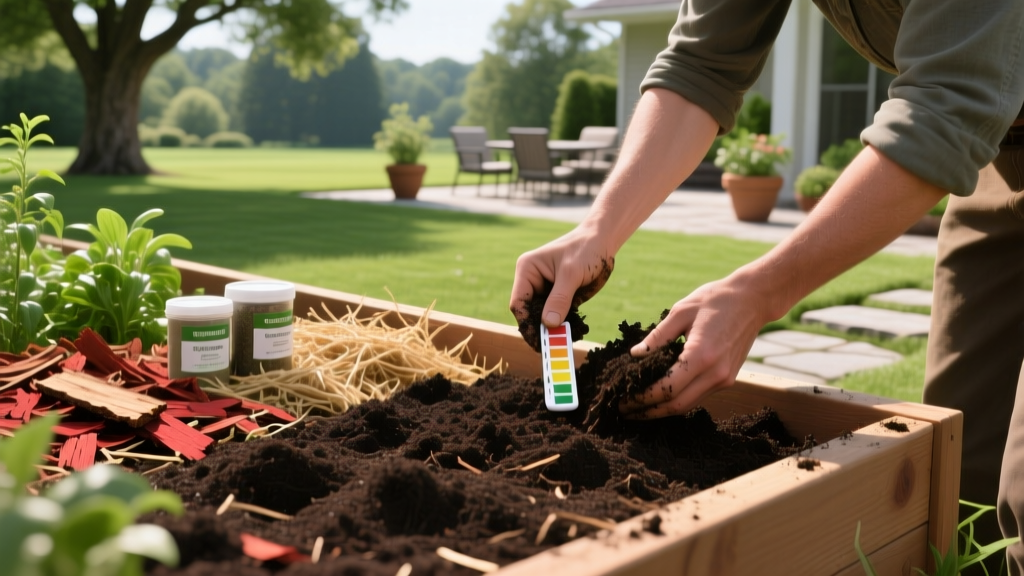
How to Raise pH in Soil: Organic Amendments and Mulch Guide
Acidic soil is one of the most common, yet frequently misdiagnosed, barriers to a thick, vibrant lawn. When soil pH drops below 6.0, essential macronutrients like phosphorus, calcium, and magnesium become chemically locked, rendering even the most expensive fertilizer applications useless. While synthetic chemical treatments exist, learning how to raise pH in soil using organic amendments, targeted mulches, and natural buffers provides a longer-lasting, biologically active foundation for turfgrass health.
This guide moves beyond generic advice to provide exact application rates, cost breakdowns, and soil-science frameworks for correcting soil acidity in 2026, specifically tailored for lawn care and landscape bed maintenance.
The Baseline Imperative: Testing Before Amending
⚠️ Critical Warning: Do Not Guess Your Soil pH
Visual symptoms of acidic soil (yellowing grass, moss invasion, weed proliferation like plantain and dandelion) mimic nitrogen deficiency and fungal diseases. Applying lime without a laboratory soil test can push your pH into the alkaline range (>7.5), causing severe iron chlorosis and manganese lockout. Always secure a baseline test measuring both pH and Cation Exchange Capacity (CEC) before purchasing amendments.
Different turfgrass species have distinct pH optima. Applying a blanket amendment without considering your specific grass type can actively harm your lawn. According to turfgrass agronomy standards, here are the target pH ranges for common lawn species:
- Kentucky Bluegrass & Perennial Ryegrass: 6.0 – 7.0
- Tall Fescue: 5.5 – 6.5 (highly adaptable, but thrives near 6.0)
- Bermudagrass & Zoysiagrass: 6.0 – 7.0
- Centipedegrass: 5.0 – 6.0 (Do NOT raise pH above 6.0; this species requires acidic soil and will suffer iron deficiency if limed).
For accurate testing, utilize a university extension laboratory rather than cheap hardware store dye kits. As noted by the Cornell University Soil Health Laboratory, professional tests measure the buffer pH, which dictates exactly how much lime your specific soil type requires to achieve the target shift, accounting for the soil's buffering capacity and clay content.
Top Organic Amendments to Raise Soil pH
Raising soil pH is a chemical neutralization process. The amendment you choose dictates the speed of the reaction, the secondary nutrients introduced, and the overall cost. Below is a comparison matrix of the most effective organic and natural amendments available to homeowners.
| Amendment | Active Compound | Reaction Time | Rate (per 1,000 sq ft)* | Est. Cost |
|---|---|---|---|---|
| Pelletized Calcitic Lime | Calcium Carbonate | 3–6 Months | 40 lbs | $15–$22 |
| Dolomitic Lime | Calcium-Magnesium Carbonate | 3–6 Months | 40 lbs | $18–$25 |
| Hardwood Wood Ash | Calcium Carbonate + Potassium | 2–4 Weeks | 10–15 lbs | Free / $8 |
| Oyster Shell Flour | Calcium Carbonate (Slow) | 12–24 Months | 50 lbs | $35–$45 |
*Rates shown are generalized to raise sandy-loam soil pH by approximately 0.5 points. Always defer to your specific soil test's buffer index recommendations. Heavy clay soils require up to 50% more amendment.
Choosing Between Calcitic and Dolomitic Lime
The choice between calcitic and dolomitic lime hinges entirely on your soil test's magnesium levels. If your base saturation of magnesium is below 10%, dolomitic lime is mandatory to prevent grass tetany and poor chlorophyll production. If magnesium is adequate, use calcitic lime; excess magnesium can compete with calcium and potassium for root uptake sites, leading to soil compaction and poor water infiltration.
The Wood Ash Advantage (and Danger)
Hardwood ash is a potent, fast-acting amendment containing up to 25% calcium carbonate equivalent, plus highly soluble potassium. However, it is exceptionally easy to over-apply. Applying more than 15 lbs per 1,000 square feet in a single season can cause salt burn and spike the pH too rapidly, locking out micronutrients. Never use ash from treated lumber, charcoal briquettes, or softwoods like pine, which contain harmful resins and lower liming equivalents.
Buffering Acidity with Mulch and Compost
While lime provides the chemical heavy lifting, organic mulches and compost act as biological buffers, stabilizing the pH over time and increasing the soil's Cation Exchange Capacity (CEC). High CEC soils resist rapid pH fluctuations, meaning your amendments last longer.
Compost Top-Dressing
Finished, neutral-pH compost (typically hovering around 6.5 to 7.0) introduces humic acids that bind to calcium and magnesium ions, preventing them from leaching out of the root zone in sandy soils. Applying a 1/4-inch layer of screened compost immediately after liming helps integrate the calcium into the soil profile via earthworm activity and microbial breakdown. According to Penn State Extension turfgrass specialists, combining lime applications with organic matter significantly accelerates the neutralization process in the thatch and upper soil horizons.
Mulch Selection for pH Management
Not all mulches are created equal when managing acidic soils. If your goal is to raise or maintain a neutral pH, you must avoid acidic mulching materials.
- Avoid: Pine needles, pine bark, and peat moss. While the 'pine needles make soil acidic' myth is slightly exaggerated regarding long-term soil impact, they do not contribute to raising pH and can temporarily tie up surface nitrogen during decomposition.
- Use: Shredded hardwood bark, leaf mold, and arborist wood chips. Hardwood mulches decompose into a slightly alkaline to neutral humus, providing a gentle, continuous buffering effect that complements your primary lime application.
Step-by-Step Application Protocol
To maximize the efficacy of your amendments and ensure they reach the root zone rather than sitting trapped in the thatch layer, follow this precise application sequence:
- Core Aerate the Lawn: Use a gas-powered core aerator to pull 3-inch plugs at a spacing of 3x3 inches. This creates direct channels for the lime to reach the subsoil where root expansion is needed.
- Apply the Amendment: Use a rotary broadcast spreader (not a drop spreader, which causes striping) to apply your chosen lime or wood ash. Set the spreader dial to the manufacturer's recommendation for 'pelletized lime' or 'granular fertilizer'.
- Water the Profile: Apply exactly 0.5 inches of irrigation immediately after spreading. This washes the dust and pellets off the grass blades (preventing foliar burn) and begins the dissolution process in the aeration holes.
- Top-Dress with Compost: Spread a thin (1/4 inch) layer of neutral compost over the lawn, dragging it with a leveling rake or drag mat so it falls into the aeration cores alongside the lime.
Troubleshooting: Why Your Soil pH Isn't Changing
The CEC Trap: If you applied the recommended amount of lime and your pH hasn't moved after 8 months, your soil likely has a high Cation Exchange Capacity (heavy clay) or a massive reserve of exchangeable acidity (aluminum and hydrogen ions) that the initial lime dose merely neutralized without raising the baseline pH. High-CEC clay soils often require a 'split application' approach: applying half the recommended lime in the fall, and the other half the following spring, to allow the soil chemistry to equilibrate.
Furthermore, pulverized lime acts faster than pelletized lime but is highly susceptible to wind drift during application. If you used pulverized lime on a breezy day, a significant portion of your amendment may have blown onto neighboring hardscapes or garden beds, resulting in an under-dosed lawn. For consistent results, always opt for pelletized lime for broadcast spreading, or lightly water the lawn immediately after applying pulverized dust to lock it into the thatch.
Correcting soil acidity is not a one-weekend project; it is a seasonal biological process. By pairing precise, test-driven mineral amendments with organic compost buffers, you build a resilient soil food web that naturally defends against future acidification, ensuring deep-rooted, drought-tolerant turfgrass for years to come.

