
Lawn Care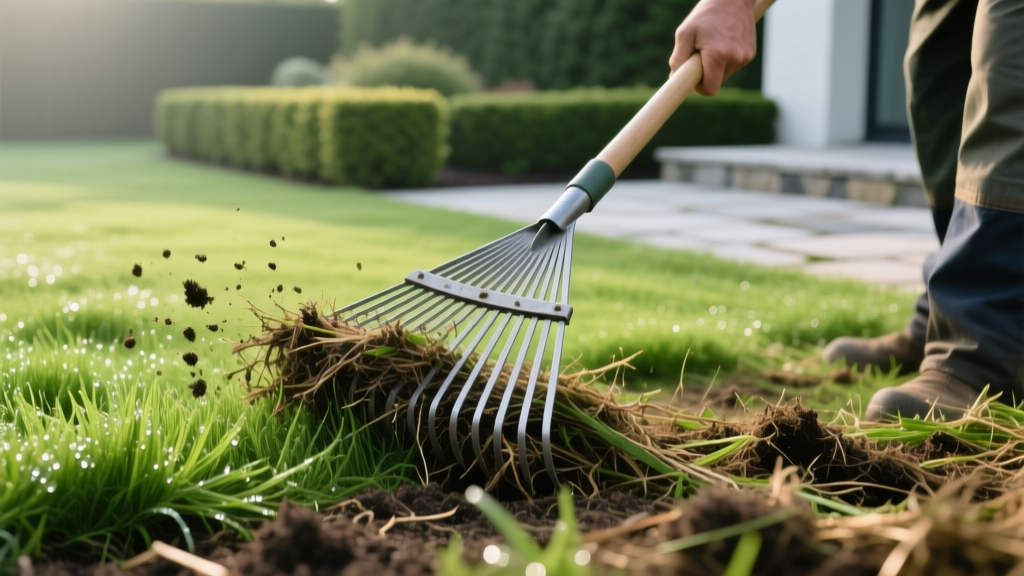
How to Rake Garden Debris and Thatch Without Damaging Your Lawn
Why the Wrong Rake Destroys Turf and Wastes Time
Selecting the correct tool to rake garden beds, remove fallen leaves, or dethatch a lawn is a matter of material science and biomechanics. Using a flexible poly leaf rake to pull heavy, wet thatch from a Bermuda grass lawn will result in bent tines and zero soil penetration. Conversely, dragging a rigid steel bow rake across a delicate fescue lawn will tear the crowns and invite fungal pathogens. The distinction between a clean, healthy lawn and a damaged one often comes down to tine spacing, material rigidity, and the angle of attack.
This guide breaks down the exact equipment specifications required for different yard zones, providing a framework for homeowners to select, use, and maintain rakes that will last for decades rather than a single season.
Material Science: Steel vs. Poly vs. Bamboo vs. Aluminum
The head and tine material dictate the tool's primary use case. Understanding the shear strength and flexibility of these materials is critical for equipment selection.
Spring Steel and Carbon Steel
Steel rakes offer the highest tensile strength. Carbon steel bow rakes (typically featuring 16 to 18 tines spaced 1 inch apart) are designed for moving heavy soil, gravel, and breaking up compacted clay. Spring steel thatching rakes feature curved, serrated blades that slice through organic matter. While highly durable, carbon steel is prone to oxidation and requires end-of-season oiling. Expect to pay between $35 and $65 for a professional-grade steel rake with a fiberglass handle.
Polypropylene (Poly) and Resin
Poly rakes dominate the leaf-raking market. Their wide spans (24 to 30 inches) and flexible tines allow them to glide over uneven turf without scalping the grass. High-density polyethylene resists UV degradation and moisture, making them virtually maintenance-free. However, they lack the rigidity to break up soil or extract deep thatch. Premium poly rakes with reinforced resin heads cost $15 to $25.
Bamboo and Hardwood
Bamboo rakes are exceptionally lightweight and offer a traditional aesthetic, but they are highly susceptible to splintering and moisture rot if stored improperly. They are best reserved for light, dry debris like pine needles on hardscapes or delicate garden beds where steel would cause damage.
Aircraft-Grade Aluminum
Aluminum offers a middle ground: it is rust-proof like poly but provides more rigidity. Aluminum leaf rakes with adjustable heads are excellent for users who need to switch between narrow garden bed raking and wide lawn sweeping, though the mechanical adjustment joints can fail under heavy lateral torque.
Ergonomics: Handle Length and Grip Selection
The handle is just as important as the head. A standard rake handle is 54 inches long. For users over 5 feet 10 inches, a 54-inch handle forces a stooped posture, increasing lumbar shear force by up to 40%. When purchasing a rake, look for 60-inch or 66-inch handles if you are tall.
Pro Tip: To test handle length, stand the rake upright next to you. The top of the handle should reach your chin or lower lip. If it only reaches your chest, you will over-bend during use.
Regarding grip material, avoid bare wood handles without a sealed finish, as they absorb sweat and blister hands. Fiberglass handles with rubberized overmold grips provide the best vibration dampening when striking hidden rocks or roots in garden beds.
The Equipment Matrix: Matching the Rake to the Task
Use this decision matrix to select the exact tool for your specific yard maintenance task.
| Tool Type | Best Use Case | Tine Material & Spacing | Estimated Cost |
|---|---|---|---|
| Thatching Rake | Extracting dead organic layer from cool/warm-season turf | Spring steel, curved blades (3/4 inch spacing) | $40 - $75 |
| Bow Rake (Garden Rake) | Leveling soil, spreading mulch, breaking clay clods | Carbon steel, straight tines (1 inch spacing) | $30 - $55 |
| Poly Leaf Rake | Clearing autumn leaves, pine straw, and light clippings | Polypropylene, flexible (24-30 inch wide span) | $15 - $25 |
| Shrub / Hand Rake | Extracting debris from tight perennial beds and under shrubs | Steel or heavy resin, narrow 8-inch span | $12 - $20 |
Biomechanics and Technique: How to Rake Garden Zones Safely
Knowing how to rake garden beds and lawns properly prevents turf damage and user fatigue. The 'Angle of Attack' is the most critical variable.
Raking Thatch (15-Degree Angle)
When using a thatching rake on a lawn, keep the handle low, maintaining a 15-degree angle to the ground. Pull the rake toward you in short, 2-foot strokes. According to the University of Minnesota Extension, thatch should only be removed when the layer exceeds half an inch. Penetrating deeper than the thatch layer into the topsoil will sever living rhizomes and stolons, severely damaging the turf's recovery ability.
Raking Leaves and Debris (45-Degree Angle)
For poly leaf rakes, hold the handle at a 45-degree angle. Use a sweeping, lateral motion rather than pulling directly backward. This allows the flexible tines to slide over the grass blades, catching the leaves without uprooting the turf.
Raking Heavy Soil and Mulch (90-Degree Angle)
When leveling soil or moving mulch in garden beds with a steel bow rake, use a chopping and pulling motion. Drive the tines vertically into the pile, then pull horizontally. Never use a bow rake to groom grass; the rigid tines will scalp the lawn instantly.
Warning: Never use a steel bow rake or a rigid thatching rake on a newly seeded or freshly sodded lawn. The tines will pull up the shallow root systems. Wait until the new turf has been mowed at least three times before performing any aggressive raking.
Seasonal Maintenance Protocol for Rakes
Proper maintenance prevents rust, wood rot, and tine fatigue. Follow this end-of-season protocol to extend your equipment's lifespan by years.
- Deep Cleaning: Use a stiff wire brush and a garden hose to remove all caked-on mud, sap, and organic matter from the tines. Soil retains moisture and accelerates carbon steel oxidation.
- Disinfection: If you have been raking areas with known fungal issues (like brown patch or dollar spot), wipe the tines with a 10% bleach solution or isopropyl alcohol to prevent cross-contaminating healthy zones next spring.
- Lubrication and Sealing: Wipe carbon steel heads with a light coat of boiled linseed oil or a silicone-based tool spray. For wooden handles, sand any rough spots and apply a coat of raw linseed oil to prevent drying and splintering.
- Proper Storage: Store rakes vertically on a wall rack or hang them by the handle. Never leave steel rakes resting head-down in damp soil or on a concrete garage floor, as concrete draws moisture and promotes rust.
For comprehensive guidelines on maintaining all landscaping hand tools, the Oregon State University Extension Service provides excellent seasonal care schedules that apply to both professional and residential equipment.
Frequently Asked Questions
Can I use a power dethatcher instead of a manual thatching rake?
Power dethatchers (rented for $60-$90 a day) are necessary for lawns exceeding 5,000 square feet with severe thatch buildup. However, for small urban lawns or targeted patch maintenance, a manual thatching rake provides better depth control and significantly reduces the risk of tearing out healthy grass crowns.
How often should I replace my poly leaf rake?
A high-density poly rake stored out of direct UV sunlight will last 7 to 10 years. If the tines become permanently bent or begin snapping at the base of the head, the plastic has undergone UV embrittlement and the tool must be replaced.
What is the best rake for pine needles?
Pine needles weave themselves into turf and garden beds. A rigid steel thatching rake or a specialized 'pine straw rake' with closely spaced, straight steel tines (1/2 inch spacing) is required to lift them out. Standard poly leaf rakes will simply glide over the top of pine straw without extracting it.

