
Lawn Care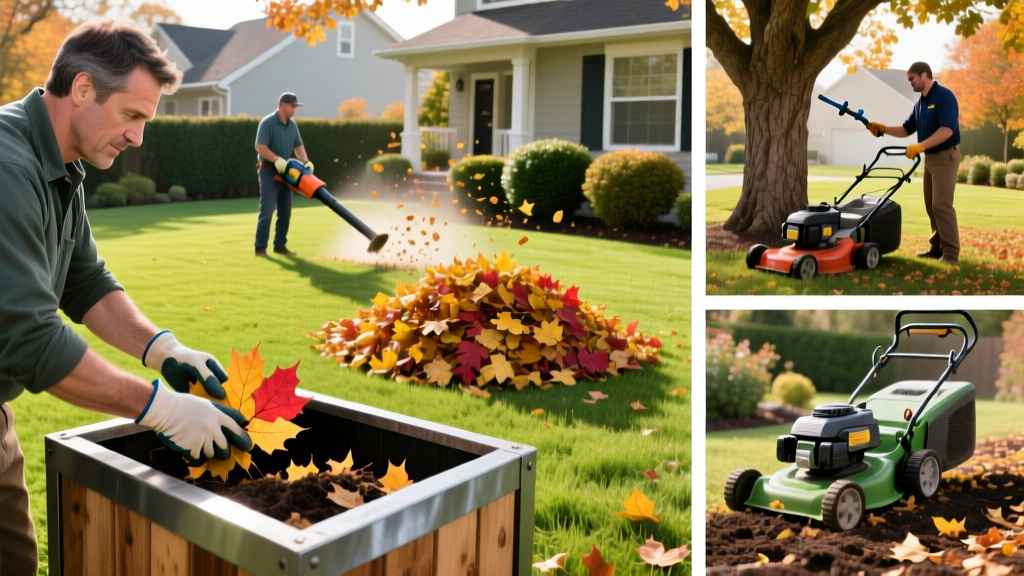
What to Do With Raked Leaves: 5 Lawn-Saving Disposal Methods
The Hidden Dangers of Piling Raked Leaves on Your Lawn
Raking is only the first half of autumn lawn maintenance. How you handle the resulting piles of debris dictates whether your turf survives the winter or succumbs to disease. Leaving concentrated piles of raked leaves on cool-season grasses like Kentucky bluegrass and tall fescue creates a microclimate that invites catastrophic fungal pathogens.
Warning: Snow Mold Incubation
Matted leaves trap moisture and block sunlight, mimicking the exact conditions required for Microdochium nivale (pink snow mold) and Typhula incarnata (gray snow mold). According to Penn State Extension, gray snow mold requires 60 or more days of continuous cover on unfrozen ground to cause severe turf damage. Piled leaves accelerate this timeline by retaining ground-level humidity even before the first snowfall.
Matted leaves trap moisture and block sunlight, mimicking the exact conditions required for Microdochium nivale (pink snow mold) and Typhula incarnata (gray snow mold). According to Penn State Extension, gray snow mold requires 60 or more days of continuous cover on unfrozen ground to cause severe turf damage. Piled leaves accelerate this timeline by retaining ground-level humidity even before the first snowfall.
Beyond disease, intact leaves smother the turf canopy, halting photosynthesis and preventing vital fall fertilizer applications from reaching the soil profile. To protect your lawn and recycle valuable organic matter, you must process or properly dispose of your raked leaves using one of the following five methods.
Method 1: Shredding Raked Leaves for Direct Lawn Mulching
The most efficient way to manage raked leaves is to eliminate the raking process entirely by mulching them directly into the turf canopy. However, simply running a standard mower over a thick layer of leaves will suffocate the grass. You must achieve the 'dime-sized' rule.
- Wait for Dry Conditions: Only mulch when leaves are completely dry. Wet leaves clump and jam the mower deck, resulting in uneven, oversized chunks.
- Upgrade Your Blade: Swap your standard high-lift blade for a specialized mulching blade. The Oregon G3 Gator Blade (typically $35 to $45 depending on your deck size) features angled teeth that create a vortex under the deck, keeping leaves suspended for multiple cuts.
- Adjust the Deck Height: Set your mower deck to 3.0 or 3.5 inches. This provides enough vertical clearance for the leaves to circulate and be shredded before dropping to the soil surface.
- Verify the Canopy: After mowing, the grass blades must remain at least 50% visible. If the shredded leaf layer exceeds 1/2 inch in thickness, you must bag the excess or rake it into garden beds.
When shredded to the size of a dime, earthworms and soil microbes can easily pull the leaf fragments down into the thatch layer, where they decompose and release nitrogen, phosphorus, and potassium back into the root zone.
Method 2: Building a Hot Compost Pile with Raked Leaves
If you have already raked your leaves into tarps or wheelbarrows, hot composting is the fastest way to break them down. The primary failure point for homeowners attempting to compost leaves is ignoring the Carbon-to-Nitrogen (C:N) ratio. Dry leaves are heavily carbonaceous, meaning they lack the nitrogen required to feed the thermophilic bacteria that generate composting heat.
Optimizing the C:N Ratio for Leaf Compost
The ideal C:N ratio for rapid decomposition is 30:1. Because dry raked leaves sit at roughly 50:1, you must introduce nitrogen-rich 'green' materials to balance the pile. The Environmental Protection Agency (EPA) recommends layering materials by volume to achieve this balance without relying on synthetic fertilizers.
| Material | C:N Ratio | Moisture Content | Role in Pile |
|---|---|---|---|
| Dry Raked Leaves | 40:1 to 60:1 | 15-20% | Carbon Base / Bulking Agent |
| Fresh Grass Clippings | 15:1 to 25:1 | 75-85% | Nitrogen Source / Moisture |
| Coffee Grounds | 20:1 | 70% | Nitrogen Booster |
| Blood Meal | 3:1 | 10% | Rapid Heat Activator |
The Formula: Mix two parts shredded raked leaves with one part fresh grass clippings by volume. If grass clippings are unavailable, sprinkle 1 cup of blood meal or alfalfa meal over every 10 gallons of leaves and water thoroughly until the pile feels like a wrung-out sponge. Turn the pile every 3 to 4 days using a 5-tine garden pitchfork to maintain core temperatures between 130°F and 150°F, which is hot enough to kill weed seeds and turf pathogens.
Method 3: Creating Leaf Mold for Soil Amendment
Unlike hot composting, which relies on bacteria, leaf mold is the product of slow, fungal decomposition. It requires zero turning, zero nitrogen additions, and yields a premium soil amendment that can hold 300% to 500% of its weight in water, making it invaluable for sandy lawn soils that struggle with drought stress.
- Containment: Build a simple cylinder using 14-gauge galvanized wire mesh (hardware cloth), roughly 3 feet in diameter and 3 feet high. Avoid solid plastic bins; fungal breakdown requires high oxygen exchange.
- Hydration: As you add raked leaves to the wire bin, hose them down thoroughly. Fungi cannot break down dry cellulose.
- Timeline: Expect the process to take 12 to 24 months. Shredding the leaves before binning them will reduce this timeframe to roughly 9 to 12 months.
The resulting dark, crumbly leaf mold should be top-dressed over your lawn in early spring at a rate of 1/4 inch, or used as a base for overseeding to maintain seed-to-soil moisture contact.
Method 4: Municipal Curbside Collection Best Practices
If you lack the space for composting or the time for mulching, municipal collection is the default option. However, improper bagging leads to rejected pickups and plastic contamination in municipal composting facilities.
Pro Tip: Ditch the Plastic
Most modern municipal yard waste programs strictly prohibit plastic bags. If you place raked leaves in standard black polyethylene contractor bags, they will be rejected by the waste hauler or sent directly to a landfill.
Most modern municipal yard waste programs strictly prohibit plastic bags. If you place raked leaves in standard black polyethylene contractor bags, they will be rejected by the waste hauler or sent directly to a landfill.
Invest in heavy-duty, biodegradable kraft paper yard waste bags. The Husky 30-Gallon Heavy-Duty Paper Yard Bags (roughly $1.20 per bag) feature reinforced bottoms and wet-strength coatings that prevent the bag from disintegrating if the raked leaves are damp. Fill them only to the indicated line, fold the top securely, and place them at the curb no more than 12 hours before your scheduled pickup to prevent rain from adding excessive water weight, which frequently causes the paper bottoms to tear during loading.
Tool Upgrades for Processing Raked Leaves
For homeowners managing large properties (1/2 acre or more) with heavy oak or sycamore drop, manual raking and standard mowing are insufficient. Dedicated leaf processing tools save hours of labor.
The Worx WG430 13 Amp Electric Leaf Mulcher (priced around $170 to $190) is a standalone unit that uses heavy-duty line trimmer cord to reduce 11 bags of dry leaves down to 1 bag of fine mulch in minutes. It is highly effective for preparing leaves for the compost bin or bagging for curbside pickup, drastically reducing the volume of waste you must handle. For commercial-grade vacuuming, the Billy Goat KV650H Leaf Vacuum (approx. $2,400) pulls leaves directly off the turf while simultaneously shredding them into a 6-bushel collection bag, eliminating the raking step entirely.
Frequently Asked Questions
Are oak leaves too acidic to use on my lawn?
No. This is a persistent horticultural myth. While fresh oak leaves do have an acidic pH (typically between 4.5 and 5.5) due to high tannin content, the decomposition process consumes these acids. According to research cited by the University of Minnesota Extension, fully decomposed oak leaf mold tests at a nearly neutral pH of 6.5 to 7.0, making it perfectly safe for all turfgrass species.
Can I burn my raked leaves?
Burning is highly discouraged and illegal in most suburban and urban municipalities. Beyond the legal restrictions, burning destroys the valuable organic matter and releases harmful particulate matter (PM2.5) into the air. Furthermore, the intense heat sterilizes the top layer of your soil, killing beneficial mycorrhizal fungi and earthworms.
How should I handle pine needles mixed with my raked leaves?
Pine needles decompose much slower than broadleaf foliage due to their thick, waxy cuticle. If your rake pulls up a mix of pine needles and standard leaves, run them through a mulching mower first to pierce the waxy coating. Use the resulting mix exclusively for garden bed mulch or pathways, as pine needles can form a mat that repels water if applied too thickly over turfgrass.

