
Lawn Care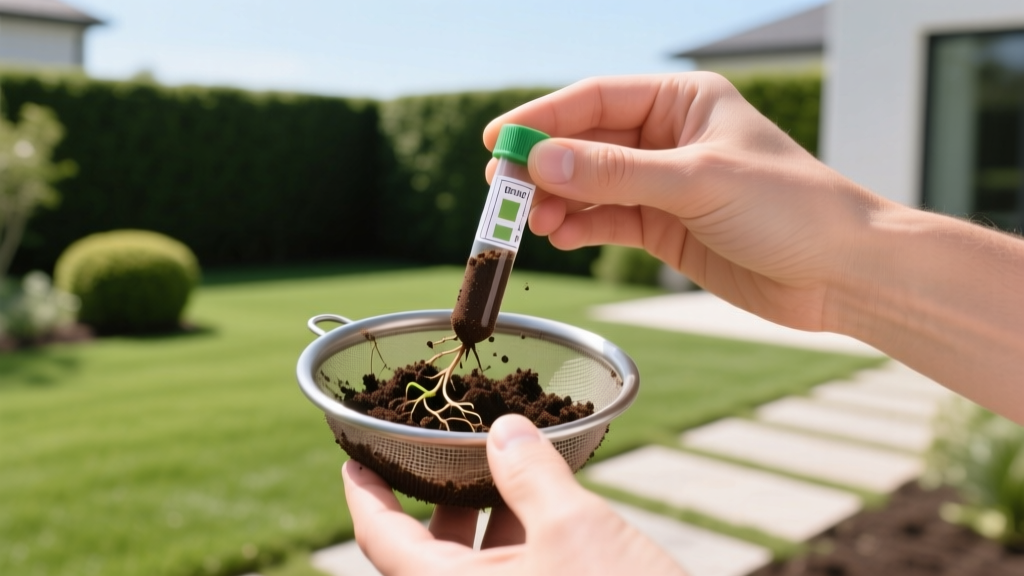
How to Read a Soil Test for Grass to Fix Nutrient Deficiencies
The Flaw in Hardware Store Testing Kits
Most homeowners approach lawn nutrition blindly, relying on generic four-step fertilizer programs or cheap colorimetric soil probes from big-box stores. These hardware store kits typically measure only basic pH and estimate Nitrogen, Phosphorus, and Potassium (NPK) using chemical reagent strips. They fail to measure Cation Exchange Capacity (CEC), base saturation percentages, or micronutrient availability. As of 2026, a comprehensive soil analysis from an independent agricultural lab costs between $30 and $45—a minor investment that prevents hundreds of dollars in wasted amendments and potential turf burn.
When you order a professional soil test for grass from a lab utilizing ICP-OES (Inductively Coupled Plasma Optical Emission Spectrometry), you receive a precise molecular breakdown of your soil's chemistry. Understanding this data is the only way to transition from reactive lawn care to proactive soil management.
Decoding the Lab Report: Beyond Basic NPK
A professional lab report contains several critical metrics that dictate exactly which mulch, compost, or mineral amendments your lawn requires. Here is how to interpret the core data points.
1. Soil pH and Buffer pH
Standard pH measures the active acidity or alkalinity of the soil solution. For most cool- and warm-season grasses, the ideal range is 6.2 to 6.8. If your pH is below 6.0, essential nutrients like phosphorus and molybdenum become chemically locked. However, standard pH only tells you the current state. Buffer pH measures the soil's reserve acidity (hidden hydrogen ions bound to clay and organic matter). Your lab will use the Buffer pH to calculate the exact tonnage of lime required per acre to shift the active pH to your target level.
2. Cation Exchange Capacity (CEC)
CEC measures your soil's ability to hold onto positively charged nutrients (cations) like calcium, magnesium, and potassium. Think of CEC as the size of your soil's nutrient fuel tank.
- Sandy soils (CEC < 10): Small fuel tank. Nutrients leach quickly. Requires frequent, low-dose amendments and heavy organic matter integration.
- Loam soils (CEC 10-20): Medium fuel tank. Ideal for turfgrass. Holds nutrients well but remains workable.
- Heavy clay soils (CEC > 25): Massive fuel tank. Holds immense nutrients but is prone to compaction and poor drainage.
3. Base Saturation Percentages
Rather than just looking at raw parts-per-million (PPM) of minerals, advanced turf managers look at base saturation—the percentage of the CEC occupied by specific cations. The ideal Albrecht-based ratios for turfgrass are:
- Calcium (Ca): 65% - 75%
- Magnesium (Mg): 10% - 15%
- Potassium (K): 3% - 5%
The Soil Amendment Decision Matrix
Use this matrix to translate your lab results into specific, actionable purchases. Prices reflect average 2026 retail costs for residential quantities.
| Soil Test Indicator | Diagnosis | Prescribed Amendment | Application Rate (per 1,000 sq ft) | Est. Cost |
|---|---|---|---|---|
| pH < 6.0, Ca < 60%, Mg < 10% | Acidic, Calcium & Magnesium deficient | Dolomitic Lime (CaMg(CO3)2) | 40 - 50 lbs (based on Buffer pH) | $8 - $12 |
| pH < 6.0, Ca < 60%, Mg > 15% | Acidic, Calcium deficient, High Magnesium | Calcitic Lime (CaCO3) | 40 - 50 lbs (based on Buffer pH) | $6 - $10 |
| pH > 7.2, High Sodium | Alkaline, Sodic Soil | Elemental Sulfur (e.g., Tiger 90CR) + Gypsum | 5 lbs Sulfur / 10 lbs Gypsum | $25 - $35 |
| Organic Matter < 2.5% | Biologically dead, low moisture retention | Finished Leaf/Manure Compost Topdressing | 1/4 inch depth (approx. 0.8 cu yd) | $35 - $50 |
| K < 2% Saturation | Potassium deficient (poor drought/cold tolerance) | Sulfate of Potash (0-0-50) | 2 - 4 lbs | $12 - $18 |
Integrating Mulch and Compost Based on Organic Matter (OM)
The UMass Soil and Plant Nutrient Testing Laboratory emphasizes that soil organic matter is the backbone of biological nutrient cycling. Your soil test will include an OM percentage. Here is how to manage your mulching and topdressing strategy based on that number:
The 3% to 5% Sweet Spot: Turfgrass thrives when soil organic matter sits between 3% and 5%. This provides enough carbon to feed soil microbes and retain moisture without creating a spongy, anaerobic thatch layer that invites fungal pathogens like Pythium blight.
If OM is Below 3% (Depleted Soil)
Your soil lacks the carbon structure to hold water and support microbial life. Synthetic fertilizers will leach rapidly. Action: Implement a bi-annual compost topdressing program. Apply 1/4 inch of screened, fully finished compost (ensure it is heated to 140°F during production to kill weed seeds) in the spring and fall. When mulching garden beds adjacent to the lawn, use arborist wood chips, which slowly break down and encourage mycorrhizal fungal networks to migrate into the turf root zone.
If OM is Above 6% (Over-Amended Soil)
Counterintuitively, too much organic matter in a lawn setting causes problems. High OM soils hold excessive water, leading to shallow root systems and severe compaction under foot traffic. Action: Stop compost topdressing immediately. Switch to a mulching mower to recycle grass clippings, but avoid adding external carbon sources. If the soil is waterlogged, core aerate heavily and topdress with coarse masonry sand (not play sand) to improve drainage and dilute the organic concentration.
Precision Sampling: How to Pull a Representative Core
A lab can only analyze what you send them. If your sample is flawed, your $35 test results are useless. Follow this strict protocol to ensure accuracy:
- Use the Right Tool: Do not use a shovel, which creates a V-shaped trench and skews the ratio of surface soil to subsoil. Use a dedicated stainless steel soil probe or a clean 1-inch PVC pipe.
- Target the Root Zone: Extract cores exactly 4 inches deep. This represents the primary active root zone of most turfgrasses.
- Grid the Lawn: Divide your lawn into zones (e.g., front yard, shaded backyard, high-traffic play area). Soil composition varies wildly across a single property. Never mix zones into one sample.
- Composite the Cores: Take 10 to 15 random cores per zone. Place them in a clean plastic bucket (never galvanized metal, which can contaminate zinc and iron readings). Break the cores apart, remove stones and grass blades, and mix thoroughly.
- Bag and Ship: Fill the lab-provided ziplock bag with about 2 cups of the mixed soil. Air-dry the soil indoors for 24 hours before shipping if it is heavily saturated with rain.
Real-World Scenario: Fixing a High-Magnesium Clay Lawn
Consider a common scenario in the American Midwest: a heavy clay lawn with a CEC of 35, a pH of 5.8, and a magnesium base saturation of 28%. The homeowner has aerated annually and applied dolomitic lime based on a hardware store pH test, yet the soil remains hard as brick and drains poorly.
The Diagnosis: The hardware store test only saw the low pH and recommended lime. However, the dolomitic lime added more magnesium to an already saturated soil. Magnesium causes clay particles to disperse and seal the surface. The Fix: The homeowner must apply Calcitic Lime (which contains almost zero magnesium) to raise the pH and push calcium levels up to 70%. The excess calcium will chemically displace the magnesium from the clay particles, causing the soil to flocculate (clump together), instantly improving oxygen and water infiltration without mechanical aeration. Following this, a light application of gypsum (Calcium Sulfate) can be used to further drive the calcium-magnesium exchange without altering the pH.
Frequently Asked Questions
How often should I run a soil test for grass?
Test every 18 to 24 months. Soil chemistry changes slowly; annual testing is usually unnecessary unless you are actively trying to correct a severe pH or macronutrient deficiency.
Can I test my soil immediately after fertilizing?
No. Wait at least 6 to 8 weeks after applying synthetic fertilizers, lime, or sulfur. Testing too soon will yield artificially inflated readings of the applied nutrients before they have integrated into the soil matrix.

