
Lawn Care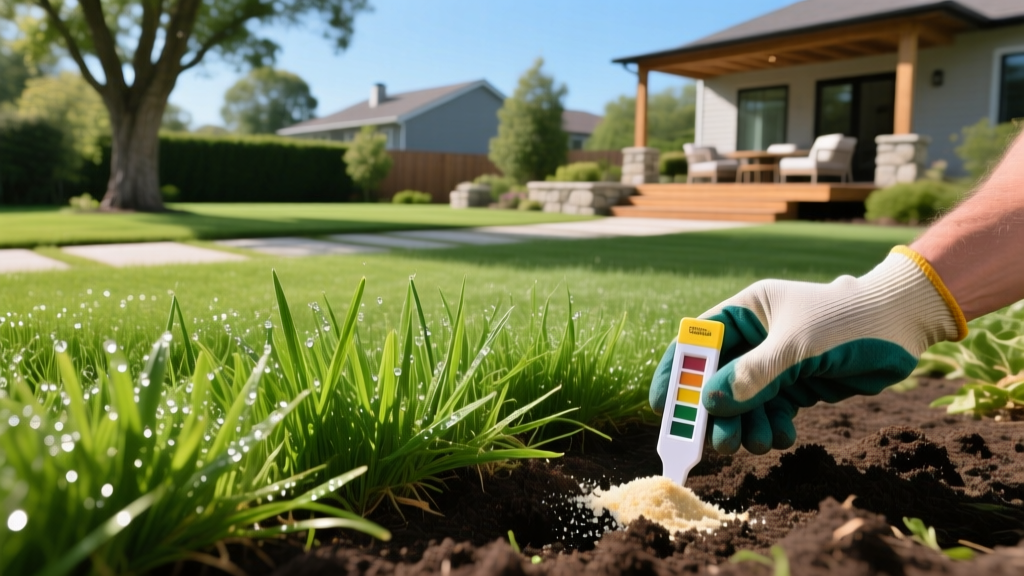
How to Reduce Soil pH in Lawns: Best Amendments & Techniques
The Hidden Cost of Alkaline Soil: Nutrient Lockout
When your lawn’s soil pH creeps above 7.5, a chemical phenomenon known as nutrient lockout occurs. Essential micronutrients—specifically iron, manganese, and zinc—bind to calcium and become chemically unavailable to grassroots. The result is severe iron chlorosis, characterized by yellowing leaf tissue with distinct green veins, stunted root growth, and an inability to recover from summer heat stress. Understanding how to reduce soil pH effectively requires more than just dumping vinegar on the grass; it demands a strategic, chemistry-based approach to soil amendment and long-term mulching.
⚠️ Critical Warning: Never attempt to acidify your lawn without a laboratory-verified soil test. Guessing your pH can lead to over-application of sulfur, which causes severe salt burn and destroys soil microbiology.
Step 1: Precision Soil Testing and Buffer pH
Before selecting an amendment, you must determine both your active soil pH and your buffer pH (the soil's resistance to change). Soils high in clay and organic matter have a high cation exchange capacity (CEC) and require significantly more acidifying agents than sandy soils to achieve the same pH drop.
- Recommended Test Kit: MySoil Professional Test Kit ($29.99) or the Luster Leaf Rapitest Digital Soil Meter ($18.50) for quick active-pH field checks.
- Target pH Ranges: Cool-season grasses (Kentucky Bluegrass, Tall Fescue) thrive at 6.0–7.0. Warm-season grasses (Bermudagrass, Zoysia) tolerate up to 7.2, but struggle immensely above 7.8.
According to the University of Minnesota Extension, soils with a high lime content (calcium carbonate) will actively neutralize added acids, meaning you must first deplete the free lime before the pH will actually drop.
Step 2: Selecting Your Acidifying Amendment
There is no single 'best' product; the right choice depends on your timeline, budget, and soil type. Below is a decision matrix for the most effective soil acidifiers used in professional turf management.
| Amendment | Speed of Action | Max Rate (per 1,000 sq ft) | Est. Cost | Primary Risk |
|---|---|---|---|---|
| Elemental Sulfur | Slow (6–12 months) | 2.0 lbs | $15 / 5 lbs | Salt burn if over-applied |
| Aluminum Sulfate | Instant (1–2 weeks) | 5.0 lbs | $25 / 10 lbs | Aluminum toxicity to roots |
| Ammonium Sulfate (21-0-0) | Moderate (3–6 weeks) | 3.0 lbs | $20 / 20 lbs | Nitrogen burn in high heat |
| Sphagnum Peat Moss | Slow (Season-long) | 1 bale (topdress) | $18 / bale | Hydrophobic if dried out |
Step 3: Application Protocols and the '2-Pound Rule'
Elemental sulfur is the gold standard for long-term pH reduction. It works through a biological process: soil bacteria (Thiobacillus thiooxidans) oxidize the sulfur into sulfuric acid, which then neutralizes alkalinity. Because this relies on bacterial activity, elemental sulfur only works when soil temperatures are consistently above 55°F and the soil is moist.
The 2-Pound Rule
Never apply more than 2 pounds of elemental sulfur per 1,000 square feet in a single application. Exceeding this threshold causes a rapid spike in soil salinity, leading to root desiccation and severe turf burn. If your soil test indicates you need 6 pounds per 1,000 square feet to reach your target pH, you must split the application into three separate treatments spaced 8 to 10 weeks apart during the spring and fall growing seasons.
Long-Term pH Maintenance via Organic Mulches
Once you have lowered the pH with sulfur or acidifying fertilizers, you must maintain it. Irrigation water in many western and midwestern municipalities is highly alkaline (often pH 8.0+), which will continuously push your soil pH back up. Incorporating acidifying organic mulches into your lawn care routine buffers this effect.
💡 Pro-Tip: Mulch Selection Matters
Avoid using mushroom compost or composted hardwood bark on alkaline lawns. These materials are rich in calcium carbonate and will actively raise your soil pH. Instead, utilize the following acidifying amendments:
Avoid using mushroom compost or composted hardwood bark on alkaline lawns. These materials are rich in calcium carbonate and will actively raise your soil pH. Instead, utilize the following acidifying amendments:
- Pine Needle Mulch (pH 3.5 - 4.5): Excellent for top-dressing bare patches before overseeding. As the needles break down, they release mild organic acids.
- Oak Leaf Mold (pH 4.5 - 5.5): Shredded oak leaves decompose slowly and provide a steady, year-round acidifying effect while improving soil structure.
- Composted Pine Bark (pH 4.0 - 5.0): Ideal for mixing into the top 2 inches of soil during lawn renovation or aeration. It lowers pH while increasing the soil's cation exchange capacity (CEC).
Troubleshooting Severe Iron Chlorosis While Waiting for Sulfur
Because elemental sulfur takes up to a year to fully react, your lawn may still suffer from iron chlorosis in the interim. To bypass the high-pH soil lockout, apply chelated iron. Standard iron sulfate will immediately lock up in alkaline soil, rendering it useless. You must use Fe-EDDHA chelated iron (such as Southern Ag Chelated Liquid Iron or Monterey Dr. Iron), which remains bioavailable to grass roots even in soils with a pH up to 9.0. Apply at a rate of 2 to 3 ounces per 1,000 square feet as a foliar spray every 21 days during the growing season until the sulfur has sufficiently lowered the baseline pH.
Frequently Asked Questions
Can I use white vinegar to lower my lawn's soil pH?
No. While vinegar (acetic acid) temporarily lowers the pH of water, it lacks the buffering capacity to alter the soil chemistry. It will also indiscriminately kill soil microbes and burn grass blades upon contact. Stick to elemental sulfur or ammonium sulfate for safe, lasting results.
Does coffee grounds mulch reduce soil pH?
This is a common myth. While fresh, unbrewed coffee grounds are acidic (pH ~5.5), spent coffee grounds that have been brewed are nearly neutral (pH 6.5–6.8). According to research highlighted by NC State Extension, relying on spent coffee grounds will not provide the acidifying power needed to correct highly alkaline turf soils.
How often should I re-test my soil pH after applying sulfur?
Wait at least 6 months after your final sulfur application before pulling new soil cores. Testing too early will only measure the active pH in the immediate root zone and will not reflect the full chemical reaction occurring deeper in the soil profile.

