
Lawn Care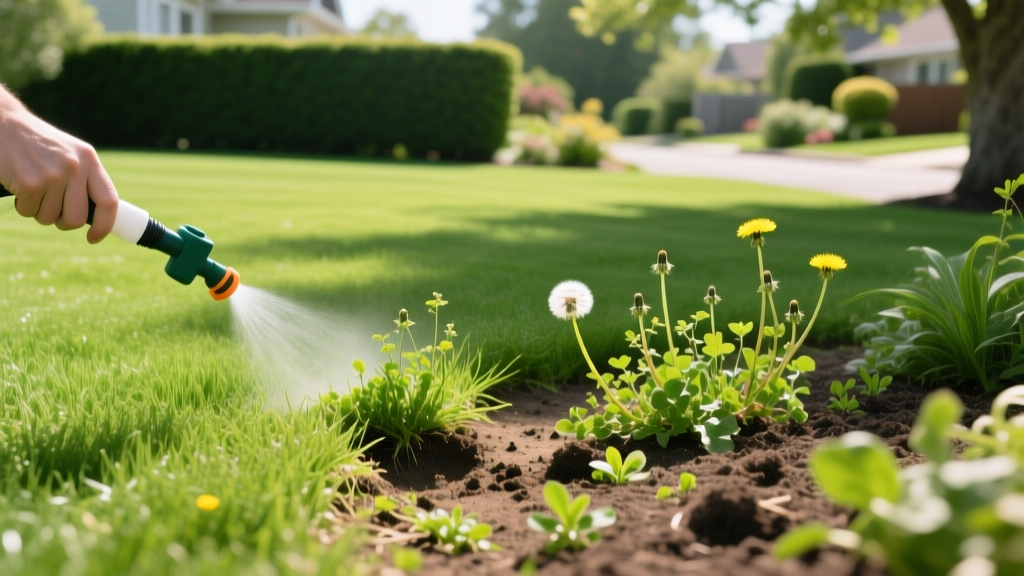
Reducing Weed Cover: Spot-Treatment for Creeping Lawn Invaders
Managing a lawn with scattered broadleaf and grassy infestations requires a shift from blanket applications to precision targeting. When evaluating your turf, the primary metric to assess is your overall weed cover—the percentage of the lawn's surface area occupied by non-turf species. Transitioning to a spot-treatment strategy not only preserves the soil microbiome but drastically reduces herbicide expenditure and environmental runoff.
The 20% Rule: Assessing Your Lawn's Weed Cover
Turfgrass scientists utilize the weed cover threshold to determine the most economically and ecologically viable control method. The general consensus among agronomists is the 20% rule. If your lawn's weed cover is below 20%, broadcast spraying is inefficient and wasteful. Spot-treatment is the mandated protocol. Once weed cover exceeds 30% to 40%, the turf canopy is compromised, and a broadcast application or complete lawn renovation becomes necessary.
Decision Matrix: Spot vs. Broadcast Application
- 0% - 20% Weed Cover: Strict spot-treatment. Use a 1-gallon hand sprayer or sponge applicator. Focus on perimeter edges and microclimates.
- 21% - 30% Weed Cover: Hybrid approach. Spot-treat dense patches; apply pre-emergent granular broadcast to prevent new germination.
- 31% - 50% Weed Cover: Broadcast post-emergent application followed by immediate overseeding and core aeration.
- 50%+ Weed Cover: Total vegetation control (glyphosate/glufosinate), soil amendment, and full renovation.
Identifying the 'Big Three' Ground-Cover Weeds
Creeping weeds are the primary drivers of high weed cover in residential lawns. They reproduce vegetatively via stolons and rhizomes, allowing a single plant to colonize dozens of square feet in a single growing season. Accurate identification dictates the chemical protocol.
1. Creeping Charlie (Ground Ivy)
Glechoma hederacea is a perennial broadleaf weed that thrives in shaded, moist areas but will aggressively invade full sun. It features scalloped, coin-shaped leaves and emits a distinct minty odor when crushed. Because it spreads via above-ground stolons that root at the nodes, pulling it manually usually leaves root fragments behind, guaranteeing regrowth.
2. White Clover
Trifolium repens is a nitrogen-fixing perennial that indicates low soil nitrogen levels. It features trifoliate leaves (three leaflets) often marked with a white 'V' chevron. Clover forms dense, low-growing mats that choke out cool-season grasses like Kentucky Bluegrass and Tall Fescue during summer stress.
3. Prostrate Spurge
Euphorbia supina is a summer annual that capitalizes on thin, heat-stressed turf. It features small, opposite leaves with a distinct red spot in the center and exudes a milky, toxic sap when the stem is broken. Unlike the perennials above, spurge relies entirely on seed production, making late-summer spot-treatment critical before seed set.
Precision Spot-Treatment Protocols & Chemistry
Effective spot-treatment relies on selecting the correct active ingredient (AI) and utilizing a surfactant to break the surface tension of the weed's waxy cuticle. According to NC State TurfFiles, applying herbicide without a surfactant can reduce efficacy by up to 40% on mature broadleaf weeds.
| Target Weed | Primary Active Ingredients | Surfactant Requirement | Optimal Timing |
|---|---|---|---|
| Creeping Charlie | Triclopyr + 2,4-D + Dicamba | NIS at 0.25% v/v | Early Fall (Post-Labor Day) |
| White Clover | Dicamba + MCPP + 2,4-D | NIS at 0.25% v/v | Spring or Early Fall |
| Prostrate Spurge | Sulfentrazone + Quinclorac | Crop Oil Concentrate (COC) | Early Summer (Pre-Seed) |
The Surfactant Multiplier
For Triclopyr-heavy mixes targeting Creeping Charlie, a Non-Ionic Surfactant (NIS) is mandatory. The standard mixing rate is 0.25% v/v, which translates to exactly 1 teaspoon of NIS per 1 gallon of mixed herbicide. For waxy summer annuals like spurge, a Crop Oil Concentrate (COC) at 1% v/v (2.5 tablespoons per gallon) is required to penetrate the thick cuticle.
Warning: Dicamba Volatilization
When spot-treating clover or ground ivy with Dicamba-based products (like SpeedZone or Trimec), never apply when ambient temperatures exceed 85°F. Dicamba is highly volatile at high temperatures and will vaporize, drifting onto and severely damaging nearby ornamental shrubs, tomato plants, and flower beds. Apply in the early morning when temperatures are below 80°F.
When spot-treating clover or ground ivy with Dicamba-based products (like SpeedZone or Trimec), never apply when ambient temperatures exceed 85°F. Dicamba is highly volatile at high temperatures and will vaporize, drifting onto and severely damaging nearby ornamental shrubs, tomato plants, and flower beds. Apply in the early morning when temperatures are below 80°F.
Equipment for Targeted Application
The goal of spot-treating is to coat the weed's foliage to the point of runoff without drenching the surrounding desirable turf. Using the wrong equipment leads to over-application and turf burn.
- 1-Gallon Pump Sprayer with Adjustable Nozzle: Use a sprayer like the Chapin ProSeries. Adjust the brass nozzle to a solid stream or narrow cone rather than a wide mist. This prevents wind drift and allows you to 'paint' the herbicide directly onto the weed cluster.
- Sponge Wiper Applicators: For lawns with severe weed cover intermixed with highly sensitive turf (like St. Augustinegrass), use a sponge-tipped herbicide wand. This physically wipes the chemical onto the broadleaf weed without any aerosolized drift.
- Dye Marker: Add 1/4 teaspoon of turf-marking dye (brilliant blue) to your tank mix. This provides visual confirmation of your spray pattern, ensuring you do not double-spray the same weed cluster, which can cause soil residual toxicity.
Cost Analysis: Spot-Treatment vs. Broadcast
Transitioning from broadcast to spot-treatment yields immediate financial benefits, particularly for homeowners maintaining lawns between 5,000 and 10,000 square feet. Below is a comparative cost analysis per 1,000 square feet of treated area, based on 2026 professional-grade concentrate pricing.
| Application Method | Herbicide Cost | Surfactant Cost | Total Cost per 1,000 sq ft |
|---|---|---|---|
| Broadcast (Blanket) | $3.50 | $0.80 | $4.30 |
| Spot-Treatment (15% cover) | $0.52 | $0.12 | $0.64 |
By restricting applications only to areas with active weed cover, homeowners reduce their chemical spend by approximately 85% per application cycle, while simultaneously minimizing the selection pressure that leads to herbicide-resistant weed biotypes.
Frequently Asked Questions
How long after spot-treating weed cover can I mow?
Wait a minimum of 48 hours before mowing. Systemic herbicides like Triclopyr and 2,4-D require time to translocate from the leaf tissue down into the root system. Mowing too soon removes the treated foliage, effectively rendering the application useless and allowing the creeping weed to regenerate from its root reserves.
Can I spot-treat weeds when the lawn is dormant?
Spot-treating during winter dormancy is highly effective for cool-season lawns (Fescue, Bluegrass). Weeds like henbit and chickweed remain actively growing when the turf is dormant. Because the grass is not actively metabolizing, you can use slightly higher rates of non-selective herbicides like glyphosate at a 1.5% solution to spot-treat winter annuals without harming the dormant turf. The University of Minnesota Extension recommends this technique for late fall and early spring cleanup.
Why did my clover turn yellow but not die after spot-treatment?
Clover has a deep, extensive taproot and a high tolerance for 2,4-D alone. If the weed turned yellow but recovered, the product you used likely lacked Dicamba or MCPP. You must use a three-way or four-way broadleaf herbicide. Furthermore, ensure you applied the mix with a surfactant; without it, the chemical rolls off the clover's hydrophobic leaf surface.
For more comprehensive guidance on establishing a healthy turf canopy that naturally resists weed invasion, consult the EPA's Safe Pest Control guidelines regarding integrated weed management and soil health optimization.

