
Lawn Care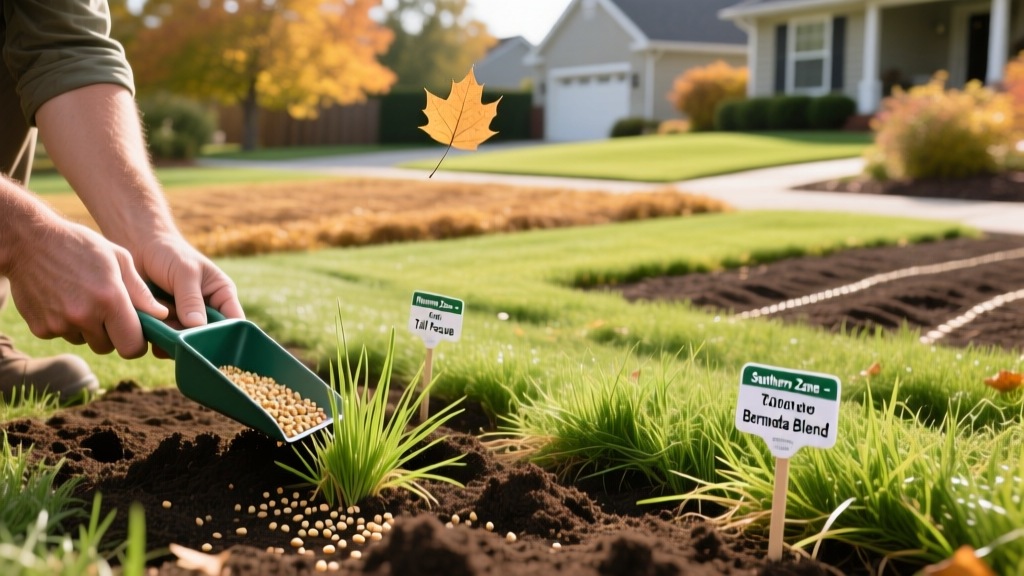
Planting Grass in Fall: Regional Timing Calendars & Seed Selection Guide
Planting grass in fall is universally recognized by turfgrass agronomists as the optimal window for establishing cool-season lawns. Unlike spring seeding, which pits fragile seedlings against aggressive summer annual weeds and heat stress, autumn provides warm soil, cool air, and predictable rainfall. However, the phrase 'fall planting' is highly relative. A homeowner in USDA Zone 4 has a drastically different planting calendar than one in Zone 7. Success relies entirely on aligning your seed drop with specific soil temperature thresholds and regional first-frost dates.
The Science of Soil Temperature: The True Trigger for Germination
Most homeowners make the mistake of watching the air temperature to decide when to seed. Turfgrass seeds do not care about air temperature; they respond exclusively to soil temperature at the root zone. For cool-season grasses like Kentucky Bluegrass, Tall Fescue, and Perennial Ryegrass, the ideal soil temperature for germination is between 50°F and 65°F (10°C to 18°C) measured at a depth of 2 inches.
Pro Tip: Purchase a dedicated soil probe thermometer (such as the REOTEMP J15 Soil Thermometer). Insert it 2 inches into the soil in the late morning. If the soil is above 70°F, wait. If it drops below 45°F, the window has closed, and seeds will sit dormant until spring, risking frost heave and seed rot.
According to Penn State Extension, planting when soil temperatures are in this sweet spot allows the root system to establish deeply before the ground freezes. The warm soil acts as an incubator, while the cooler ambient air prevents the heat stress and fungal diseases (like Pythium blight) that routinely destroy spring-seeded lawns.
Regional Fall Planting Calendar by USDA Hardiness Zone
Timing your seed application requires working backward from your region's average first frost date. You need a minimum of 45 to 60 days of active growth before a hard freeze. Below is a targeted calendar for planting grass in fall across major climate zones.
| USDA Zone | Primary Regions | Optimal Seeding Window | Avg. First Frost | Latest Safe Planting Date |
|---|---|---|---|---|
| Zone 3-4 | Northern MN, ND, ME | Aug 10 – Aug 25 | Sept 15 - 25 | August 30 |
| Zone 5-6 | Midwest, NY, PA, MA | Aug 20 – Sept 15 | Oct 10 - 25 | September 20 |
| Zone 7-8 | Transition Zone, VA, NC | Sept 1 – Sept 30 | Nov 1 - 15 | October 10 |
| Zone 9-10 | Deep South (Warm-Season) | Oct 15 – Nov 15 (Overseeding) | Rare / Dec 15 | November 20 |
Note for the Transition Zone (Zones 7-8): This region requires careful cultivar selection. Tall Fescue is highly recommended here due to its superior heat and drought tolerance compared to Kentucky Bluegrass, as noted by the UMass Amherst Turf Program.
Exact Seeding Rates & Cultivar Selection
Guessing your seeding rate leads to either sparse turf (inviting weeds) or overcrowded seedlings that succumb to damping-off disease. Always calibrate your spreader to match the specific species you are planting.
Cool-Season Seeding Rates (Per 1,000 Sq. Ft.)
- Tall Fescue: 6 to 8 lbs. (Use for high-traffic, drought-prone areas. Cultivar recommendation: 'Titan Ultra' or 'Raptor III').
- Kentucky Bluegrass (KBG): 1.5 to 2 lbs. (KBG seeds are tiny; over-applying is a common, costly mistake. Cultivar recommendation: 'Midnight' or 'Award').
- Perennial Ryegrass: 5 to 6 lbs. (Excellent for rapid germination and erosion control. Cultivar recommendation: 'Manhattan 7').
- Fine Fescue: 3 to 5 lbs. (Best for heavily shaded areas where other grasses fail. Cultivar recommendation: 'Shoreline' Creeping Red Fescue).
Pre-Emergent Herbicide Warning: Never apply standard pre-emergent crabgrass preventers (like Pendimethalin or Dithiopyr) within 60 days before or after seeding. They will kill your grass seed. If weed pressure is severe, use a selective pre-emergent containing mesotrione (e.g., Tenacity), which is explicitly labeled as safe for use during cool-season grass seeding.
Step-by-Step Seedbed Preparation Protocol
The physical condition of the soil dictates germination success just as much as timing. Follow this exact preparation sequence three to four weeks before your target seeding date.
- Core Aeration: Pull 3-inch deep soil plugs on 2-inch centers. This relieves summer compaction and creates micro-depressions for seed-to-soil contact.
- Soil Amendment: Based on a recent soil test, apply lime if pH is below 6.2, or elemental sulfur if pH is above 7.2. Turfgrass nutrients become chemically locked up outside the 6.2–7.0 pH range.
- Starter Fertilizer Application: Apply a high-phosphorus starter fertilizer (e.g., Scotts Turf Builder Starter Food 24-25-4) at a rate of 1 lb of actual nitrogen per 1,000 sq. ft. Phosphorus is critical for early root development.
- Seed Distribution: Split your seed in half. Apply the first half walking North-to-South, and the second half walking East-to-West. This cross-hatching prevents striping and bare spots.
- Topdressing & Rolling: Drag a piece of chain-link fence or a leveling rake over the lawn to cover the seed with 1/8 inch of soil. Follow with a light lawn roller filled halfway with water to press the seed firmly into the soil matrix.
Post-Planting Watering & Winterization
Once the seed is in the ground, moisture management is your primary job. Grass seed must remain continuously moist until the radicle (first root) anchors into the soil.
The 3-Phase Watering Schedule
Phase 1: Germination (Days 1-14)
Water lightly 2 to 3 times per day for 10-15 minutes per zone. The goal is to keep the top 1 inch of soil damp, not muddy. If the seed dries out for even a few hours during this phase, the sprouting embryo will die.
Phase 2: Establishment (Days 15-30)
As seedlings reach 1 inch tall, reduce watering frequency to once per day, but increase the duration to 20-30 minutes. This encourages roots to chase the moisture deeper into the soil profile.
Phase 3: Deep Rooting (Days 30-Winter)
Transition to standard deep-and-infrequent watering (1 inch of water per week, applied in 1 or 2 sessions). Continue watering your newly established lawn well into late fall until the ground freezes. A hydrated lawn enters winter dormancy with higher cellular sugar concentrations, acting as natural antifreeze against winter desiccation.
First Mow and Winter Prep
Wait to mow until the new grass reaches 3.5 inches tall. Set your mower deck to 3 inches and ensure the blade is freshly sharpened to avoid tearing fragile seedlings. Do not apply broadleaf weed killers (like 2,4-D) until the new grass has been mowed at least three times, as young turf lacks the metabolic capacity to process herbicides without suffering severe phytotoxicity.
By adhering to these regional timelines, soil temperature metrics, and exact agronomic rates, you bypass the common pitfalls of autumn lawn renovation and establish a dense, deeply rooted turf capable of surviving the following summer's heat.

