
Lawn Care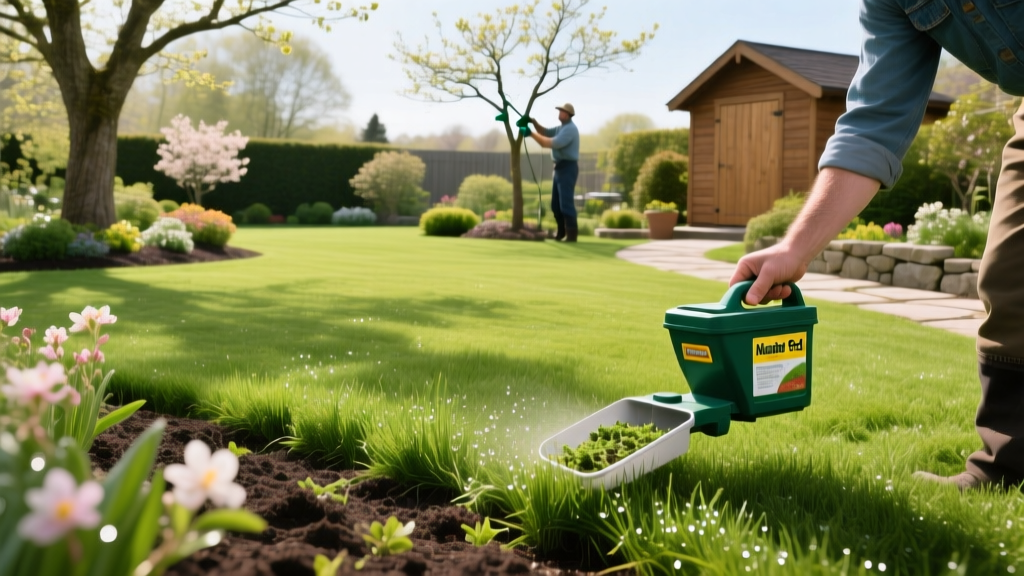
Best Time to Apply Weed and Feed: Regional Timing Calendar
The single most common reason lawn care treatments fail is not the product itself, but the calendar. Homeowners frequently ask when the best time to apply weed and feed is, expecting a simple month-based answer. However, turfgrass biology does not operate on the Gregorian calendar; it operates on soil temperature and daylight hours. Applying a 2,4-D and dicamba-based herbicide combined with high-nitrogen fertilizer at the wrong physiological stage will either burn your turf or fail to kill the target weeds.
According to the NC State Turfgrass Program, synchronizing your application with the active growth cycles of both your specific grass species and the target weeds is mandatory for efficacy. This guide breaks down the exact environmental triggers, regional calendars, and product-specific protocols required for a successful application.
The Great Misconception: Post-Emergent vs. Pre-Emergent
Before determining the timing, you must clarify which product you are actually holding. The retail industry loosely uses the term 'weed and feed' to describe two chemically distinct categories. Confusing them is the primary cause of spring lawn failures.
- True Weed & Feed (Post-Emergent): Contains broadleaf killers (2,4-D, dicamba, MCPP, quinclorac) mixed with soluble nitrogen. These granules must physically stick to the leaves of actively growing, visible weeds (like dandelions and clover) to be absorbed. Timing depends on weed foliage presence.
- Crabgrass Preventer + Fertilizer (Pre-Emergent): Contains prodiamine or dithiopyr. This creates a chemical barrier in the top 1-inch of soil to stop weed seeds from germinating. Timing depends strictly on soil temperature, regardless of visible weeds.
Information Gain: If you apply a post-emergent 'Weed & Feed' in early March to prevent crabgrass, you will waste your money. Post-emergents do not stop seed germination. Conversely, applying a pre-emergent in May to kill existing dandelions will fail, as pre-emergents only affect seeds, not mature root systems.
The Soil Temperature Trigger
Air temperature is a misleading metric. A 70°F sunny day in late winter does not mean the soil is ready. You must measure soil temperature at a 2-inch depth using a digital soil probe thermometer.
Critical Temperature Thresholds
- 50°F to 55°F (Soil): Pre-emergent crabgrass preventers must be applied and watered in before soil temps hit 55°F for three consecutive days.
- 65°F to 75°F (Soil): The ideal window for post-emergent broadleaf Weed & Feed. Weeds are actively translocating nutrients (and herbicides) down to their roots, and cool-season grasses can handle the nitrogen flush without excessive heat stress.
Regional Timing Calendars by Grass Type
The University of Minnesota Extension emphasizes that regional transition zones require highly localized timing. Use the matrix below to identify your optimal application windows based on your primary turfgrass species.
| Region / Grass Type | Spring Post-Emergent Window | Fall Post-Emergent Window | Primary Target Weeds |
|---|---|---|---|
| North (Kentucky Bluegrass, Tall Fescue, Perennial Ryegrass) | Late May to Mid-June (Soil >60°F) | Early Sept to Mid-Oct | Dandelion, Clover, Plantain |
| Transition Zone (Tall Fescue, Zoysia, Bermuda mix) | Mid-April to Early May | Late Sept to Early Nov | Chickweed, Henbit, Dandelion |
| South (Bermuda, St. Augustine, Zoysia, Centipede) | March to Early April (Post-green-up) | Not Recommended (Use standalone herbicides) | Dollarweed, Spurge, Goosegrass |
Product Selection and Cost Breakdown
Not all weed and feed formulations are created equal. The active ingredient profile dictates which weeds will die and which grasses might suffer phytotoxicity (chemical burn).
Top Tier Formulations (2026 Market Pricing)
- Scotts Turf Builder Weed & Feed (Standard): Contains 2,4-D and Dicamba. Excellent for dandelions and clover in cool-season lawns. Cost: ~$42 for a 13.3k sq. ft. bag ($3.15 per 1,000 sq. ft.). Note: Do not use on St. Augustine or Centipede grass.
- Lesco Three-Way Herbicide + Fertilizer: Professional-grade formulation often including MCPP for tougher broadleaves like ground ivy. Cost: ~$55 for a 50lb bag (varies by regional distributor).
- BioAdvanced 3-in-1 Weed & Feed for Southern Lawns: Formulated with Penoxsulam and Sulfentrazone, specifically buffered to prevent burning St. Augustine and Centipede grasses. Cost: ~$38 for a 10k sq. ft. bag.
Warning: Never apply standard 2,4-D based weed and feed to Floratam St. Augustine or Centipede grass when temperatures exceed 85°F. The combination of the ester-based herbicide and high heat will cause severe turf melt and necrosis within 48 hours.
The 48-Hour Weather Rule & Application Protocol
Granular post-emergent weed and feed requires a specific moisture environment to work. The herbicide granules must dissolve on the leaf surface of the weed to be absorbed. If the grass is bone dry, the granules will bounce off the leaves and fall to the soil, where they are largely ineffective against broadleaf weeds.
Step-by-Step Execution Framework
- Check the Forecast: Ensure zero rain is expected for at least 48 hours post-application. Rain will wash the granules off the weed leaves before absorption occurs.
- Leverage Morning Dew: Apply between 6:00 AM and 9:00 AM when morning dew is present on the grass blades. The dew acts as the moisture agent to dissolve the granules on the weed foliage.
- Calibrate the Spreader: For a standard rotary spreader (e.g., Scotts EdgeGuard DLX), set the dial to 6.5 for most granular weed and feed products. Walk at a steady 3.0 MPH pace. Overlapping wheel tracks ensures even distribution and prevents striping.
- The Mowing Rule: Do not mow for 2 days before application (weeds need maximum leaf surface area to catch granules) and do not mow for 2 days after (allow time for systemic translocation to the weed roots).
- Sweep Hardscapes: Immediately sweep any granules off driveways and sidewalks. 2,4-D and Dicamba are highly toxic to aquatic ecosystems and will wash into storm drains if left on concrete.
Common Failure Modes and Troubleshooting
If your application did not yield results, diagnose the failure using these common edge cases:
- Symptom: Weeds turned yellow but didn't die. Cause: You applied during a drought. Weeds shut down their vascular systems during drought stress and do not translocate the herbicide to their roots. Wait for a rain event, let the weeds turgor up, and reapply.
- Symptom: Grass blades show brown tips and stunted growth. Cause: Spreader overlap error. You likely applied a double rate of nitrogen and herbicide in overlapping wheel tracks. Always use the edge-guard feature near landscape beds and turn the spreader off before stopping your walking motion.
- Symptom: Nutgrass (Yellow Nutsedge) is still thriving. Cause: Nutsedge is a sedge, not a broadleaf weed or a grass. Standard 2,4-D weed and feed will not kill it. You must purchase a standalone Halosulfuron-methyl (SedgeHammer) product for targeted treatment.
Frequently Asked Questions
Can I apply weed and feed and grass seed at the same time?
No. The herbicides in weed and feed (specifically 2,4-D and dicamba) do not distinguish between weed seeds and grass seeds. They will inhibit the germination and early root development of your new turf. You must wait at least 4 weeks after applying weed and feed before overseeding, or wait until the new grass has been mowed at least 3 times before applying herbicides.
Is liquid weed and feed better than granular?
For pure weed control, liquid applications using a pump sprayer are vastly superior because they guarantee complete foliar coverage. However, liquid herbicides do not contain the bulk nitrogen required to feed the lawn. Granular 'weed and feed' is a convenience product that combines two tasks, but professional turf managers typically separate the two: applying liquid herbicides for weeds and granular fertilizers for soil nutrition.
How long does it take to see results?
Under optimal conditions (65°F to 80°F with adequate soil moisture), you will see the leaves of broadleaf weeds begin to curl and cup within 48 to 72 hours. Complete root death and browning of the weed typically takes 10 to 14 days. Do not reapply if the weeds look twisted after 3 days; the systemic process is working.

