
Lawn Care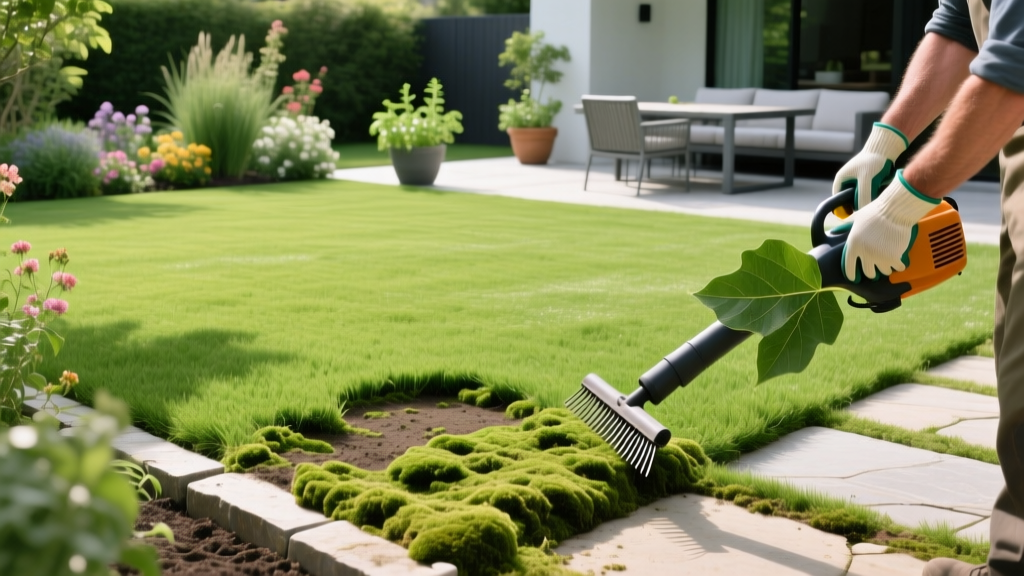
How to Remove Moss from Grass Lawn: The Complete Eradication Playbook
The Biology of Invasion: Why Moss is Winning
Moss (Bryophyta) is not a traditional weed; it is an opportunistic, non-vascular plant. It does not actively kill your turfgrass. Instead, it exploits the exact environmental voids left behind by failing grass. When you ask how to remove moss from grass lawn, you are actually asking how to fix the underlying soil and microclimate failures that allow moss to outcompete your turf.
According to turfgrass pathology research, moss thrives when four specific environmental thresholds are breached: soil pH drops below 5.5, soil bulk density exceeds 1.4 g/cm³ (severe compaction), direct sunlight falls below four hours daily, and surface drainage is impaired. Eradicating moss requires a systematic, three-phase playbook that addresses both the symptom (the moss itself) and the disease (the soil environment).
⚠️ Critical Warning: Never use a spike aerator on moss-prone lawns. Spike aerators push soil outward, increasing lateral compaction and worsening the exact drainage issues that cause moss. Always use a hollow-tine core aerator.
Phase 1: The Kill (Chemical and Mechanical Removal)
Before correcting the soil, you must eliminate the existing moss mat. While aggressive power-raking can physically remove moss, it often tears out healthy grass roots and fails to address microscopic moss spores. Chemical desiccation is the most effective first step.
Choosing Your Moss Killer
The two primary active ingredients for moss eradication are ferrous sulfate (iron) and potassium salts of fatty acids (insecticidal soaps). Here is how they compare in real-world application:
| Active Ingredient | Product Example | Application Rate | Cost (Approx.) | Pros & Cons |
|---|---|---|---|---|
| Ferrous Sulfate (Iron) | Lilly Miller Moss Out | 3–5 lbs per 1,000 sq ft | $20–$25 / 10 lbs | Pros: Turns moss black in 24-48 hrs; provides iron nutrient to grass. Cons: Stains concrete and stone instantly. |
| Potassium Salts of Fatty Acids | Safer Brand Moss Killer | 1 gallon per 1,000 sq ft (RTS) | $15–$18 / 32 oz | Pros: Won't stain hardscapes; safe near garden beds. Cons: Only a contact burner; no residual soil benefit. |
| Sodium Bicarbonate (DIY) | Arm & Hammer Baking Soda | 3 tbsp per gallon of water | $5 / 4 lbs | Pros: Cheap and accessible. Cons: Highly phytotoxic to grass; adds harmful sodium to soil. |
Execution Strategy: Apply granular ferrous sulfate when the lawn is damp and rain is not expected for 48 hours. The moss will turn black and brittle within two days. Once desiccated, use a stiff thatch rake to aggressively pull the dead moss mat out of the turf canopy, exposing the bare soil beneath.
Phase 2: The Fix (Soil Correction and Aeration)
Removing the moss leaves bare, compacted dirt. If you seed immediately without correcting the soil matrix, the moss will return within one growing season. The University of Minnesota Extension emphasizes that altering the soil pH and physical structure is mandatory for long-term turf survival.
Step 1: Core Aeration
Rent a walk-behind hollow-tine core aerator. Run it over the affected area in two perpendicular passes to extract 3-inch soil plugs spaced 2 to 3 inches apart. Leave the plugs on the lawn to break down naturally; they contain beneficial microbes that will help decompose the remaining thatch layer.
Step 2: pH Adjustment via Liming
Moss dominates in acidic soil (pH 5.0–5.5). Turfgrass requires a pH of 6.0–6.5 to unlock soil nutrients.
- Test First: Send a soil sample to your local university cooperative extension ($15–$30). Do not guess your pH.
- Apply Lime: If your pH is 5.5, you will typically need to apply 50 lbs of pelletized calcitic lime per 1,000 square feet to raise the pH by one full point.
- Timing: Apply lime immediately after aeration. The aeration holes allow the lime to penetrate the root zone rather than sitting uselessly on the surface.
💡 Pro Tip: If your soil test reveals high magnesium levels alongside low pH, use calcitic lime (calcium carbonate). If magnesium is low, use dolomitic lime. Applying dolomitic lime to already magnesium-heavy clay soil will cause severe nutrient lockout.
Phase 3: The Reclaim (Turf Rehabilitation)
With the moss removed and the soil corrected, you must re-establish a dense turf canopy to shade out future moss spores. The Oregon State University Extension Service notes that attempting to grow sun-loving grasses in shaded, moss-prone areas is the primary reason eradication efforts fail.
Selecting the Right Seed
For areas that receive less than six hours of direct sunlight, abandon Kentucky Bluegrass and Bermuda. Instead, overseed with a shade-tolerant mix:
- Fine Fescues (Chewings, Creeping Red, Hard Fescue): Require 40% less nitrogen than standard turf and thrive in low-light, low-fertility environments.
- Rough Bluegrass (Poa trivialis): Excellent for heavily shaded, consistently damp areas, though it may go dormant in peak summer heat.
Seeding Protocol: Apply a starter fertilizer (high in phosphorus, e.g., 10-18-10) at a rate of 3 lbs per 1,000 sq ft. Broadcast the seed at a rate of 5 to 6 lbs per 1,000 sq ft. Top-dress with a 1/4-inch layer of screened compost to retain moisture and protect the seed from birds. Water lightly twice daily for 14 days until germination occurs.
Troubleshooting Edge Cases: When Grass Simply Won't Grow
Sometimes, the microclimate is too extreme for any turfgrass to survive, making moss removal a futile, endless cycle. Evaluate these two scenarios:
The Dense Canopy Problem
If the moss is growing beneath a mature oak or maple tree, the soil is likely subjected to both dense shade and severe moisture competition from tree roots. If you cannot prune the lower canopy to allow at least 30% light penetration, stop fighting the moss. Instead, embrace the shade by removing the failing grass entirely and installing a shade-tolerant groundcover like Pachysandra terminalis or a 3-inch layer of shredded hardwood mulch.
The Heavy Clay Bowl
If the mossy area sits in a topographical depression where water pools for more than 12 hours after a rain event, aeration and lime will not save it. You must regrade the lawn. Use a landscaping rake to cut the high spots and fill the low spots, establishing a minimum 2% slope (a 2-inch drop per 10 feet of horizontal distance) away from the center of the depression to force surface runoff.
Long-Term Prevention Maintenance Schedule
To ensure the moss does not return, integrate these specific thresholds into your annual lawn care program:
- Mowing Height: Never scalp the lawn. Maintain a cutting height of 3.0 to 3.5 inches. Taller grass shades the soil surface, preventing moss spores from receiving the light they need to germinate.
- Irrigation: Switch from daily light watering (which keeps the surface perpetually damp and invites moss) to deep, infrequent watering. Apply 1 to 1.5 inches of water per week in a single or double session to force grass roots deep into the soil profile.
- Annual Aeration: Core aerate the lawn every fall. If your soil is heavy clay, aerate twice a year (spring and fall) to continually disrupt the compaction layer.
- Autumn Leaf Removal: Do not allow fallen leaves to mat on the lawn for more than one week. A wet leaf mat creates the exact dark, humid microclimate moss requires to establish winter colonies.
Playbook Summary: Successfully removing moss requires killing the existing mat with ferrous sulfate, physically raking it out, correcting the soil pH and compaction via lime and core aeration, and finally overseeding with fine fescues adapted to your specific light conditions. Treat the soil, not just the symptom.

