
Lawn Care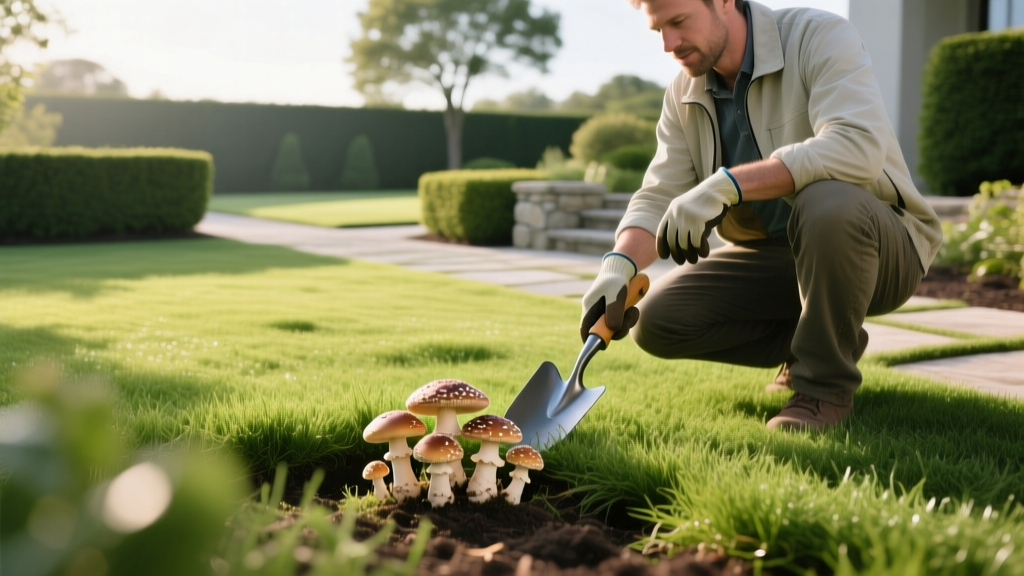
How to Eliminate Mushrooms in Lawn Grass: Step-by-Step Guide
The Root Cause: Why Fungi Invade Your Turf
Mushrooms in lawn grass are not the actual problem; they are merely the visible fruiting bodies of a vast, underground fungal network called mycelium. This mycelium feeds on decaying organic matter buried in your soil profile. When environmental conditions align—specifically high moisture, moderate temperatures (60°F to 80°F), and high humidity—the mycelium pushes mushrooms to the surface to release spores.
Diagnostic Insight: The presence of mushrooms actually indicates healthy, biologically active soil rich in organic matter. However, from a turf management perspective, they signal excessive moisture, poor drainage, or heavy thatch buildup that must be corrected to maintain a dense, usable lawn.
According to the University of Minnesota Extension, common triggers for fungal fruiting include buried construction debris (like wood stumps or form boards left behind by builders), excessive thatch layers exceeding 0.5 inches, and compacted soil that traps water near the root zone.
Step-by-Step Procedure to Remove Mushrooms in Lawn Grass
Eradicating mushrooms requires a multi-phase approach targeting the environment the mycelium needs to thrive. Follow these sequential maintenance procedures.
Step 1: Manual Extraction and Spore Disruption
While pulling mushrooms will not kill the underground mycelium, it prevents the release of millions of new spores into your turf canopy.
- Timing: Extract mushrooms early in the morning before the caps fully open and release spores.
- Technique: Grip the base of the stipe (stem) and twist gently to snap it off at the soil line. Avoid yanking, which leaves the base intact to regenerate quickly.
- Disposal: Immediately place extracted mushrooms in a sealed plastic bag. Do not compost them, as standard residential compost piles rarely reach the 140°F required to kill fungal spores.
Step 2: Core Aeration and Thatch Reduction
Mycelium thrives in anaerobic, compacted environments. Core aeration introduces oxygen to the soil profile, which accelerates the bacterial breakdown of the organic matter feeding the fungi.
Rent a walk-behind core aerator (such as a Ryan Lawnaire V or Classen CA-18H). Ensure the machine pulls actual soil plugs 2 to 3 inches deep and 0.5 to 0.75 inches in diameter. Leave the plugs on the lawn to dry and break down naturally; they contain beneficial microbes that help decompose thatch.
| Equipment | Average Cost | Frequency Needed |
|---|---|---|
| Walk-Behind Core Aerator (4-hour rental) | $85 - $115 | Annually (Fall/Spring) |
| Power Dethatcher (Vertical Mower) | $65 - $90 | As needed (Thatch > 0.5") |
| Manual Lawn Coring Shoes (Spike attachments) | $25 - $40 | Not recommended (Compacts soil laterally) |
Step 3: Correcting Soil Drainage and Moisture
Fungi require constant moisture to fruit. If your lawn stays wet for more than 12 hours after a rain event, you must alter your water management.
- Audit Sprinkler Heads: Ensure you are applying 1 to 1.5 inches of water per week, divided into two deep watering sessions rather than daily shallow sprinklings. Shallow watering keeps the top 1 inch of soil perpetually damp, creating an ideal fungal nursery.
- Prune Overhanging Canopy: Trim tree branches to allow at least 4 hours of direct sunlight to reach the turf. UV radiation naturally suppresses surface fungal growth and dries the soil profile faster.
- Address Low Spots: For depressions holding water, apply a topdressing of 70% washed river sand and 30% compost. Apply in 0.25-inch lifts, allowing the grass to grow through before adding more.
Step 4: Nitrogen Fertilization to Accelerate Decomposition
The mycelium is feeding on carbon-heavy organic matter (wood, roots, thatch). By introducing high-nitrogen fertilizer, you stimulate soil bacteria to outcompete the fungi and break down the carbon material faster.
- Application Rate: Apply 1.0 pound of actual nitrogen per 1,000 square feet.
- Product Selection: Use a fast-release nitrogen source like Urea (46-0-0) or a balanced turf fertilizer like Lesco 24-0-11. Avoid slow-release organic fertilizers (like Milorganite) in heavily infested areas, as they can temporarily feed the fungal network before breaking down.
Addressing Fairy Rings: A Specialized Fungal Threat
Sometimes mushrooms in lawn grass appear in distinct, expanding circles known as fairy rings. According to Penn State Extension, fairy rings are categorized into three distinct types, each requiring a specific remediation strategy.
Warning: Fairy rings are caused by wood-decaying Basidiomycetes. They are notoriously difficult to eradicate completely and often require a combination of cultural and chemical controls over multiple seasons.
| Ring Type | Visual Symptoms | Targeted Remediation Procedure |
|---|---|---|
| Type I | Ring of dead or dying grass; soil is hydrophobic (repels water). | Poke holes 6 inches deep inside and outside the ring. Apply a wetting agent (surfactant) like Aqua-Aid to break soil surface tension, then deep-water daily for 14 days. |
| Type II | Ring of dark green, rapidly growing grass (no dead zones). | The fungi are releasing excess nitrogen. Mask the ring by fertilizing the rest of the lawn to match the dark green color. Do not add extra nitrogen to the ring itself. |
| Type III | Ring of mushrooms or puffballs; no visible change to grass color. | Manually remove fruiting bodies. Apply a systemic fungicide (see below) and increase core aeration frequency to twice per season. |
Chemical Fungicides: Do They Work on Lawn Mushrooms?
"Fungicides do not kill the mycelium feeding on buried wood or thatch. They only suppress the formation of the fruiting bodies (mushrooms). Cultural practices that remove the food source or alter the moisture environment remain the only permanent solution." — Turfgrass Pathology Guidelines.
If cultural steps fail and you are dealing with persistent Type III fairy rings or nuisance mushrooms in high-traffic areas, professional-grade fungicides can suppress fruiting. Consumer-grade products (like copper sulfate or baking soda sprays) are largely ineffective against Basidiomycetes.
Active Ingredient Comparison
- Azoxystrobin (e.g., Syngenta Heritage SC): A broad-spectrum strobilurin fungicide. Highly effective at suppressing fairy ring fruiting. Cost is approximately $165 for a 2.5-gallon jug, making it an investment usually reserved for severe infestations or professional lawn care routes. Apply at 0.4 to 0.8 fl oz per 1,000 sq ft.
- Flutolanil (e.g., ProStar 70 WP): Specifically targets Basidiomycetes (the mushroom-forming fungi). Excellent for fairy rings but does not control common foliar diseases like dollar spot. Requires heavy watering immediately after application to move the chemical into the root zone where the mycelium lives.
- Propiconazole (e.g., Bayer Banner Maxx): A more affordable systemic option (~$60 per gallon). It offers moderate suppression of mushroom fruiting but is better utilized for leaf-spot diseases. Requires 3 to 4 applications spaced 21 days apart during peak fruiting season.
Preventative Maintenance Schedule
To ensure mushrooms in lawn grass do not return, integrate these specific tasks into your annual maintenance calendar:
- Early Spring: Perform a thatch check. If the thatch layer exceeds 0.5 inches, schedule power raking. Apply a pre-emergent herbicide, which has no effect on fungi but keeps the turf canopy thin enough to allow soil drying.
- Late Summer: Adjust irrigation controllers to reduce watering frequency as nighttime temperatures drop below 65°F. Fungi require warm days and cool, damp nights to trigger fruiting.
- Mid-Fall: Execute core aeration and apply a winterizer fertilizer high in potassium (e.g., 10-0-14) to strengthen turf cell walls against fungal pathogens.
By systematically removing the food source, altering the moisture profile, and utilizing targeted aeration, you can successfully eliminate mushrooms and reclaim a dense, uniform turf canopy.

