
Lawn Care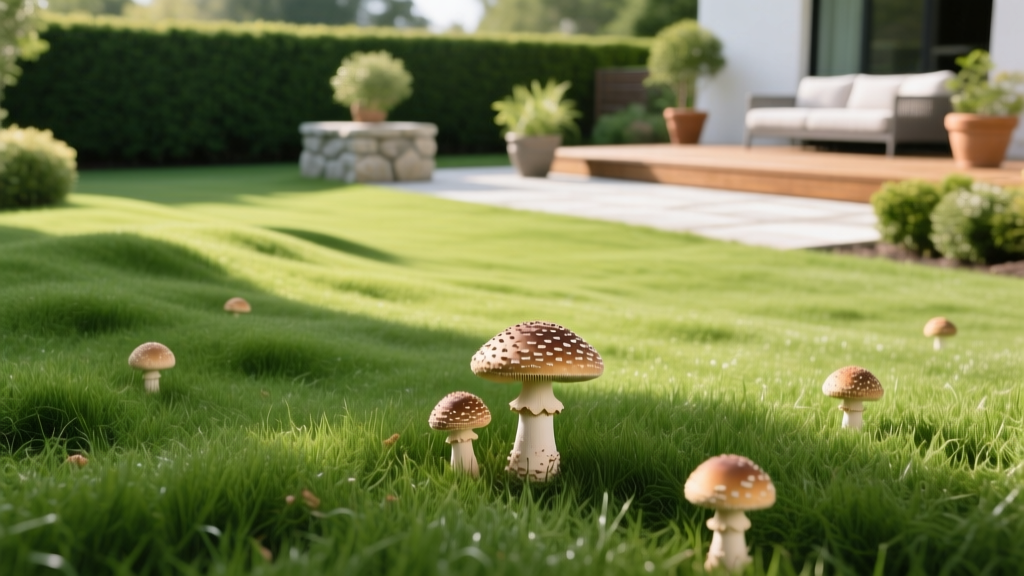
How to Get Rid of Toadstools in Lawn: The Complete Playbook
The Root Cause: Why Toadstools Invade Your Turf
Understanding how to get rid of toadstools in lawn requires shifting your perspective from treating a 'weed' to managing a subterranean fungal network. Toadstools and mushrooms are simply the fruiting bodies of mycelium—a massive, thread-like organism living in your soil. According to the University of Minnesota Extension, these fungi are actually beneficial decomposers. They break down buried organic matter like dead tree roots, construction lumber, and excessive thatch, recycling nutrients back into the soil.
However, when soil remains overly saturated, compacted, or heavily shaded, the mycelium produces above-ground toadstools to release spores. You cannot permanently eradicate the mycelium without destroying the soil ecosystem, but you can manipulate the environment to stop the fruiting bodies from emerging.
⚠️ The 'Fairy Ring' Warning: If your toadstools are growing in a perfect circle or arc, you are likely dealing with a Fairy Ring (caused by Marasmius oreades or similar basidiomycetes). Type 1 fairy rings create hydrophobic (water-repellent) soil, killing the grass inside the ring. These require aggressive, targeted intervention detailed in Step 4.
The 5-Step Toadstool Eradication Playbook
Step 1: Physical Removal and Spore Interruption
Do not wait for toadstools to open their caps and drop millions of spores. As soon as you spot them, kick them over or mow them down. If pulling them by hand, wear gardening gloves and dispose of them in the municipal yard waste bin, not your home compost pile, as residential compost rarely reaches the 140°F required to kill fungal spores.
Step 2: Thatch Management and Core Aeration
Fungi thrive in the spongy, moisture-retaining layer of thatch. Measure your thatch layer using a soil probe or a sharp spade. If the thatch exceeds 0.5 inches, schedule a power dethatching session. Following dethatching, perform core aeration to pull 3-inch soil plugs. This breaks up compacted clay, allowing the topsoil to dry out faster between waterings. Fungi require constant moisture to fruit; drying the top 2 inches of soil halts toadstool production.
Step 3: Alter the Carbon-to-Nitrogen (C:N) Ratio
This is the most overlooked strategy in lawn care. Fungi feed on high-carbon materials (wood, roots, thatch). By introducing high-nitrogen fertilizer, you stimulate soil bacteria to outcompete the fungi for resources, accelerating the decomposition of the wood and starving the mycelium. Apply a fast-release nitrogen fertilizer (such as a 46-0-0 Urea or 30-0-0 Ammonium Sulfate) at a rate of 1 lb of actual nitrogen per 1,000 square feet. Water it in immediately to push the nitrogen into the root zone where the mycelium operates.
Step 4: Deep, Infrequent Irrigation
Frequent, shallow watering keeps the surface damp, triggering fungal fruiting. Transition to deep, infrequent watering. Apply 1 to 1.5 inches of water per week, split into just two sessions (e.g., 0.75 inches on Tuesday and Saturday). This forces turf roots to grow deeper while allowing the surface soil to dry completely in the intervening days.
Step 5: Targeted Fungicide Application (For Severe Cases)
For persistent fairy rings or severe basidiomycete outbreaks that resist cultural controls, professional-grade fungicides are required. Note that standard consumer fungicides (like Myclobutanil) are largely ineffective against the specific fungi that produce lawn toadstools.
Fungicide Comparison Matrix for Lawn Fungi
| Active Ingredient | Brand Example | Approx. Cost | Efficacy on Toadstools |
|---|---|---|---|
| Azoxystrobin | Heritage G | $90 - $120 | High (Best for Fairy Rings) |
| Flutolanil | ProStar 70 WP | $140 - $160 | High (Targets Basidiomycetes) |
| Propiconazole | Banner MAXX | $60 - $80 | Moderate (Broad Spectrum) |
| Myclobutanil | Immunox (Consumer) | $15 - $25 | Low (Ineffective on Toadstools) |
Note: When applying Azoxystrobin or Flutolanil for fairy rings, you must water the product in with at least 0.25 inches of irrigation immediately after application to move the active ingredient into the thatch and upper soil profile where the mycelium resides.
Debunking DIY Toadstool Killers
The internet is saturated with ineffective home remedies for mushroom removal. Here is the scientific reality of why these fail:
- Vinegar (Acetic Acid): Spraying vinegar will burn the grass blades and melt the visible toadstool cap, but it does not penetrate the soil to kill the mycelium. The toadstools will return after the next rain.
- Bleach Solutions: Bleach destroys local soil biology, harms earthworms, and can create toxic salt buildup in the root zone. It is highly detrimental to turf health and fails to reach deep fungal networks.
- Baking Soda: While baking soda (sodium bicarbonate) can alter surface pH and inhibit some foliar diseases like powdery mildew, it has zero curative effect on deep-rooted soil basidiomycetes.
Preventative Maintenance Schedule
To ensure toadstools do not return, implement this seasonal checklist based on turfgrass science recommendations from NC State University Turf Pathology:
- Early Spring: Apply a pre-emergent and a high-nitrogen fertilizer to stimulate bacterial decomposition of winter thatch.
- Summer: Monitor irrigation. Use a rain sensor to prevent overwatering during humid, rainy weeks. Prune lower tree branches to increase sunlight penetration and airflow, reducing surface humidity.
- Early Fall: Perform core aeration and top-dress with a thin layer of coarse sand to improve soil drainage and prevent future compaction.
- Late Fall: Remove all fallen leaves and organic debris promptly. Wet, matted leaves create the perfect microclimate for fungal fruiting.
By focusing on soil drainage, thatch reduction, and nitrogen management, you will naturally suppress the mycelium's ability to produce toadstools, resulting in a cleaner, healthier lawn without relying on harsh, ineffective chemicals.

