
Lawn Care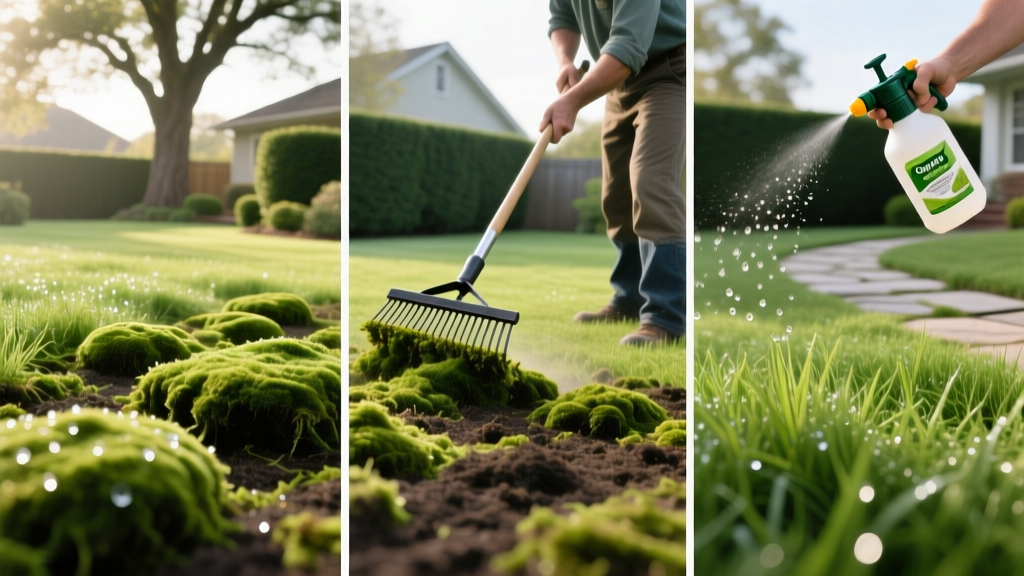
Removing Moss From Grass Lawn: Step-by-Step Eradication Guide
Moss is not a weed; it is an opportunistic ground cover that thrives exactly where turfgrass fails. Simply applying a chemical killer without addressing the underlying soil chemistry and environmental deficits guarantees the moss will return within a single growing season. Successfully removing moss from grass lawn environments requires a systematic approach that shifts the ecological advantage back to your turf. This guide details the precise agronomic steps, product measurements, and timelines required to eradicate moss and establish a dense, resilient turf canopy.
The Root Cause Matrix: Why Moss Invades Your Turf
Before purchasing any treatments, you must identify why the moss established in the first place. Moss outcompetes grass when the soil environment becomes hostile to turf roots. Use this diagnostic matrix to identify your primary deficit.
| Symptom / Condition | Primary Cause | Agronomic Correction |
|---|---|---|
| Soil pH below 5.5 | High acidity locking up nutrients | Apply dolomitic lime (50 lbs / 1,000 sq ft) |
| Standing water > 12 hours | Severe compaction or clay hardpan | Core aeration + topdress with coarse sand |
| Less than 4 hours direct sun | Dense tree canopy shading | Arborist pruning to raise canopy to 20% light |
| Thatch layer > 0.5 inches | Over-fertilization, lack of microbes | Power dethatching + compost tea application |
Step 1: Diagnose and Test Before You Treat
Do not guess your soil pH. Moss thrives in acidic conditions (pH 5.0 to 5.5), while most cool- and warm-season turfgrasses require a pH between 6.2 and 6.8 for optimal nutrient uptake.
Pro Tip: Skip the hardware store liquid test kits, which are notoriously inaccurate. Send a $20-$30 soil sample to a university extension lab or a private lab like Logan Labs. Request a standard agronomic test that includes buffer pH, which tells you exactly how much lime is required to shift your soil chemistry.
Step 2: Eradicate Existing Moss (Chemical Desiccation)
Once you have your soil test results, the immediate physical task is killing the existing moss mat. The most effective, cost-efficient, and widely available active ingredient for this is ferrous sulfate monohydrate (often sold as 15-20% iron sulfate).
Application Specifications for Ferrous Sulfate
- Product Recommendation: Lilly Miller Moss Out for Lawns or generic agricultural ferrous sulfate.
- Application Rate: 4 to 5 lbs per 1,000 square feet.
- Spreader Setting: For a Scotts EdgeGuard broadcast spreader, use setting 6.5.
- Timing: Apply when temperatures are between 55°F and 75°F, and rain is not expected for 48 hours.
Ferrous sulfate works via rapid desiccation. It will burn the moss, turning it from vibrant green to necrotic black within 24 to 48 hours. According to the University of Minnesota Extension, iron-based treatments are highly effective but must be applied carefully, as they will permanently stain concrete driveways, sidewalks, and stone patios an orange-brown rust color. Sweep any granules off hardscapes immediately after application.
Step 3: Physical Removal and Scarification
A critical mistake homeowners make is raking the moss immediately after it turns black. Wait 10 to 14 days. Allow the dead moss to dry out completely. If you rake it while wet, you will smear the decaying organic matter into the soil profile, creating a muddy barrier that prevents grass seed from making soil contact.
- Manual Raking (Under 1,000 sq ft): Use a rigid steel thatching rake with curved tines. Pull aggressively to extract the dead moss and the upper 1/4 inch of thatch.
- Power Dethatching (Over 1,000 sq ft): Rent a walk-behind power rake (dethatcher) with flail blades. Set the blade depth so it barely scratches the soil surface—about 1/4 inch deep. Setting it too deep will rip out the crowns of your surviving turfgrass.
- Debris Disposal: Bag the removed moss. Do not compost it unless your compost pile reaches 140°F, as moss spores can survive ambient decomposition temperatures.
Step 4: Correct the Underlying Environmental Deficits
With the physical moss removed, the soil is exposed. You must now alter the environment so grass outcompetes any remaining moss spores. The Royal Horticultural Society emphasizes that long-term moss control relies entirely on improving turf vigor through cultural practices rather than repeated chemical applications.
Core Aeration and Soil Amendment
If your soil is compacted, rent a gas-powered core aerator. The machine must pull actual soil plugs (cores) that are 2 to 3 inches long and 0.5 inches wide. Aim for 20 to 40 holes per square foot by making two passes in perpendicular directions. Leave the soil plugs on the lawn to break down naturally; they contain beneficial microbes that will help decompose the remaining thatch layer.
Liming for pH Correction
If your soil test indicated a pH below 6.0, apply pelletized dolomitic lime. Dolomitic lime is preferred over calcitic lime because it supplies both calcium and magnesium, addressing the nutrient lockout caused by acidic soils. Apply no more than 50 lbs per 1,000 square feet in a single application to avoid inducing a magnesium-induced potassium deficiency.
Step 5: Overseed and Re-establish the Canopy
Moss fills voids. If you do not fill the bare soil with desirable turfgrass immediately, moss or broadleaf weeds will recolonize within weeks.
- Seed Selection: For shaded areas where moss previously thrived, use a premium shade mix heavy in Chewings fescue and creeping red fescue. These fine-bladed grasses require less sunlight and establish dense root mats that physically choke out moss spores.
- Seeding Rate: Apply 4 to 6 lbs of seed per 1,000 square feet for overseeding existing thin lawns.
- Starter Fertilizer: Apply a high-phosphorus starter fertilizer (e.g., 10-18-10 NPK) at the time of seeding to accelerate root development. Phosphorus is critical for the early establishment of fine fescues.
- Moisture Management: Water the newly seeded areas lightly 2 to 3 times daily for the first 14 days to keep the top 1/2 inch of soil consistently moist, but never waterlogged.
Warning on Pre-Emergent Herbicides: Do not apply crabgrass pre-emergents (like prodiamine or dithiopyr) within 60 days before or after overseeding. These chemicals create a barrier in the soil that will inhibit the germination of your new grass seed just as effectively as they stop weeds.
Estimated Cost Breakdown for a 5,000 sq ft Lawn
Budgeting for a complete moss eradication and renovation requires accounting for both materials and equipment rentals. Here is a realistic cost estimate for a mid-sized lawn:
| Item / Service | Estimated Cost |
|---|---|
| Professional Lab Soil Test | $25.00 |
| Ferrous Sulfate (20 lbs) | $35.00 |
| Walk-Behind Power Rake Rental (4 hours) | $65.00 |
| Core Aerator Rental (4 hours) | $75.00 |
| Dolomitic Lime (100 lbs) | $20.00 |
| Premium Shade Grass Seed (20 lbs) | $110.00 |
| Starter Fertilizer (15 lbs) | $25.00 |
| Total Estimated DIY Cost | $355.00 |
'The secret to permanent moss control is not a stronger chemical; it is a stronger turf. When grass roots occupy the soil profile and the canopy intercepts the sunlight, moss simply has nowhere to establish.'
By following this exact sequence—testing, desiccating, raking, amending, and overseeding—you shift the ecological balance of your lawn. The initial labor is intensive, but the resulting dense, deep-rooted turf canopy will naturally suppress moss for years to come, reducing your long-term maintenance to standard mowing and seasonal fertilization.

