
Lawn Care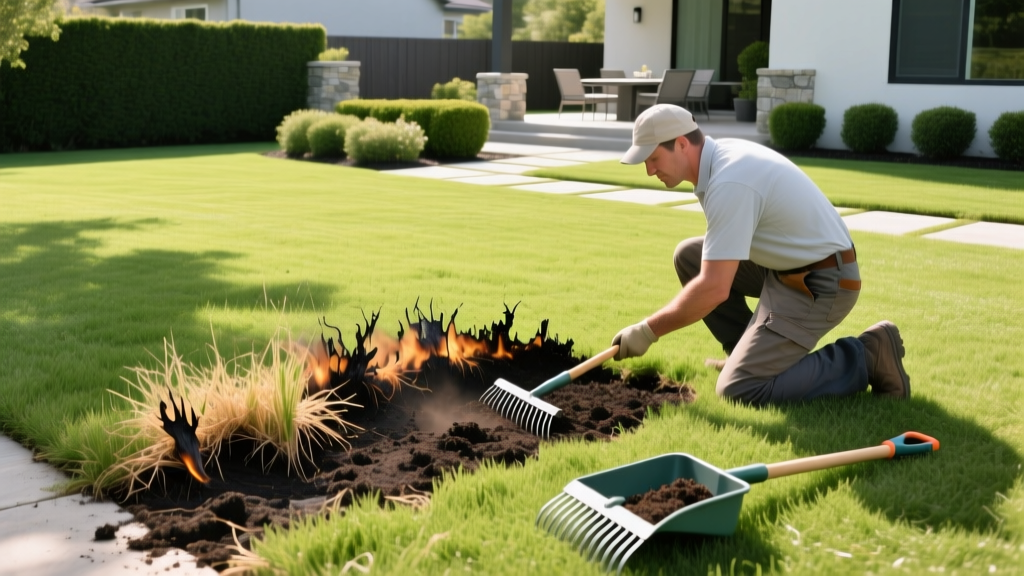
How to Fix Burnt Grass: Step-by-Step Recovery Protocol
The Diagnostic Matrix: Dead vs. Dormant vs. Burnt
Before applying any treatments, you must accurately diagnose the cause of the brown patches. Burnt grass is rarely a singular issue; it is a symptom of severe abiotic stress, typically stemming from fertilizer salt toxicity, extreme heat-induced dormancy, or localized nitrogen overload from pet urine. Misidentifying the cause will lead to wasted resources and further turf decline.
Perform the Tug Test and Crown Inspection. Grab a handful of the brown grass and pull gently. If it lifts effortlessly with no root resistance, the turf is dead and requires renovation. If it resists, use a knife to slice into the soil and examine the crown (the base of the plant where roots and shoots meet). A firm, white or pale green crown indicates the grass is dormant or mildly stressed and can be revived. A mushy, brown, or black crown indicates fatal tissue necrosis.
| Cause | Visual Symptom | Root/Crown Condition | Immediate Action Required |
|---|---|---|---|
| Fertilizer Burn | Brown tips with yellow halos; uniform streaking matching application paths. | Roots appear stubby, brown, and desiccated. Crown is stressed but intact. | Aggressive soil flushing to leach soluble salts. |
| Heat/Drought Stress | Overall bluish-gray tint before turning brown; footprints remain on grass. | Roots are deep but dry. Crown is hard and pale green (dormant). | Deep, infrequent watering cycles to break dormancy. |
| Dog Urine Spots | Brown dead centers surrounded by a dark green, rapidly growing outer ring. | Center crown is completely necrotic (dead). Outer ring roots are healthy. | Flush center, rake dead tissue, and spot-seed. |
Step-by-Step Recovery Protocol
According to University of Minnesota Extension guidelines, reviving a damaged lawn requires a phased approach that prioritizes soil chemistry correction before introducing new seed or synthetic nutrients. Follow this exact sequence to maximize turf recovery.
Step 1: Leach Soluble Salts (For Fertilizer & Urine Burn)
Fertilizer burn occurs when excess soluble salts in the soil create an osmotic imbalance, literally pulling water out of the grass roots via reverse osmosis. To fix this, you must leach the salts below the root zone (typically 6 to 8 inches deep).
- The Math: Applying 1 inch of water equals 0.62 gallons per square foot. For a 500-square-foot burnt patch, you need to apply roughly 310 gallons of water.
- The Schedule: Apply 1 inch of water daily for 5 to 7 consecutive days. Do not flood the lawn to the point of surface runoff; use a low-flow sprinkler to allow the water to percolate deeply into the soil profile.
- Surfactant Application: If the soil is hydrophobic (repels water), apply a liquid soil wetting agent like Simple Lawn Solutions Liquid Aerating Loosener ($25 per 32oz bottle) prior to watering to ensure the moisture penetrates compacted clay layers.
Step 2: Relieve Soil Compaction and Hydrophobicity
Once the salts are leached and the soil is moist (but not saturated), perform core aeration. This is critical for burnt grass because heat stress and chemical burns often degrade soil microbial activity, leading to compacted, lifeless dirt.
- Equipment: Rent a walk-behind core aerator with 3-inch hollow tines (typically $85 to $110 per day from major hardware stores).
- Execution: Make two passes over the damaged area, with the second pass at a 45-degree angle to the first. Leave the extracted soil cores on the lawn to break down naturally; they contain beneficial microbes that will help re-inoculate the damaged turf.
Step 3: Slit-Seed and Topdress
If the crown inspection revealed dead tissue, broadcasting seed over the surface will yield a germination rate of less than 15%. You must ensure seed-to-soil contact.
- Rake: Use a metal thatch rake to aggressively remove the dead brown blades, exposing the bare soil.
- Slit-Seed: Use a mechanical slit-seeder calibrated to drop 6 to 8 lbs of seed per 1,000 square feet for Tall Fescue, or 2 to 3 lbs for Kentucky Bluegrass. The machine's blades will cut shallow furrows and drop the seed directly into them.
- Topdress: Apply a 1/4-inch layer of screened compost or peat moss over the seeded area. This retains moisture and protects the seed from birds and UV degradation. Avoid using straw, which often introduces weed seeds and competes for nitrogen as it decomposes.
Step 4: Apply Bio-Stimulants (Avoid Synthetic Nitrogen)
Applying high-nitrogen synthetic fertilizers (like a standard 30-0-10 blend) to recovering burnt grass will trigger a secondary salt burn and shock the fragile new root systems. Instead, utilize bio-stimulants to encourage root elongation and reduce abiotic stress.
According to research highlighted by Nebraska Extension Turfgrass Science, humic and fulvic acids act as natural chelators, improving the turf's ability to absorb existing soil nutrients without adding dangerous salt loads. Apply a liquid humic acid supplement (such as Simple Lawn Solutions Liquid Humic Fulvic Acid, ~$35/gallon) at a rate of 3 ounces per 1,000 square feet every 14 days until the grass has fully re-established its green color.
⚠️ CRITICAL WARNING: Herbicide Interference
Do NOT apply pre-emergent herbicides (such as Prodiamine or Dithiopyr) to areas where you are attempting to revive or reseed burnt grass. Pre-emergents work by inhibiting cell division in germinating seeds; they cannot distinguish between crabgrass and your expensive turfgrass seed. Wait until the new grass has been mowed at least three times before applying any chemical weed control. For post-emergent broadleaf weeds in recovering areas, rely on manual hand-pulling to avoid chemical stress on the fragile turf.
Recovery Cost and Timeline Breakdown
Budgeting for lawn recovery requires understanding the difference between DIY labor and professional intervention. Below is a realistic cost matrix for a DIY homeowner tackling 1,000 square feet of moderately burnt lawn.
| Recovery Phase | Materials & Equipment | Estimated Cost (per 1,000 sq ft) | Expected Timeline |
|---|---|---|---|
| Soil Flushing | Water usage (municipal rates vary) | $2.00 - $5.00 | Days 1-7 |
| Core Aeration | Walk-behind aerator rental (split daily rate) | $45.00 - $60.00 | Day 8 |
| Seeding & Topdressing | Premium seed (3 lbs) + Screened compost (0.25 cubic yards) | $35.00 - $50.00 | Day 9 |
| Bio-Stimulants | Liquid Humic/Fulvic Acid + Wetting Agent | $15.00 - $25.00 | Days 10-45 |
| Total DIY Cost | Complete Recovery Protocol | $97.00 - $140.00 | 4 to 6 Weeks |
Troubleshooting FAQ
Will burnt grass from dog urine grow back?
The dark green outer ring will thrive, but the dead brown center will not recover on its own. Dog urine contains extremely high concentrations of urea (nitrogen) and salts, which cause localized fertilizer burn. Once the crown tissue in the center turns brown and mushy, it is dead. You must rake out the dead thatch, flush the soil with 3 gallons of water to dilute the remaining salts, and spot-seed the center using a shade-tolerant or high-traffic seed blend that matches your existing lawn.
Can I apply a starter fertilizer immediately after seeding burnt patches?
Only if the soil has been thoroughly flushed of previous salts. If the burn was caused by drought or heat, a starter fertilizer (like Jonathan Green Black Beauty Starter 12-18-8) is highly beneficial for promoting rapid root development. However, if the burn was caused by a previous fertilizer overdose, skip the synthetic starter fertilizer entirely for the first 30 days. Rely on the compost topdressing and humic acid to provide gentle, slow-release nutrition that will not shock the germinating seeds.
How do I prevent mower-induced burnt grass during summer heat?
Mowing stressed grass tears the leaf blades rather than cutting them cleanly, leading to rapid moisture loss and brown, burnt tips. During peak summer temperatures (above 85°F), raise your mower deck to a minimum of 3.5 to 4 inches. Taller grass shades the soil, reducing evaporation and keeping the root zone up to 10°F cooler. Additionally, ensure your mower blades are sharpened every 25 hours of use; a dull blade will shred the turf, leaving it vulnerable to fungal pathogens like brown patch and dollar spot. For more on safe chemical handling and environmental protection during lawn treatments, always consult the EPA Safe Pest Control guidelines.

