
Lawn Care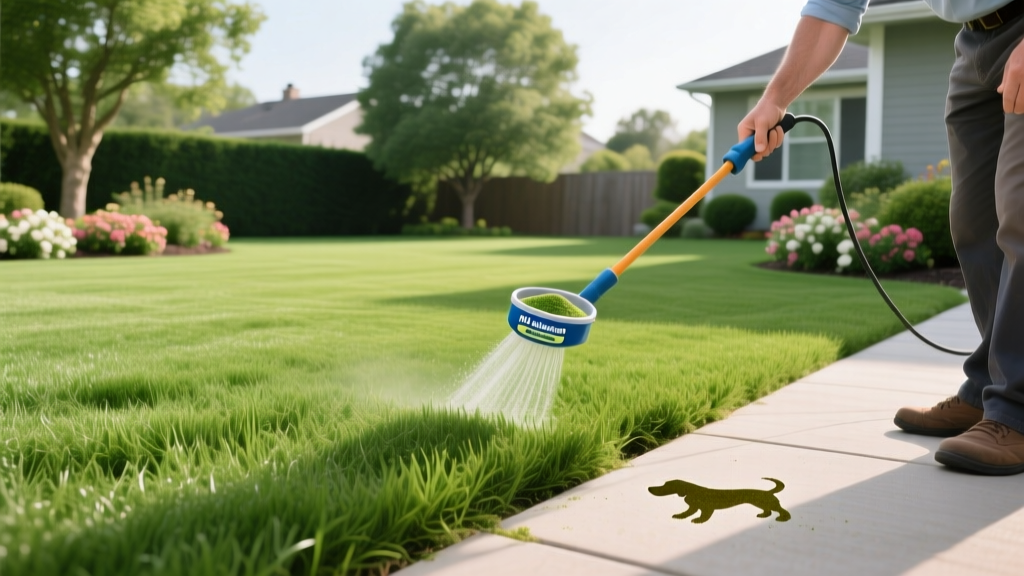
How to Stop Dog Pee Burning Grass: Step-by-Step Lawn Fix
The Chemistry of the Burn: Why pH Modifiers Fail
The most persistent myth in lawn care is that dog urine burns grass because it is too acidic. This is chemically false. The average pH of canine urine ranges from 6.0 to 6.5, which is slightly acidic to neutral and perfectly safe for turfgrass. The actual culprit behind dog pee burning grass is a massive, localized overload of urea (nitrogen) and salts.
When a dog urinates, it deposits the equivalent of 10 to 15 pounds of nitrogen per 1,000 square feet into a tiny 10-inch circle. Soil urease enzymes rapidly convert this urea into ammonia, which then oxidizes into nitrate. This sudden spike causes osmotic shock—the high salt concentration literally draws moisture out of the grass roots, resulting in the classic necrotic yellow center surrounded by a dark green ring of stimulated growth.
⚠️ CRITICAL WARNING: The Baking Soda Myth
Do not apply baking soda, lime, or tomato juice to your dog's water or the lawn. These attempt to alter urine pH, which does not prevent nitrogen burns. Furthermore, altering a dog's urine pH through unregulated supplements can trigger life-threatening struvite or calcium oxalate bladder stones. Always consult a veterinarian before changing your dog's diet.
Phase 1: The 8-Hour Dilution Protocol
The only way to prevent a fresh urination spot from turning into a dead patch is immediate, deep dilution. You must push the concentrated salts below the active root zone (the top 6 inches of soil) before osmotic shock occurs.
- Time the Flush: You have an 8-hour window after urination to dilute the spot. After 8 hours, the urea has already converted to ammonia and root damage is underway.
- Volume Requirements: A light sprinkle from a watering can is insufficient. You must apply 1.5 to 2 gallons of water directly to the 10-inch impact zone. This volume is required to physically leach the salts down to 8-10 inches deep.
- Tool Selection: Keep a dedicated 2-gallon pump sprayer (filled only with water) near your back door for immediate deployment, or use a hose-end spray nozzle set to a 'shower' pattern to avoid soil compaction.
Phase 2: Soil Cation Exchange & Neutralization
For spots that were not diluted in time, or for lawns suffering from chronic, overlapping urine damage, you must repair the soil's Cation Exchange Capacity (CEC). Dog urine is high in sodium and potassium salts, which bind tightly to clay and organic matter, locking out essential nutrients like calcium and magnesium.
To displace these salts, we utilize calcium sulfate (gypsum). The calcium ions are stronger than sodium ions; they kick the sodium off the soil particles, allowing it to be flushed away by subsequent irrigation.
| Amendment | Application Rate | Mechanism of Action |
|---|---|---|
| Pelleted Gypsum (Calcium Sulfate) | 40 lbs per 1,000 sq ft | Displaces sodium from soil cation exchange sites; improves soil porosity for better salt leaching. |
| Liquid Humic Acid (e.g., N-EXT Humic12) | 3 oz per 1,000 sq ft | Chelates (binds) excess salts and heavy metals, buffering the root zone and stimulating microbial recovery. |
| Granular Biochar | 10 lbs per 1,000 sq ft | Acts as a permanent sponge in the soil profile, absorbing excess nitrogen spikes and retaining moisture. |
Procedure: Apply gypsum and biochar using a broadcast spreader. Water immediately with 0.5 inches of irrigation to drive the amendments into the soil profile. Follow up two weeks later with a liquid humic acid application via a hose-end sprayer.
Phase 3: Overseeding with Urine-Resistant Cultivars
If the grass is already dead (brown and brittle), no amount of gypsum will resurrect it. You must physically remove the dead tissue and reseed. However, not all grasses handle nitrogen and salt loads equally. According to turfgrass research from institutions like the University of Minnesota Extension, selecting the right species is your best long-term defense.
Grass Species Tolerance Matrix
- 🟢 Tall Fescue (High Tolerance): Deep root system (up to 3 feet) allows it to access water below the salt-concentrated topsoil. Look for rhizomatous cultivars like 'Titan Ultra' or 'Raptor IV'.
- 🟢 Perennial Ryegrass (High Tolerance): Germinates in 5-7 days, making it the ultimate patch-repair seed. It thrives on high nitrogen loads. Cultivars like 'Palmer IV' or 'Caddyshack' are excellent choices.
- 🟡 Bermudagrass (Moderate Tolerance): As a warm-season grass, it handles nitrogen well but can suffer from the salt component of urine. Requires frequent, deep watering to flush salts.
- 🔴 Kentucky Bluegrass (Low Tolerance): Highly susceptible to urea burns. If your lawn is predominantly KBG, you must implement strict behavioral training or transition to a fescue blend.
The Reseeding Procedure: 1. Rake out the dead thatch aggressively using a steel thatch rake. 2. Scarify the bare soil to a depth of 1/4 inch to ensure seed-to-soil contact. 3. Apply a starter fertilizer high in phosphorus (e.g., 18-24-12) to promote rapid root establishment. 4. Sow Perennial Ryegrass at a rate of 5 lbs per 1,000 sq ft. 5. Topdress with 1/4 inch of screened compost and keep moist (watering 3x daily for 5 minutes) until germination occurs.
Phase 4: Behavioral & Dietary Interventions
Lawn care professionals and veterinary experts, including guidelines published by the American Kennel Club (AKC), emphasize that managing the source is just as critical as treating the soil.
Hydration Hacks
The more diluted the urine, the lower the nitrogen concentration. Instead of dangerous pH-altering pills, increase your dog's water intake naturally: • Add 4 to 8 ounces of low-sodium, onion-free bone broth to their dry kibble. • Switch to a high-moisture wet food diet or rehydrate freeze-dried raw diets. • Use a pet water fountain to encourage frequent drinking throughout the day.
Hardscaping a Potty Zone
The ultimate step-by-step fix for chronic dog pee burning grass is spatial management. Construct a designated 4x4 foot potty area in a low-visibility corner of the yard. 1. Excavate the area to a depth of 4 inches. 2. Lay down heavy-duty landscape fabric. 3. Fill with 2 inches of washed drainage gravel, topped with 2 inches of smooth river rock or pea gravel. 4. Train your dog to use this spot on a leash, rewarding heavily with high-value treats immediately upon completion.
Frequently Asked Questions
Will adding vitamin C to my dog's diet stop the grass from burning?
No. While Vitamin C (ascorbic acid) will lower the pH of the urine, it will not reduce the urea or salt content. The grass will still burn from nitrogen toxicity, and artificially acidifying the urine increases the risk of calcium oxalate kidney stones in certain breeds.
How long does it take for gypsum to fix urine-burned soil?
Gypsum begins displacing sodium immediately upon dissolving, but visible turf recovery takes 3 to 4 weeks. You must water the area deeply after application to flush the displaced sodium salts out of the root zone.
Can I use clover instead of grass to avoid burn spots?
Microclover (Trifolium repens var. Pirouette) is highly resistant to dog urine burns because it fixes its own atmospheric nitrogen and doesn't rely on soil nitrogen in the same way turfgrasses do. Blending 5% microclover seed into your existing fescue lawn is an excellent, low-maintenance strategy for dog owners.

