
Lawn Care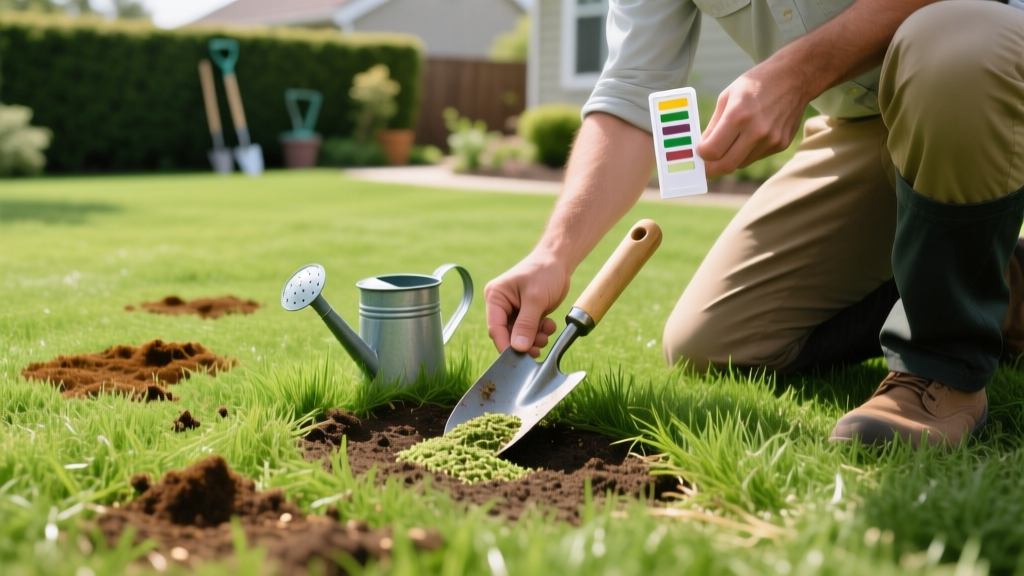
Diagnose and Repair Dog Pee Spots on Grass: Rescue Fixes
Symptom Diagnosis: Is It Dog Urine or a Lawn Disease?
Before applying any rescue treatments, you must confirm that the necrotic patches in your turf are actually caused by canine urine. Misdiagnosing a fungal infection as urine burn will lead to wasted time and incorrect chemical applications. Dog pee spots on grass present a highly specific visual signature due to the localized concentration of urea and soluble salts.
| Symptom Feature | Dog Urine Burn | Brown Patch Fungus | Chinch Bug Damage |
|---|---|---|---|
| Patch Shape | Perfectly circular, 3 to 8 inches wide | Irregular, expanding concentric rings | Irregular, jagged yellow-to-brown areas |
| Border Edge | Distinct dark green 'halo' of stimulated growth | Dark 'smoke ring' border on outer edge | Gradual fading, no distinct border |
| Location Pattern | Random, often near fences, trees, or pathways | Low-lying, poorly drained, or shaded areas | Hot, dry, south-facing slopes or near driveways |
| Odor Test | Faint ammonia scent when turf is wet | Musty, earthy, or moldy scent | No distinct odor |
The Science of the Burn: Nitrogen Overload vs. The pH Myth
A pervasive myth in lawn care is that dog urine kills grass because it is too acidic, leading homeowners to feed their dogs tomato juice or baking soda to alter their pet's urine pH. According to veterinary and turfgrass experts, this is entirely incorrect and potentially dangerous to your pet's urinary tract health.
⚠️ Warning: The pH Myth
Normal dog urine pH ranges from 6.0 to 6.5, which is actually ideal for most turfgrasses. The burn is caused by nitrogen overload and osmotic shock from soluble salts, not acidity. Altering your dog's diet with unregulated supplements to change urine pH can trigger the formation of struvite or calcium oxalate bladder stones, leading to severe veterinary emergencies.
When a dog urinates, it deposits a massive dose of liquid nitrogen (urea) into a small 4-inch radius. While nitrogen is a primary component of lawn fertilizer, this localized spike overwhelms the grass's cellular capacity, essentially 'fertilizer-burning' the roots and crown. The dark green halo surrounding the dead center is the result of the urine's outer edges diluting just enough to act as a perfect nitrogen fertilizer, stimulating rapid, dark growth.
Immediate Rescue Protocol (0 to 48 Hours)
If you catch your dog in the act or notice a fresh, wet spot, you have a narrow window to prevent cellular death in the turfgrass. The goal is to push the urea and salts below the root zone before they are absorbed by the grass blades and crown.
- The 2-Hour Rule: You must dilute the spot within two hours of deposition. After this window, the salts begin to draw moisture out of the grass roots via osmosis.
- Volume over Pressure: Do not use a high-pressure hose nozzle, which will wash away topsoil and seed. Use a watering can to apply exactly 1.5 to 2 gallons of water directly over the spot.
- Surfactant Addition: If your soil is highly compacted or hydrophobic (water beads up on the surface), add 1 teaspoon of liquid humic acid or a gentle, non-toxic surfactant (like yucca extract) to the watering can. This breaks the water's surface tension, allowing it to penetrate the soil profile and carry the urea down past the 4-inch root zone.
Long-Term Repair for Dead Spots (1 to 4 Weeks)
If the grass has already turned brown and the crown is dead, dilution will no longer save it. You must physically remediate the soil chemistry before attempting to reseed, or the residual salts will kill the new grass seedlings.
Step 1: Soil Flushing and Cation Exchange
Rake out the dead thatch and necrotic grass down to bare soil. Next, apply pelletized gypsum (calcium sulfate) at a rate of 2 lbs per 10 square feet. Gypsum is critical here because the calcium ions displace the sodium salts left behind by the urine from the soil's cation exchange capacity (CEC). Products like Espoma Organic Garden Gypsum (typically $16 for a 50 lb bag in 2026) are highly effective. Water the gypsum in deeply with 1 inch of water to flush the displaced salts below the root zone.
Step 2: Reseeding with Tolerant Blends
Wait 48 hours after the gypsum application before seeding. For repair patches, avoid Kentucky Bluegrass, which is highly susceptible to urea burn. Instead, use a Tall Fescue or Perennial Ryegrass blend. Jonathan Green Black Beauty Ultra (approx. $48 for 10 lbs) contains deep-rooting fescues that naturally dilute soil salts and recover faster from localized stress.
- Seed Rate: Apply 8 to 10 seeds per square inch in the bare patch.
- Topdressing: Cover with 1/4 inch of peat moss or screened compost to retain moisture.
- Germination Watering: Water lightly 3 times a day for 14 days to keep the seed bed consistently moist but not waterlogged.
Grass Species Urine Tolerance Matrix
Not all turfgrasses react to canine urine equally. If you are planning a full lawn renovation and own dogs, selecting the right seed or sod is your best long-term defense. The following matrix ranks common North American turfgrasses by their biological tolerance to urea and salt concentrations.
| Grass Species | Urine Tolerance | Recovery Mechanism | Best Climate Zone |
|---|---|---|---|
| Tall Fescue | High | Deep root system (up to 3 feet) dilutes salts naturally. | Transition Zone & Cool-Season |
| Perennial Ryegrass | Moderate-High | Extremely fast germination (5-7 days) for rapid patch repair. | Cool-Season & Northern |
| Bermudagrass | Moderate | Aggressive lateral spread via stolons fills in dead spots quickly. | Warm-Season & Southern |
| Zoysia | Low-Moderate | Dense thatch layer can trap salts; slow recovery rate. | Transition & Warm-Season |
| Kentucky Bluegrass | Low | Shallow roots absorb concentrated urea directly; burns easily. | Cool-Season & Northern |
| Fine Fescue | Very Low | Thin blades and shallow roots; highly susceptible to osmotic shock. | Cool-Season & Shaded Areas |
Preventative Landscape and Dietary Adjustments
If repairing dog pee spots on grass becomes a weekly chore, shift your strategy from reactive rescue to proactive landscape design and dietary management.
Dietary Hydration: The most effective way to reduce urine concentration is to increase your dog's water intake. Transitioning from dry kibble to a wet food diet, or adding 1/2 cup of warm water or low-sodium bone broth to their daily kibble, naturally dilutes the urea output without altering the dangerous pH balance. Always consult your veterinarian before making significant dietary shifts.
The 'Potty Zone' Hardscape: Train your dog to use a designated area of the yard. Instead of grass, fill this 4x4 foot zone with pea gravel, mulch, or artificial turf. If you prefer a living ground cover, plant White Clover (Trifolium repens). Clover is a legume that fixes its own atmospheric nitrogen; because it does not rely on soil nitrogen, it is virtually immune to dog urine burn and stays green year-round.
Expert Summary
Successfully managing dog pee spots on grass requires abandoning the pH myth and focusing on nitrogen dilution. Flush fresh spots with 2 gallons of water immediately, use gypsum to displace salts in dead patches, and overseed with deep-rooted Tall Fescue. For permanent relief, integrate a pea-gravel potty zone or clover groundcover into your landscape design.

