
Lawn Care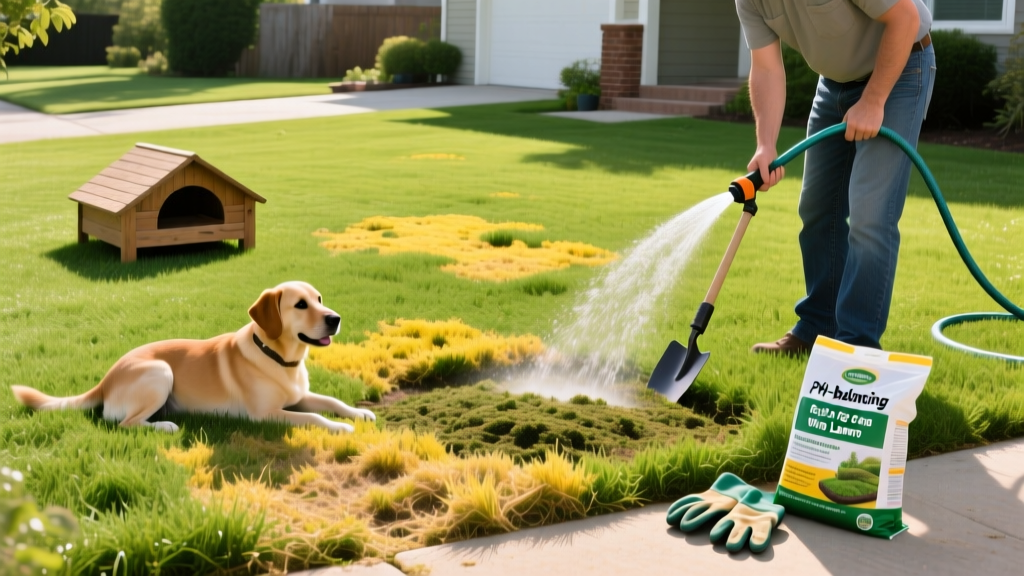
Step-by-Step Repair for Dogs Killing Grass With Pee on Lawns
The Soil Chemistry: Why Dog Urine Burns Turf
When dealing with dogs killing grass with pee, the first step in effective lawn maintenance is understanding the underlying soil chemistry. A pervasive myth in the landscaping industry is that dog urine damages turf because it is too acidic. In reality, canine urine typically has a pH between 6.0 and 6.5, which is slightly acidic but well within the tolerable range for most turfgrasses. The actual culprit is nitrogen toxicity and salt accumulation.
Dog urine is highly concentrated with urea, a nitrogen-rich byproduct of protein metabolism. When a dog urinates, it deposits a massive dose of liquid nitrogen onto a small surface area (typically 6 to 10 inches in diameter). This creates a localized fertilizer overdose. The center of the spot dies from nitrogen burn and salt desiccation, while the outer "halo" often turns dark green and grows rapidly due to the diluted nitrogen acting as a mild fertilizer.
WARNING: The Tomato Juice Myth
Do not attempt to alter your dog's urine pH by adding tomato juice, baking soda, or commercial acidifying supplements to their water or food. According to veterinary and turfgrass experts, these methods are ineffective against nitrogen burn and can cause severe health issues, including calcium oxalate bladder stones. The goal is dilution, not pH alteration.
Do not attempt to alter your dog's urine pH by adding tomato juice, baking soda, or commercial acidifying supplements to their water or food. According to veterinary and turfgrass experts, these methods are ineffective against nitrogen burn and can cause severe health issues, including calcium oxalate bladder stones. The goal is dilution, not pH alteration.
Step-by-Step Procedure: Repairing Existing Burn Spots
Repairing dead patches requires a systematic approach to neutralize soil salts and establish new root systems. Follow this exact protocol for spots that have been dead for more than two weeks.
Step 1: Deep Soil Flushing
Before adding seed, you must leach the excess nitrogen salts out of the root zone. Use a garden hose with a spray nozzle to apply 3 to 5 gallons of water per square foot directly to the burn spot. This pushes the soluble salts below the 6-inch root zone. Allow the soil to drain for 24 hours before proceeding.
Step 2: Excavation and Soil Loosening
Dead grass will not decompose fast enough to allow new seed-to-soil contact. Use a bow rake or a hand spade to aggressively scrape away the dead turf and thatch. Dig down approximately 1 to 2 inches to loosen the compacted soil. If the soil feels hard and crusty (a sign of sodium buildup), break it up thoroughly.
Step 3: Gypsum Amendment
To counteract the sodium salts left behind by the urine, apply pelletized gypsum (calcium sulfate). Gypsum works through cation exchange: the calcium displaces the sodium from the soil particles, and the sulfate binds with the sodium to form sodium sulfate, which is highly soluble and easily washed away. Apply 2 to 3 pounds of gypsum per 100 square feet and rake it into the top inch of soil. In 2026, a 50-pound bag of professional-grade gypsum costs approximately $18 to $25 at most landscape supply stores.
Step 4: Precision Seeding
Select a seed blend matched to your existing lawn. For cool-season lawns, a mix of Perennial Ryegrass (for 5-to-7-day rapid germination) and Tall Fescue (for deep-rooted drought and urine tolerance) is ideal. Premium grass seed currently retails for $10 to $14 per pound.
- Application Rate: Apply seed at a rate of 5 to 6 seeds per square inch.
- Coverage: Lightly rake the seed into the soil so it is covered by exactly 1/8 to 1/4 inch of dirt. Do not bury it deeper, or it will fail to germinate.
- Topdressing: Apply a 1/4 inch layer of compost or peat moss over the seed to retain moisture.
Step 5: Germination Watering Schedule
New seed requires consistent surface moisture. Water the repaired spot lightly 2 to 3 times a day for 5 to 10 minutes per session. The goal is to keep the top 1 inch of soil moist, not soggy. Once the ryegrass germinates (around day 7), reduce watering to once daily, but increase the duration to encourage deeper root growth. Keep dogs off the repaired area for a minimum of 21 days.
Preventative Lawn Maintenance Protocols
Once you have repaired the damage, implement these landscape and behavioral protocols to minimize future occurrences of dogs killing grass with pee.
Hydration and Dilution Tactics
The most effective preventative measure is increasing your dog's water intake to naturally dilute their urine. Switch to a wet food diet or add water/bone broth to their dry kibble. Additionally, keep a watering can near the back door. Immediately after your dog urinates, pour 1 to 2 gallons of water over the spot. This immediate dilution prevents the urea from burning the leaf tissue.
Landscape Design Adjustments
Consider installing a dedicated "pee post" or gravel zone. Dogs naturally prefer to mark vertical objects or specific substrates. Train your dog to use a designated area filled with pea gravel or mulch by placing their existing urine-soaked soil in that spot and rewarding them with high-value treats when they use it. Alternatively, integrate microclover (Trifolium repens var. Microclover) into your turf. Clover is highly resistant to nitrogen burn and maintains a green appearance even under heavy canine traffic.
Grass Species Urine Tolerance Matrix
Not all turfgrasses react to canine urine equally. If you are planning a full lawn renovation, use this matrix to select a species that can withstand nitrogen spikes.
| Grass Species | Season | Urine Tolerance | Recovery Rate |
|---|---|---|---|
| Tall Fescue | Cool | High | Moderate |
| Perennial Ryegrass | Cool | Moderate | Very Fast |
| Kentucky Bluegrass | Cool | Low | Slow (Spreads via rhizomes) |
| Bermudagrass | Warm | Moderate | Fast (Spreads via stolons) |
| Zoysiagrass | Warm | Low | Very Slow |
FAQ: Troubleshooting Canine Lawn Damage
Q: Can I just throw grass seed over the dead yellow spots?
A: No. The nitrogen salts remaining in the soil will burn the delicate new roots of the germinating seed. You must flush the soil with water and loosen the top layer before seeding, otherwise, your germination rate will be near zero.
Q: Are there any lawn-safe supplements I can give my dog?
A: Avoid products marketed as "lawn-saving dog rocks" or pH-altering pills. According to the Colorado State University Extension, dietary manipulation of urine pH is largely ineffective for preventing turf burn and poses urinary tract risks to the animal. Focus entirely on increasing the dog's water volume to dilute the urea naturally.
Q: Why is the grass around the dead spot so incredibly green and thick?
A: This is the "halo effect." The urine at the center of the spot is concentrated enough to cause toxicity and desiccation. However, at the outer edges, the urine is diluted by the surrounding soil moisture, acting as a highly effective, fast-release liquid nitrogen fertilizer. This is the same reason agricultural urea is used to boost crop yields.
Q: How do I handle urine damage on warm-season lawns like Zoysia?
A: Warm-season grasses generally have lower urine tolerance and slower recovery rates than cool-season fescues. For Zoysia or St. Augustine, immediate watering (within 12 hours of urination) is mandatory. If a spot dies, plug it with healthy sod from a nursery rather than relying on seed, as warm-season grasses are rarely established from seed in residential renovations. For more details on regional turf management, consult the University of California Agriculture and Natural Resources IPM guidelines.

