
Lawn Care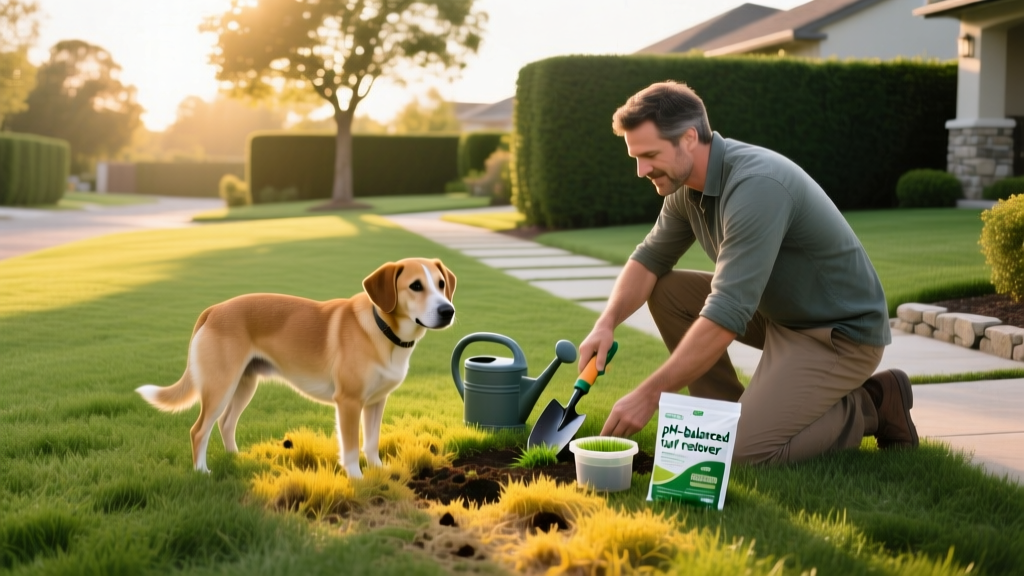
How to Stop Dogs Wee Killing Grass: Step-by-Step Repair Guide
The sight of yellow, necrotic rings scattered across an otherwise pristine lawn is a common frustration for pet owners. When you are dealing with dogs wee killing grass, the damage is rarely superficial. Canine urine delivers a highly concentrated payload of nitrogen, salts, and potassium that overwhelms the soil's cation exchange capacity, effectively causing a localized fertilizer burn. Addressing this requires more than just raking dead blades; it demands a systematic approach to soil chemistry, targeted flushing, and strategic reseeding.
The Chemistry of the Burn: Debunking the pH Myth
Warning: The Acid Myth
A pervasive misconception is that dog urine is highly acidic and burns grass by lowering soil pH. In reality, canine urine typically has a pH between 6.0 and 8.0. The damage is caused by nitrogen overload and salt toxicity, not acidity. Applying lime to 'neutralize' the acid will not cure the burn and may unnecessarily alter your soil's baseline pH, locking up essential micronutrients like iron and manganese.
A pervasive misconception is that dog urine is highly acidic and burns grass by lowering soil pH. In reality, canine urine typically has a pH between 6.0 and 8.0. The damage is caused by nitrogen overload and salt toxicity, not acidity. Applying lime to 'neutralize' the acid will not cure the burn and may unnecessarily alter your soil's baseline pH, locking up essential micronutrients like iron and manganese.
Dog urine contains approximately 15 to 30 grams of urea per liter. When urea hits the soil, soil bacteria (via the enzyme urease) rapidly hydrolyze it into ammonia and carbon dioxide. This sudden spike in localized ammonium creates severe osmotic stress, drawing water out of the grass roots and causing the characteristic dead center. The dark green ring often seen on the periphery of the dead spot is where the nitrogen concentration drops low enough to act as a fertilizer rather than a toxin.
Step-by-Step Repair Protocol for Existing Dead Spots
Repairing urine burns requires extracting the excess salts and rebuilding the soil structure before introducing new seed. Follow this exact sequence for spots ranging from 6 to 12 inches in diameter.
Step 1: Immediate Soil Flushing (Days 1-2)
If the spot is less than 48 hours old, aggressive leaching can save the grass. You must push the urea and salts below the root zone (typically the top 6 inches of soil).
- Volume: Apply exactly 1.5 to 2.0 gallons of water per square foot of the affected area.
- Method: Use a watering can with a rose attachment or a hose with a gentle shower nozzle to prevent topsoil erosion. Do not use a high-pressure jet.
- Timing: Water within 8 hours of urination for maximum efficacy. After 24 hours, the osmotic damage to the roots is usually irreversible.
Step 2: Excavation and Cation Exchange (Days 3-5)
For spots where the grass is already brown and brittle, the root system is dead. You must physically remove the toxic soil layer.
- Use a hand trowel or half-moon edger to cut out the dead patch, extending 2 inches into the healthy green perimeter.
- Excavate the top 1.5 inches of soil and discard it.
- Apply agricultural gypsum (calcium sulfate) at a rate of 2 ounces per square foot to the exposed subsoil. Gypsum provides calcium ions that displace the toxic sodium ions left by the urine from the soil's cation exchange sites, improving drainage and preventing future salt lock-up.
- Backfill the hole with a 50/50 mix of topsoil and screened compost.
Step 3: Reseeding with Urine-Tolerant Blends (Days 6-14)
Standard Kentucky Bluegrass seed will likely fail if residual salts remain. Opt for specialized repair products or specific grass species.
- Product Recommendation: Scotts EZ Seed Dog Spot Repair (approx. $22 for 3 lbs). This formula includes a proprietary mulch that expands to hold water, salt-neutralizing agents, and a blend of Perennial Ryegrass and Tall Fescue.
- Application Rate: Apply at 5 to 8 lbs per 1,000 square feet. Ensure seed-to-soil contact by lightly tamping with the back of a rake.
- Germination Watering: Keep the top 1 inch of soil consistently moist (watering 2-3 times daily for 5 minutes) until seedlings reach 2 inches in height.
Preventative Maintenance Matrix
Once the lawn is repaired, preventing future damage requires a multi-pronged approach. The American Kennel Club (AKC) notes that balancing pet health with lawn care often requires compromising on convenience. Below is a comparison of the most effective preventative strategies.
| Strategy | Mechanism of Action | Efficacy & Cost | Potential Drawbacks |
|---|---|---|---|
| Dietary Hydration | Adding water or wet food to kibble dilutes urine concentration. | High efficacy; Low cost ($0-$10/mo). | Requires more frequent bathroom breaks. |
| Yucca Schidigera Supplements | Binds to ammonia in the gut, reducing nitrogen output in urine. | Moderate efficacy; Moderate cost ($15-$30/bottle). | Must be dosed exactly; overuse causes GI upset. |
| Potty Training / Hardscaping | Directing the dog to a designated gravel or mulch zone. | Highest efficacy; High initial cost ($100-$500+). | Requires weeks of consistent behavioral training. |
| Soil Surfactants | Wetting agents (e.g., Aqua-Aid) help water penetrate and leach salts faster. | Moderate efficacy; Moderate cost ($30-$50/gallon). | Does not stop the burn, only mitigates severity. |
Expert Warning on DL-Methionine: Many over-the-counter 'lawn saver' dog treats contain DL-Methionine, an amino acid designed to acidify the dog's urine. Veterinary professionals strongly advise against using these without a prescription. Altering your dog's urinary pH to protect your grass can lead to severe metabolic acidosis and the formation of calcium oxalate bladder stones, resulting in thousands of dollars in emergency veterinary surgery.
Selecting Urine-Resistant Grass Varieties
If you are renovating a lawn heavily trafficked by dogs, your choice of turfgrass species is the single most critical variable. According to turfgrass research highlighted by the University of Minnesota Extension, species with deep root systems and high wear tolerance recover significantly faster from nitrogen burns.
Cool-Season Grasses (Northern Climates)
- Tall Fescue (Festuca arundinacea): The gold standard for dog owners. Its deep root system (often reaching 2-3 feet) allows it to access water below the salt-concentrated topsoil layer. Recommended Cultivar: Titan Ultra or Mustang IV.
- Perennial Ryegrass (Lolium perenne): Highly tolerant of urine salts and germinates in just 5-7 days, making it ideal for rapid patch repair. However, it requires frequent watering and lacks the drought tolerance of Fescue.
- Kentucky Bluegrass (Poa pratensis): Avoid. Highly susceptible to urine burn due to its shallow root system and reliance on rhizomes that are easily destroyed by salt toxicity.
Warm-Season Grasses (Southern Climates)
- Bermudagrass (Cynodon dactylon): While generally tough, Bermudagrass is surprisingly sensitive to the high nitrogen loads in dog urine and will readily burn. It recovers quickly via stolons if the crown is not killed, but aesthetic damage is severe.
- Buffalograss (Bouteloua dactyloides): A better warm-season alternative. Its extreme drought tolerance and deep roots provide a natural buffer against localized osmotic stress.
Troubleshooting Edge Cases
Why is my grass dying in the winter?
Winter urine burns occur because cool-season grasses enter dormancy and cease active water uptake. Without transpiration pulling water through the plant, the salts sit stagnant in the crown tissue. When spring arrives, the damaged crowns fail to green up. To prevent this, increase your dog's dietary water intake during late fall to dilute the urine before dormancy sets in.
Can I use baking soda to neutralize the spots?
No. Baking soda (sodium bicarbonate) introduces more sodium into the soil. Since sodium toxicity is a secondary cause of the burn, adding baking soda exacerbates the soil structure degradation, leading to compacted, hydrophobic dirt that repels water.
How do I handle multiple dogs in a small yard?
For high-density pet environments, rely on a rotational watering schedule. Use a soil moisture probe to identify high-traffic zones. Every Sunday, deeply water these specific zones to 6 inches to leach accumulated salts before they reach critical toxicity thresholds. Combine this with an annual core aeration and topdressing with 1/4 inch of biochar, which actively adsorbs excess ammonia and heavy salts from the soil profile.

