
Lawn Care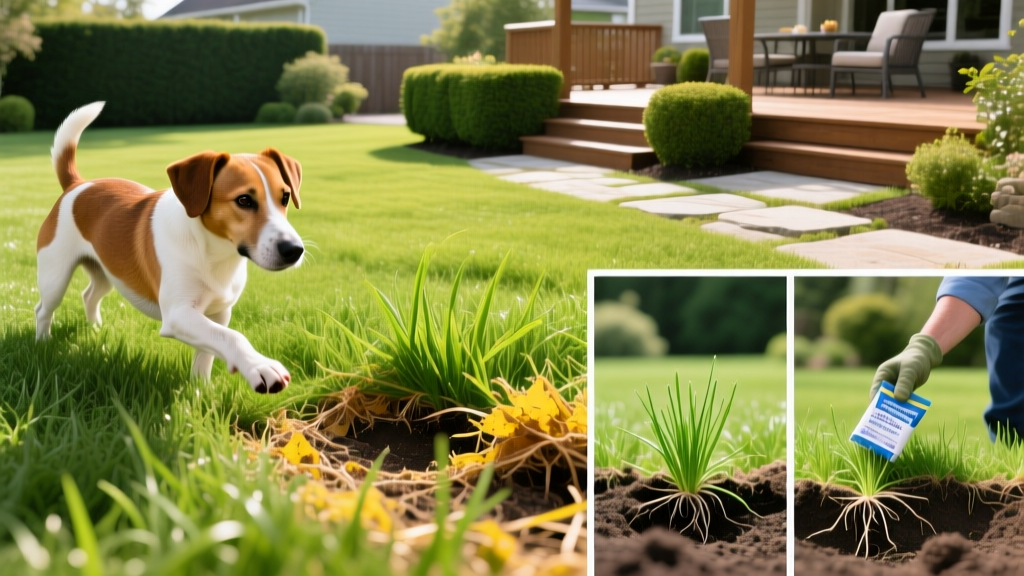
Stop Dog Pee Killing Grass: Step-by-Step Lawn Repair Guide
Dog urine damage is fundamentally a nitrogen toxicity issue, not a soil acidity problem. When a dog urinates on turfgrass, the high concentration of urea overloads the root zone, causing rapid cellular dehydration and tissue necrosis. Female dogs typically cause more severe damage than males because they squat and deposit their entire bladder volume in a single concentrated area, whereas males mark multiple locations with smaller amounts. Repairing these necrotic patches requires a precise sequence of soil flushing, thatch removal, and strategic overseeding to restore turf density without triggering secondary nitrogen burn.
The Biochemistry of Urine Burn: Debunking the pH Myth
A persistent myth in lawn care is that dog urine kills grass because it is too acidic. Consequently, many homeowners waste time applying lime to raise soil pH. According to Colorado State University Extension, dog urine typically has a pH between 6.0 and 8.0, which falls well within the acceptable range for most turfgrasses. The actual culprit is the nitrogen load. A single urination event can deposit the equivalent of 20 pounds of nitrogen per 1,000 square feet in that localized spot. The grass blades absorb this toxic concentration, leading to the characteristic yellow halo with a dead brown center. Understanding this biochemistry is critical because it dictates the repair protocol: you must dilute and leach the nitrogen, not alter the pH.
Step 1: The 8-Hour Soil Flushing Protocol
Immediate intervention is the most effective way to prevent permanent turf death. If you catch your dog in the act, or notice a fresh wet spot, you have an 8-hour window before the urea causes irreversible cellular damage.
- Calculate the Volume: You need approximately 1.5 to 2 gallons of water per square foot of the affected area to push the urea below the 6-inch root zone.
- Apply Slowly: Use a watering can with a rose attachment or a hose with a gentle shower nozzle. Flooding the area too quickly will cause runoff, failing to leach the nitrogen from the soil profile.
- Aerate if Compacted: If the soil is heavily compacted, use a hand fork to puncture the spot 3 to 4 inches deep before watering. This creates channels for the water to carry the urea deep into the subsoil.
Warning: Avoid Dietary 'Lawn Saver' Supplements
Over-the-counter dog treats claiming to prevent lawn burn often contain DL-Methionine or Ascorbic Acid to alter urine pH or bind salts. Veterinary professionals warn against these. Altering your dog's systemic pH does not reduce nitrogen output and can cause severe renal stress, urinary crystals, or gastrointestinal distress. The most effective 'supplement' is simply increasing your dog's daily water intake to naturally dilute their urine before it reaches the lawn.
Step 2: Excavation and Soil Amendment
If the 8-hour window has passed and the grass has turned brown and brittle, the tissue is dead. You must physically remove the damaged material to prepare for renovation.
- Rake and Remove: Use a steel garden rake to aggressively scarify the dead patch. Remove all dead blades, roots, and the top 1 inch of soil if the urea concentration is exceptionally high.
- Neutralize the Base: Mix 2 cups of topsoil with 1 cup of compost to refill the excavated void. Compost introduces beneficial microbes that accelerate the breakdown of residual urea into harmless atmospheric nitrogen gas.
- Level the Grade: Tamp the soil mixture down so it sits exactly 0.5 inches below the surrounding healthy lawn grade. This prevents the new seed from washing away during irrigation.
Step 3: Selecting Urine-Resistant Turfgrass
Not all grasses react to urea equally. According to research highlighted by Penn State Extension, certain species have deeper root systems and higher metabolic thresholds for nitrogen, making them significantly more resilient to dog urine.
| Grass Species | Urea Tolerance | Recovery Speed | Best Climate |
|---|---|---|---|
| Perennial Ryegrass | High | Very Fast (5-7 days) | Cool Season / Transition |
| Tall Fescue | High | Moderate (10-14 days) | Cool Season / Transition |
| Kentucky Bluegrass | Low | Slow (21+ days via rhizomes) | Northern Cool Season |
| Bermudagrass | Moderate | Fast (via stolons) | Warm Season |
Crucial E-E-A-T Insight: When repairing dog spots, never use a standard high-nitrogen starter fertilizer (like a 24-25-4 formulation). The soil in the dead patch already contains toxic levels of nitrogen from the urine. Applying more nitrogen will instantly burn the delicate new seedlings. Instead, use a low-nitrogen, high-phosphorus starter fertilizer (such as a 5-10-5 or 18-24-12 ratio) to promote root development without exacerbating the nitrogen overload.
Step 4: Overseeding and Topdressing Execution
Once the soil is prepped and the correct seed is selected, follow this precise seeding protocol to ensure germination:
- Seed Application: Apply Perennial Ryegrass or Tall Fescue seed at a rate of 1/4 cup per square foot of the patch. Press the seed lightly into the soil using the back of a rake; do not bury it deeper than 1/8 inch.
- Topdress with Peat Moss: Cover the seed with a 1/4 inch layer of sphagnum peat moss. Peat moss retains up to 20 times its weight in water, creating a humid microclimate essential for germination, while remaining dark enough to absorb solar heat.
- Germination Watering: Water the patch lightly 3 to 4 times a day for the first 10 days. The goal is to keep the peat moss constantly damp, not soggy. Once the seedlings reach 2 inches tall, reduce watering to once daily to encourage deep root growth.
Step 5: Designing a Dog-Friendly Relief Zone
The most permanent solution to stop dog pee killing grass is to train your dog to use a designated relief area. The American Kennel Club recommends establishing a specific zone that is visually distinct from the main lawn.
- Dimensions: Build a minimum 4x6 foot enclosed area.
- Substrate Selection: Avoid cedar or pine mulch, which can be toxic if ingested and retains odors. Opt for washed pea gravel (3/8-inch size) over a base of landscape fabric. Pea gravel drains instantly, does not absorb urine odors, and is comfortable on dog paws.
- Perimeter Training: Use a physical barrier like a 6-inch timber border. Lead your dog to this area on a leash after meals and immediately reward them with high-value treats. It typically takes 14 to 21 days of consistent leash-guided training to establish the habit.
By combining immediate soil flushing, strategic low-nitrogen overseeding, and behavioral landscape design, you can maintain a dense, healthy lawn without resorting to ineffective chemical neutralizers or compromising your dog's health.

