
Lawn Care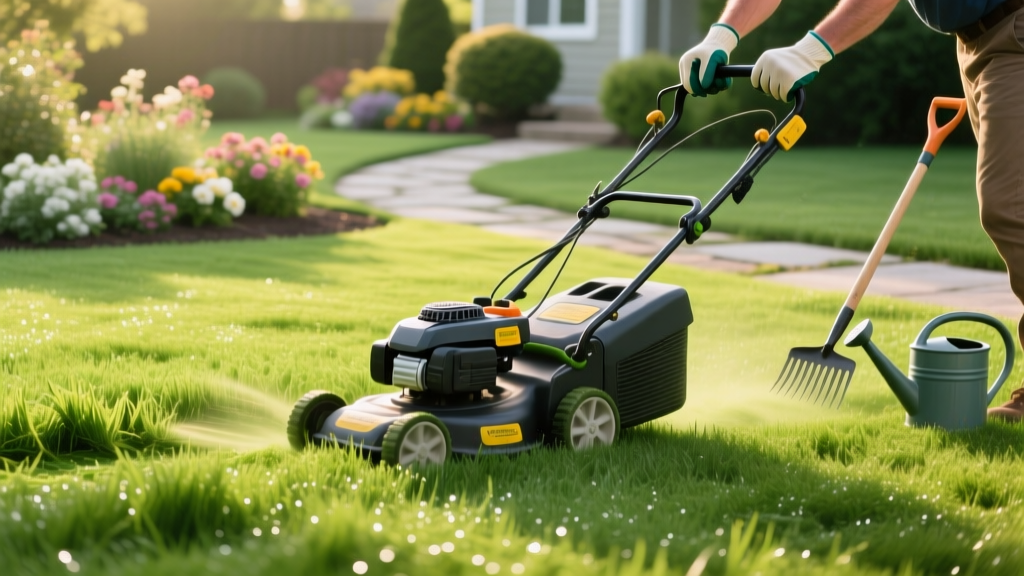
Restoring Vibrant Grass Color: Step-by-Step Lawn Maintenance Guide
Achieving a deep, vibrant grass color is a biochemical challenge, not just a matter of applying more water or generic fertilizer. Chlorophyll synthesis—the pigment responsible for the green hue in turfgrass—requires a precise balance of macronutrients, micronutrients, and optimal soil pH. When grass color fades to pale green, yellow, or white, it is communicating a specific metabolic breakdown. This step-by-step maintenance guide provides a diagnostic framework and actionable protocols to restore and maintain optimal turf pigmentation.
Step 1: Diagnose the Root Cause of Faded Grass Color
Before applying any amendments, you must identify whether the color loss is due to a macronutrient deficiency, a micronutrient lockout, or environmental stress. Misdiagnosis leads to wasted money and potential turf burn.
- Nitrogen Deficiency: Characterized by uniform yellowing (chlorosis) that begins on the older, lower leaves first. The plant translocates mobile nitrogen from old tissue to support new growth. Overall turf density and growth rate will also be stunted.
- Iron Chlorosis: Manifests as interveinal yellowing (the leaf veins remain green while the tissue between them turns yellow) and appears exclusively on the newest, youngest leaves at the top of the canopy. Iron is immobile in the plant.
- Dull Mower Blades: Shredded leaf tips turn necrotic and white/brown. From a distance, this creates a grayish or faded cast over the entire lawn, masking the actual chlorophyll content lower on the blade.
- Heat/Drought Dormancy: Warm-season grasses (like Bermudagrass or Zoysia) may naturally lose color during extreme drought, while cool-season grasses (like Kentucky Bluegrass) will fade during peak summer heat to conserve moisture.
Step 2: Test and Adjust Soil pH for Nutrient Uptake
Soil pH dictates nutrient availability. If your soil pH is too high (alkaline), iron and manganese become chemically locked up, rendering them inaccessible to grass roots regardless of how much iron fertilizer you apply. If it is too low (acidic), calcium and magnesium deficiencies occur, weakening the cell walls and dulling the grass color.
| Soil pH Level | Nutrient Availability Impact | Corrective Action (Per 1,000 sq ft) |
|---|---|---|
| 5.0 - 5.8 (Too Acidic) | Iron/Manganese toxicity; Calcium/Magnesium lockout. | Apply 25-50 lbs of pelletized calcitic lime. |
| 6.0 - 7.0 (Optimal) | Maximum availability of N, P, K, and micronutrients. | Maintain with annual compost top-dressing. |
| 7.2 - 8.0+ (Alkaline) | Severe Iron, Zinc, and Manganese lockout (chlorosis). | Apply 5-10 lbs of elemental sulfur; use foliar chelates. |
According to turf nutrition research from NC State Extension, maintaining a pH between 6.0 and 6.5 is critical for cool-season grasses to maximize nitrogen uptake and sustain deep green coloration throughout the growing season.
Step 3: Apply Targeted Macronutrients and Micronutrients
Once pH is corrected, you must supply the specific building blocks for chlorophyll a and chlorophyll b. Nitrogen forms the core of the chlorophyll molecule, while iron acts as the essential catalyst in chlorophyll synthesis.
The Iron vs. Nitrogen Color Dilemma
Many homeowners attempt to fix yellow grass by dumping high-nitrogen synthetic fertilizers (like urea). While this forces rapid growth, the new cells expand faster than chlorophyll can be produced, resulting in a pale, lime-green color and increased disease susceptibility.
Expert Protocol for Darkening Grass Color:
- For Nitrogen: Use slow-release methylene urea (MU) or sulfur-coated urea (SCU). Apply at a rate of 0.5 to 0.75 lbs of actual nitrogen per 1,000 sq ft. This feeds the turf steadily, allowing dense chlorophyll packing without flushing the plant.
- For Iron (Acidic Soils): Ferrous sulfate is effective and cheap ($10-$15 per 5 lbs) but only works if soil pH is below 7.0.
- For Iron (Alkaline Soils): You must use chelated iron, specifically Fe-EDDHA. As of 2026, premium Fe-EDDHA liquid formulations cost between $40 and $60 per gallon, but it remains bioavailable in soils with a pH up to 9.0. Apply at 2-4 oz per 1,000 sq ft via foliar spray for a darkening effect visible within 48 hours.
Step 4: Optimize Mowing to Protect the Canopy
Mowing practices directly impact the visual perception of grass color. Tearing the leaf tip exposes the internal vascular tissue, which quickly desiccates and turns white. A lawn with 30% white leaf tips will visually read as faded or gray, even if the underlying chlorophyll levels are optimal.
- Follow the 1/3 Rule: Never remove more than one-third of the total blade height in a single pass. For a 3-inch target height, mow when the grass reaches 4.5 inches. Scalping removes the most chlorophyll-dense tissue and exposes shaded, pale lower stems to UV bleaching.
- Sharpen Blades on a Schedule: Sharpen rotary mower blades every 20 to 25 hours of operation. Use a flat bastard file or bench grinder, strictly maintaining the OEM bevel angle (usually 10 to 15 degrees). A blunt edge crushes the xylem and phloem, causing tip dieback.
- Alternate Mowing Patterns: Mowing in the same direction compacts the soil and trains the grass grain to lay flat, which reflects light unevenly and creates a washed-out appearance. Alternate between vertical, horizontal, and diagonal passes.
Proper mowing height also shades the soil, keeping root zones cooler and preserving the deep green color of cool-season grasses during early summer heat waves. For detailed mowing height specifications by turf type, refer to the NC State TurfFiles Mowing Guide.
Step 5: Manage Irrigation and Seasonal Shifts
Overwatering is a primary culprit for faded grass color. Saturated soils displace oxygen, leading to hypoxic root conditions. When roots suffocate, they cannot uptake iron or nitrogen, triggering secondary chlorosis.
- Watering Metrics: Apply 1 to 1.5 inches of water per week, split into two deep watering sessions rather than daily light sprinklings. Use a straight-sided tuna can placed on the lawn to measure exact sprinkler output.
- Seasonal Fading: Understand your grass type. If you have Tall Fescue or Kentucky Bluegrass, a slight fading to a 'summer green' during 90°F+ days is a natural survival mechanism. Do not over-fertilize with nitrogen to force dark color during peak summer stress, as this will deplete carbohydrate reserves and lead to brown patch disease.
Frequently Asked Questions
Why did my lawn turn grayish-green after I applied iron?
If you applied a liquid iron product (especially ferrous sulfate or high-concentration chelates) and left it on the leaf surface without watering it in during high heat, you likely caused phytotoxicity (leaf burn). Iron is a heavy metal and can scorch tissue if the droplets evaporate and leave concentrated salts on the blade. Always apply liquid iron in the early morning or late evening, and irrigate lightly 12 hours after application to wash residues into the soil profile.
Can I use Epsom salt to make my grass greener?
Epsom salt is magnesium sulfate. Magnesium is the central atom in the chlorophyll molecule, so a deficiency will cause yellowing. However, most soils already have adequate magnesium. Applying Epsom salt to soil with sufficient magnesium will not make the grass darker and can actually antagonize calcium uptake. Only use Epsom salt if a professional soil test explicitly confirms a magnesium deficiency; otherwise, stick to nitrogen and iron protocols.
How fast will chelated iron improve my grass color?
When applied as a foliar spray, liquid Fe-EDDHA or amino-acid chelated iron is absorbed directly through the leaf stomata. You will typically see a noticeable darkening of the grass color within 24 to 72 hours. However, this is a cosmetic fix that lasts only 3 to 4 weeks. For long-term color retention, you must address the underlying soil pH and root-zone nutrient availability.

