
Lawn Care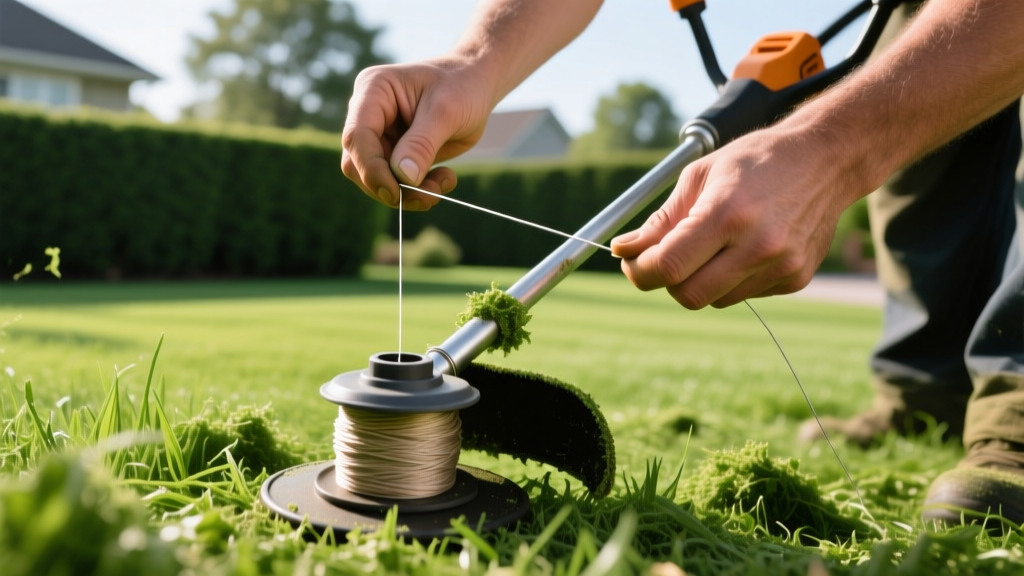
How Do I Restring a Weed Eater for Precision Weed Spot-Treatment?
The Role of Mechanical Spot-Treatment in Integrated Weed Management
When managing invasive weed species like creeping charlie, nutsedge, or dallisgrass near delicate ornamental beds, chemical spot-treatments carry a high risk of herbicide drift. Triclopyr or glyphosate applied too close to desirable plants can cause severe phytotoxicity. In these scenarios, mechanical spot-treatment using a precision string trimmer is the safest and most effective eradication method. However, a poorly maintained trimmer throws debris, shreds bark, and lacks the cutting accuracy required for tight spaces. If you are asking yourself, how do I restring a weed eater to achieve surgical precision for spot-treatment, the answer lies in selecting the correct line geometry and mastering the spool winding technique.
According to the University of Minnesota Extension, integrated weed management relies on combining cultural, mechanical, and chemical controls. Mechanical control via string trimming is critical for severing weed crowns just below the soil surface without disturbing the root zones of nearby desirable plants. To execute this, your weed eater must be strung with the appropriate diameter and shape to slice cleanly rather than bludgeon the weed stems.
Trimmer Line Selection Matrix for Precision Weeding
Before you begin the restringing process, you must choose the right line. Standard .095-inch twisted line is excellent for clearing overgrown ditches, but it is far too aggressive for precision spot-treatment around tree trunks and garden borders. For delicate weed eradication, you need a thinner, rounder profile that cuts cleanly and minimizes kinetic impact on surrounding hardscapes and bark.
| Line Diameter | Line Shape | Best Use Case in Spot-Treatment | Recommended Brands / Models |
|---|---|---|---|
| .065-inch | Round | Ultra-precision edging, delicate flower bed borders, severing soft-stemmed annual weeds. | Stihl Round Line, Echo Premium |
| .080-inch | Round or Square | General mechanical spot-treatment, cutting through mature creeping charlie and nutsedge. | Oregon Gatorline, Maxpower |
| .095-inch | Twisted / Star | Heavy brush clearing. Avoid for precision spot-treatment due to high bark-damage risk. | Husqvarna Titanium Force |
Pro Tip: For the cleanest cut on fibrous weeds like dallisgrass, use a co-polymer or titanium-infused .080-inch round line. These materials resist melting and maintain a sharper edge longer than standard nylon, reducing the frequency of restringing during large spot-treatment sessions.
Step-by-Step: How Do I Restring a Weed Eater (Bump-Feed Models)
The vast majority of residential and commercial trimmers, such as the Echo SRM-225 or Stihl FS 91 R, utilize a bump-feed spool system. Here is the exact procedure to restring the spool for optimal line feed and cutting balance.
- Secure the Trimmer and Remove the Spool: Disconnect the spark plug wire on gas models or remove the battery on electric models. Hold the spool housing stationary and unscrew the bump knob (usually reverse-threaded, so turn clockwise to loosen). Remove the empty spool and the heavy metal washer beneath it.
- Clean the Housing: Use a wire brush to clear out compacted grass clippings and melted nylon residue from the eyelets. Friction from debris causes the new line to weld and jam.
- Anchor the Line: Cut two 15-foot lengths of your chosen precision line. Find the center divider on the spool. Most modern spools (like the Echo Speed-Feed 400) have a center notch to lock the line without cutting it in half. If your spool lacks this, insert one end of the line into the anchor hole inside the spool hub.
- Wind in the Correct Direction: Look for the directional arrows stamped on the top of the spool. Wind the line tightly and evenly in the direction of the arrows. Overlapping or loose winding is the primary cause of line feed failure. Keep the two strands separated in their respective upper and lower tiers.
- Lock the Ends: Leave about 6 inches of line unwound. Snap these ends into the temporary retention slots on the spool's rim.
- Thread the Eyelets: Pull the retained ends out of the slots and thread them through the metal or reinforced plastic eyelets on the outer trimmer housing.
- Reassemble and Tension: Slide the spool back onto the drive shaft, ensuring the metal washer is seated correctly. Thread the bump knob back on (turn counter-clockwise to tighten). Pull both lines firmly outward to release them from the retention slots and seat the spool against the spring.
Troubleshooting Restringing Failures and Line Welding
Even when you know how to restring a weed eater properly, operational errors can cause the line to fail. Understanding these failure modes is critical when performing time-sensitive spot-treatments.
Warning: Line Welding
If you hold the throttle at maximum RPM while the trimmer head is stationary or resting against a hard surface (like a concrete curb), friction will melt the nylon inside the spool, fusing the layers together. Always keep the head spinning freely before engaging the weeds, and use a sweeping motion rather than holding the trimmer in one spot.
If you hold the throttle at maximum RPM while the trimmer head is stationary or resting against a hard surface (like a concrete curb), friction will melt the nylon inside the spool, fusing the layers together. Always keep the head spinning freely before engaging the weeds, and use a sweeping motion rather than holding the trimmer in one spot.
- Line Breaks at the Eyelet: This usually indicates worn eyelet grommets or using a line diameter too thick for the housing. Inspect the metal grommets for deep grooves and replace the housing if necessary.
- Line Feeds Out Too Far and Snaps: The cutting blade on the underside of the trimmer guard is dull or missing. This blade is responsible for shearing the line to the correct operational length. Replace the guard or the blade insert.
- Spool Jams and Won't Feed: The line was wound loosely or in the wrong direction. Disassemble and rewind with high tension.
Upgrading to Fixed-Line Heads for Delicate Spot-Treatment
While bump-feed heads are versatile, professional lawn care operators often upgrade to fixed-line heads (such as the Husqvarna H30 or Shindaiwa Speed-Feed equivalents) when executing high-precision mechanical spot-treatments.
| Feature | Bump-Feed Spool | Fixed-Line Head |
|---|---|---|
| Line Replacement Speed | 5-10 minutes (requires spool removal and winding) | 15 seconds (slide pre-cut pieces into eyelets and tighten screws) |
| Cutting Consistency | Varies as line wears and bumps out | Perfectly consistent length for uniform spot-treatment |
| Jamming Risk | Moderate to High (internal spool friction) | Zero (no internal spool or moving parts) |
| Best For | Large open areas, mixed brush and lawn | Precision edging, delicate tree-ring weeding, garden beds |
Precision Trimming Techniques to Prevent Tree Damage
When using your freshly restrung weed eater to spot-treat weeds like plantain or clover growing in the root zones of trees, you must avoid 'string trimmer blight.' According to Colorado State University Extension, repeated mechanical damage to the cambium layer from trimmer line can girdle and kill mature trees. To safely eradicate weeds near trunks:
- Maintain a 1/4-Inch Clearance: Never let the spinning line touch the bark. Use the tip of the string, not the full length, to slice the weed crowns.
- Use the 'Scythe' Motion: Instead of pushing the trimmer head directly into the tree base, swing the trimmer in a controlled, shallow arc parallel to the trunk.
- Lower the RPMs: If using a gas trimmer with a variable throttle, feather the trigger. A slower line speed cuts soft-stemmed weeds effectively while reducing the kinetic energy that strips bark upon accidental contact.
Frequently Asked Questions
How often should I restring my weed eater when doing spot-treatments?
For precision spot-treatment using .080-inch line, expect to replace the line every 2 to 3 hours of active cutting time. If you are frequently edging against abrasive surfaces like concrete or brick, this interval may drop to 45 minutes. Keeping bulk line on hand and mastering a fast restringing process minimizes downtime.
Can I use fishing line or generic wire to restring my weed eater?
No. Standard trimmer line is engineered with specific polymers (like co-polymer nylon) designed to shear cleanly upon impact with hard objects, protecting the trimmer's drive shaft and gearbox. Fishing line or wire will not shear, transferring catastrophic shock loads to the engine and posing a severe laceration hazard to the operator.
Why does my line keep melting together inside the spool?
Line melting, or 'welding,' occurs when friction generates excessive heat. This happens if you run the trimmer at high RPMs while the head is resting on the ground, or if you use a line diameter that is too large for the spool's capacity, creating internal friction. Always use the manufacturer-recommended diameter and keep the head elevated and spinning freely.

