
Lawn Care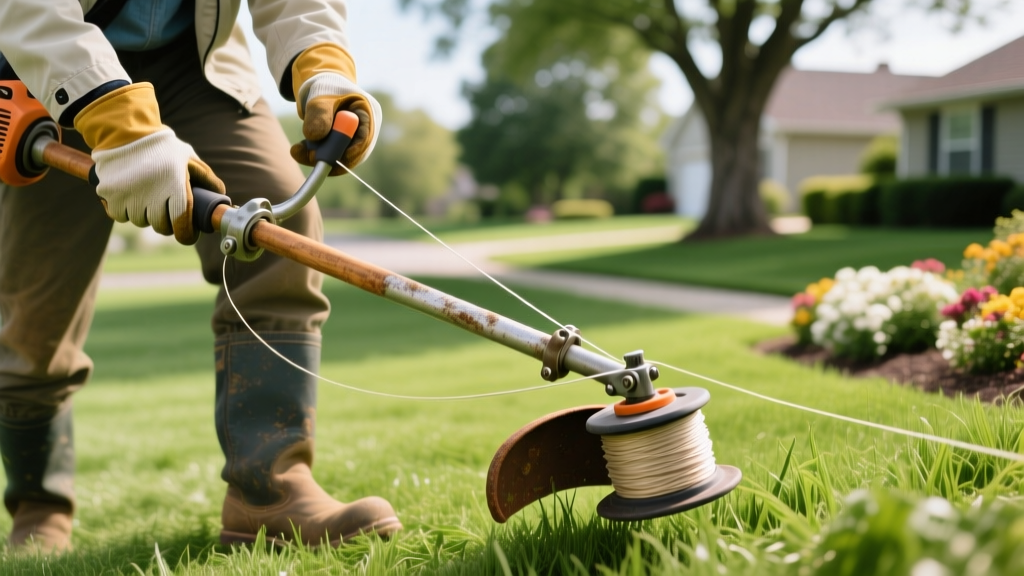
Step-by-Step Guide to Restringing a Weed Eater for Precision Weed Spot-Treatment
The Role of Precision Trimming in Weed Spot-Treatment
When executing a targeted weed species spot-treatment program, your string trimmer is not just an edging tool; it is a surgical instrument. Spot-treating invasive species like Dallisgrass (Paspalum dilatatum) or Yellow Nutsedge (Cyperus esculentus) near delicate ornamental beds requires absolute precision. A poorly maintained trimmer tears through thick weed rhizomes, leaving jagged edges that invite fungal pathogens to adjacent desirable turf and making subsequent post-emergent herbicide applications uneven. Knowing the exact science behind restringing a weed eater for spot-treatment ensures you slice cleanly through fibrous weed crowns without causing collateral damage to your fescue or bermudagrass.
In 2026, modern co-polymer trimmer lines offer unprecedented durability, but selecting the wrong geometry or improperly winding the spool will still result in catastrophic line welding or snapping mid-job. This guide bridges the gap between mechanical trimmer maintenance and advanced agronomic weed management.
Choosing the Right Line Geometry for Target Weeds
Standard 0.065-inch round nylon line is entirely inadequate for spot-treating mature weed patches. The NC State TurfFiles Weed Database highlights the dense, fibrous nature of perennial grassy weeds, which require high-shear cutting force. Below is the definitive matrix for pairing line geometry with specific spot-treatment targets.
| Line Type & Size | Target Weed Species | Cut Quality & Spot-Treatment Benefit |
|---|---|---|
| 0.080-inch Twisted (Co-polymer) | Dallisgrass, Crabgrass | Slices thick, fibrous crowns cleanly. Prevents tearing that stresses surrounding turf. |
| 0.095-inch Multi-Sided (Square/Star) | Mature Yellow Nutsedge, Johnsongrass | Aggressive shearing edges cut through pithy, fast-growing stems without wrapping the spool. |
| 0.065-inch Round (Standard Nylon) | Poa Annua, Henbit (Soft annuals) | Clean cut on soft tissue, but will instantly snap on Dallisgrass rhizomes. Avoid for heavy spot-treatment. |
For most residential spot-treatment programs, a premium 0.080-inch twisted line (such as Oregon Gatorline or Cyclone Desert Extrusion, typically costing $18 to $25 per 3-pound spool) provides the optimal balance of slicing power and aerodynamic efficiency, reducing the load on your trimmer's motor during prolonged edging sessions.
Step-by-Step: Restringing a Weed Eater for Surgical Edging
The most common failure mode during weed spot-treatment is 'line welding'—where friction melts the string inside the spool, fusing it into a solid plastic block. This happens when restringing a weed eater with overlapping winds or incorrect tension. Follow these steps for a standard bump-feed head (e.g., Speedfeed 400 or generic equivalent):
- Clean the Spool Cavity: Before restringing, use a bristle brush to clear out impacted soil and pulverized weed sap from the spool housing. Debris increases internal friction, leading to premature line melting.
- Check the Eyelet Grommets: Inspect the metal or hard-plastic eyelets where the line exits. If they are deeply grooved from 0.095-inch line, they will shave and weaken a 0.080-inch line. Replace the eyelets or the entire trimmer head if grooves exceed 1mm in depth.
- Align and Anchor: Find the anchor hole in the center of the spool. Insert your pre-cut line (usually 15 to 20 feet per side for dual-line heads) and lock it into the retaining slot. Do not knot the line; rely on the mechanical anchor.
- Wind with Zero Overlap: This is the most critical step. Wind the line tightly in the direction indicated by the arrows on the spool. Ensure each wrap sits perfectly parallel and side-by-side. Never let the line cross over itself. Overlapping wraps create intense localized friction when the line retracts, causing the co-polymer to fuse.
- Lock and Thread: Leave a 4-to-6-inch tail on each side, lock them into the temporary retention slits on the spool rim, and seat the spool back into the housing. Pull the tails sharply to release them from the slits and thread them through the exterior eyelets.
⚠️ Warning: The Tension Click
If you are using a speed-feed or dial-knob head, ensure you hear the distinct mechanical 'click' when engaging the tension mechanism after threading. Failing to seat the spool under proper spring tension will cause the line to over-extend on the first bump, resulting in the blade guard chopping the line down to a useless 2-inch stub.
If you are using a speed-feed or dial-knob head, ensure you hear the distinct mechanical 'click' when engaging the tension mechanism after threading. Failing to seat the spool under proper spring tension will cause the line to over-extend on the first bump, resulting in the blade guard chopping the line down to a useless 2-inch stub.
Spot-Treatment Tactics for High-Risk Weed Zones
Once you have successfully finished restringing a weed eater with the correct geometry, your approach to the weed patch must change. According to the UC Statewide IPM Weed Gallery, mechanical disruption of certain weeds can trigger aggressive spreading if not done correctly.
When spot-treating Yellow Nutsedge, which often infiltrates the tight seams between hardscaping and turf, use your freshly strung 0.080-inch twisted line to cut the weed flush with the soil surface. Do not dig into the soil with the trimmer head; disturbing the soil brings dormant nutlets to the surface. Cut the visible foliage cleanly, then immediately apply a targeted post-emergent herbicide like Sulfentrazone or Halosulfuron-methyl to the fresh, open cut. The clean slice provided by a properly restrung trimmer allows for maximum systemic herbicide uptake without shredding the plant tissue.
For Dallisgrass spot-treatments in ornamental beds, keep the trimmer head perfectly parallel to the ground. The twisted line will slice through the thick, white rhizomes cleanly. If you use a dull or improperly wound round line, the Dallisgrass crown will splinter, and the plant will rapidly regenerate multiple tillers from the damaged node, worsening the infestation.
Troubleshooting Feed Issues During Active Weed Control
Even with perfect restringing technique, spot-treating dense weed patches puts immense strain on your trimmer line. Use this diagnostic framework if your line fails mid-job:
- Symptom: Line feeds out too far and breaks at the guard.
Cause: Bumping the head too aggressively on soft soil, or the internal advance mechanism is clogged with wet grass clippings.
Fix: Disassemble the head, wash the internal cam and spring with a degreaser, and tap the head lightly on firm ground, not soft mulch. - Symptom: Line retracts into the spool and won't feed out.
Cause: Line welding due to overlapping spool winds, or the line was wound in the wrong direction (against the rotation arrows).
Fix: You must completely cut out the fused plastic, discard it, and restart the restringing process using the zero-overlap parallel winding method. - Symptom: Line snaps instantly upon hitting thick weed stalks.
Cause: Using UV-degraded nylon line or a line diameter too thin for the weed species.
Fix: Switch to a fresh spool of UV-stabilized co-polymer line. Store your spare line spools in a sealed, opaque bucket to prevent solar degradation, which reduces tensile strength by up to 40% over a single summer season.
Mastering the art of restringing a weed eater is not just about keeping the tool running; it is about ensuring the mechanical cut supports your chemical and cultural weed management strategies. By matching line geometry to the specific weed species and executing a flawless, zero-overlap spool wind, you transform a basic yard tool into a precision instrument for turfgrass renovation.

