
Lawn Care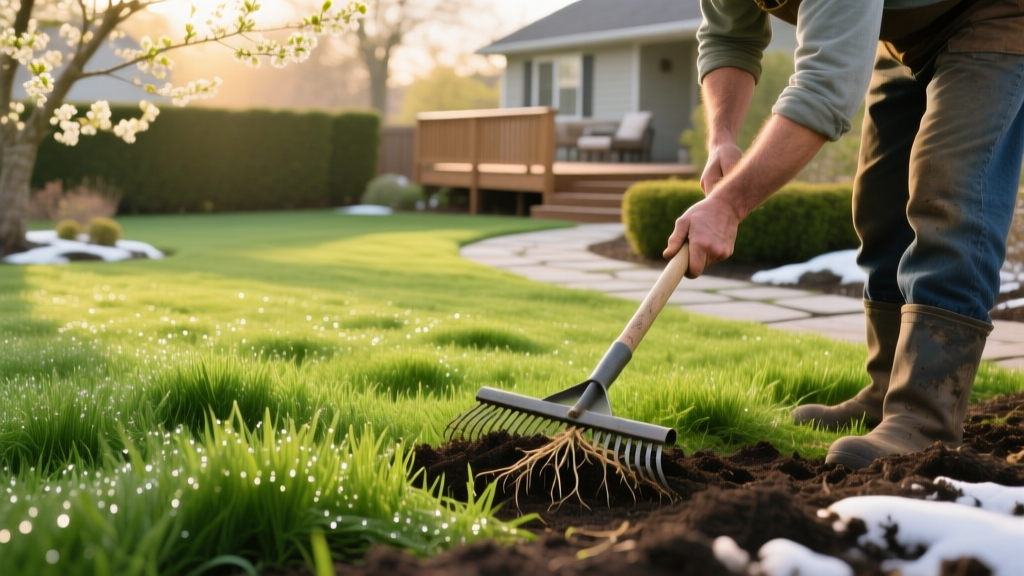
How to Wake Up a Dormant Lawn: Step-by-Step Spring Guide
Transitioning a dormant lawn back into active spring growth requires precise timing and mechanical care. Whether you are managing a cool-season turf (like Tall Fescue or Kentucky Bluegrass) waking from winter, or a warm-season turf (like Bermuda or Zoysia) emerging from winter dormancy, applying the wrong procedures too early can damage the crown and invite fungal pathogens. This guide outlines the exact step-by-step maintenance procedures to safely revive your turf, optimize soil temperatures, and establish a strong root system for the upcoming growing season.
Diagnosing Dormancy vs. Winter Kill
Before initiating any mechanical or chemical procedures, you must verify that the brown turf is actually dormant and not dead. Winter kill, desiccation, or snow mold can destroy grass crowns, leaving behind tissue that will never green up.
- The Tug Test: Grab a handful of brown grass blades near the soil line and pull upward with moderate force. If the grass snaps off easily at the crown or the roots pull up without resistance, the turf is likely dead in that patch. If the roots hold firm and the blades stretch slightly before breaking, the crown is alive and dormant.
- Crown Inspection: Use a trowel to dig up a small 2x2 inch plug. Slice the crown (the base where roots meet blades) in half with a knife. A healthy, dormant crown will be firm and white or pale yellow inside. A dead crown will be mushy, brown, or hollow.
Soil Temperature Triggers for Green-Up
Air temperature is a poor indicator for lawn care timing. Soil temperature at a 2-inch depth dictates root activity, microbial breakdown of fertilizers, and pre-emergent herbicide efficacy. According to turfgrass research from Penn State Extension, applying nitrogen before the soil reaches the correct threshold forces the plant to push top growth at the expense of root development, leading to a weak lawn that crashes in early summer.
| Grass Type | Soil Temp Trigger (2-inch depth) | Expected Green-Up Window | First Fertilizer Application |
|---|---|---|---|
| Cool-Season (Fescue, Bluegrass) | 50°F - 55°F | Early to Mid-Spring | When soil hits 55°F consistently |
| Warm-Season (Bermuda, Zoysia) | 65°F (Daytime) / 60°F (Night) | Mid to Late Spring | Only after 50% green-up is visible |
Pro Tip: Purchase a dedicated soil thermometer probe (like the ThermoWorks Thermapen or a standard 6-inch dial probe) rather than relying on local weather apps, which only measure ambient air temperature.
Step 1: Mechanical Debris Removal (Weeks 1-2)
Once the soil begins to thaw and dry out, the first physical step is clearing the canopy to allow solar radiation to reach the soil. This accelerates soil warming.
- Wait for the Soil to Dry: Never rake or walk heavily on a dormant lawn when the soil is saturated. This causes severe compaction and tears the dormant root hairs. Wait until the top 2 inches of soil are dry to the touch.
- Use a Poly-Tine Rake: Use a flexible plastic or bamboo leaf rake to gently sweep away winter debris, dead leaves, and matted snow mold. Do not use a metal thatching rake or a power dethatcher on a dormant lawn. Metal tines will rip out dormant crowns that are not yet anchored by active spring root growth.
- Core Aeration (Cool-Season Only): If your cool-season lawn suffers from heavy clay compaction, early spring is a secondary window for core aeration (fall is primary). Pull 3-inch deep plugs using a gas-powered core aerator, leaving the plugs on the lawn to break down naturally.
Step 2: Targeted Pre-Emergent and Fertilizer Application (Weeks 3-4)
Chemical applications must be timed to the soil temperatures established in the diagnostic phase. Applying the wrong product at the wrong time wastes money and harms the turf.
Pre-Emergent Herbicides
Crabgrass and other summer annual weeds germinate when soil temperatures at a 1-inch depth reach 55°F for consecutive days. Apply a pre-emergent like Prodiamine (Barricade) or Dithiopyr (Dimension) just before this threshold. Dithiopyr is highly recommended for early spring because it offers early post-emergent control; if you miss the exact germination window by a few days, Dithiopyr will still kill young crabgrass seedlings in their first growth stage.
The 'Half-Rate' Nitrogen Rule
For cool-season grasses, apply a light, slow-release nitrogen fertilizer to support the initial green-up without causing a massive flush of weak blade growth. Aim for 0.5 lbs of actual Nitrogen per 1,000 square feet. A product like Milorganite (5-2-0) or a polymer-coated sulfur-coated urea (PCSCU) is ideal here. For warm-season grasses, apply zero nitrogen while the lawn is fully dormant; wait until the turf is at least 50% green and actively growing to avoid fueling Large Patch fungus.
Warning: The Fungus Danger Zone
Applying high-nitrogen, fast-release synthetic fertilizers (like standard 46-0-0 urea) to a partially dormant warm-season lawn traps moisture in the thatch layer. This creates the exact environment needed for Rhizoctonia solani (Large Patch fungus) to destroy the turf's stolons before summer begins. Always use slow-release organics or wait for full green-up.
Applying high-nitrogen, fast-release synthetic fertilizers (like standard 46-0-0 urea) to a partially dormant warm-season lawn traps moisture in the thatch layer. This creates the exact environment needed for Rhizoctonia solani (Large Patch fungus) to destroy the turf's stolons before summer begins. Always use slow-release organics or wait for full green-up.
Step 3: The 'Scalp and Bag' First Mow (Weeks 5-6)
The first mow of the season serves a specific agronomic purpose: removing the dead, brown tips of the grass blades to expose the lower, living green tissue to sunlight, and allowing solar heat to penetrate the soil canopy.
- Drop the Deck: Lower your mower deck by exactly 0.5 inches below your standard maintenance height. For example, if you maintain Tall Fescue at 3.5 inches, drop the deck to 3.0 inches for this single cut. If you maintain Bermuda at 1.5 inches, drop it to 1.0 inches.
- Bag the Clippings: Unlike the rest of the year where mulching is preferred, you must bag the clippings during the first mow. Removing the dead organic matter prevents thatch buildup and maximizes soil solarization.
- Return to Normal Height: Immediately raise the mower deck back to its optimal summer height for the second cut. Never scalp a lawn down to the dirt in spring, as a sudden late frost will kill the exposed, tender crowns.
Step 4: Deep Cycle Hydration Protocols
Dormant lawns require minimal water, but transitioning lawns need consistent moisture to push new root hairs into the soil profile. However, watering habits must adapt to your soil type to prevent runoff and disease.
According to turf management guidelines from NC State Turfgrass Extension, the goal is to provide roughly 1 inch of water per week, including rainfall, once active growth begins. If you have heavy clay soil, apply this water using the cycle-and-soak method:
- Run your irrigation zones for 10 minutes.
- Shut the system off for 45 minutes to allow the water to infiltrate the dense clay.
- Run the zones for another 10 minutes.
This prevents the water from pooling on the surface, which leads to anaerobic soil conditions and promotes Pythium blight in the warming spring weather.
Troubleshooting: When the Dormant Lawn Won't Wake Up
If you have followed the soil temperature guidelines, applied the correct pre-emergents, and initiated the first mow, but specific patches remain completely brown, you are likely dealing with a localized pathology rather than standard dormancy.
- Spring Dead Spot (SDS): Common in Bermuda grass. Appears as sunken, circular patches of dead grass with dark, necrotic roots. SDS attacks the roots in the fall, but the damage only becomes visible when the lawn fails to break dormancy in spring. Treatment requires fall applications of Myclobutanil or Propiconazole; spring fungicides will not cure it. Reseed or plug the affected areas with healthy Bermuda stolons once soil temps hit 70°F.
- Gray or Pink Snow Mold: Common in cool-season grasses after prolonged snow cover. Appears as matted, crusty patches with a gray or pinkish web-like mycelium. Rake the matted areas gently with a poly-tine rake to break up the crust, allowing air and sunlight to dry the fungus out. Avoid applying nitrogen until the mold has dried and the turf begins to recover.
Waking up a dormant lawn is an exercise in patience and precise measurement. By relying on soil temperature data rather than the calendar, utilizing gentle mechanical cleanup, and applying targeted, low-rate nutrition, you set the foundation for a dense, weed-resistant turf that will thrive through the stress of the upcoming summer.

