
Lawn Care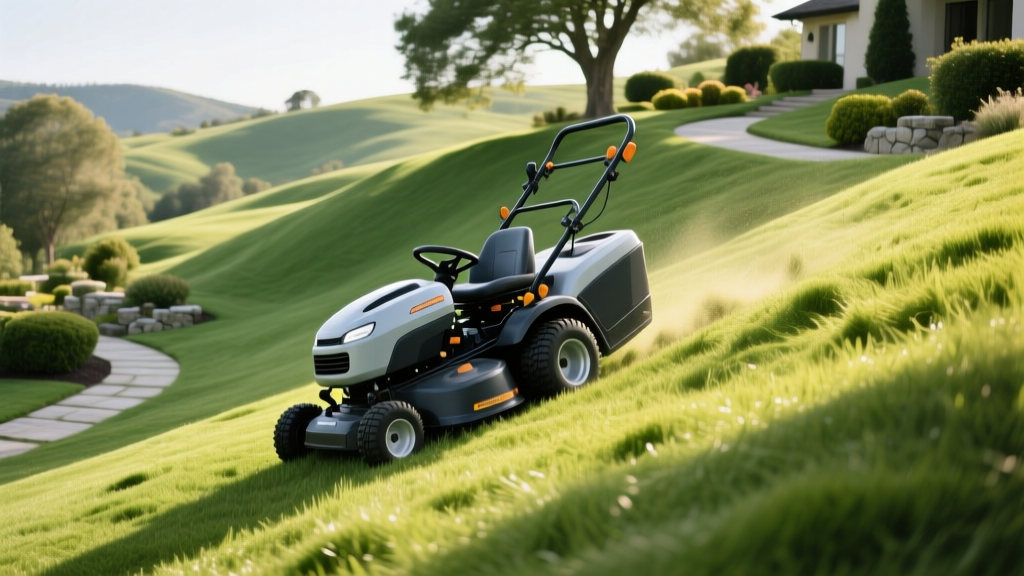
Are Riding Lawn Mowers Good on Hills? 2026 Steep Slope Guide
The Physics of Slopes: Why Center of Gravity Dictates Safety
When homeowners ask if riding lawn mowers are good on hills, the answer depends entirely on the machine's center of gravity (CG), wheelbase length, and track width. Mowing on an incline introduces lateral and longitudinal forces that can easily overcome the traction and stability limits of standard lawn equipment. According to safety guidelines published by the Ohio State University Extension, the vast majority of riding mower rollovers occur on slopes exceeding 15 degrees (a 26.8% grade).
A standard lawn tractor features a high CG due to the engine placement and the rider's seated position. When traversing a lateral slope, the weight shifts to the downhill wheels. If the slope exceeds the machine's lateral stability threshold, the uphill wheels lose traction, leading to a catastrophic rollover. Garden tractors, which are heavier, wider, and sit lower to the ground, inherently handle these forces better than lightweight residential lawn tractors.
⚠️ CRITICAL SAFETY WARNING: The Consumer Product Safety Commission (CPSC) reports that riding mower rollovers account for a significant percentage of fatal lawn care accidents. Never mow up and down a slope with a standard lawn tractor if the incline exceeds 15 degrees. Always use a digital inclinometer or a smartphone slope-measuring app to verify your terrain's grade before operating heavy machinery.
Zero-Turn vs. Lawn Tractors: Which is Actually Safer on Hills?
A common misconception is that zero-turn mowers (ZTRs), with their superior speed and maneuverability, are ideal for hilly terrain. In reality, traditional lap-bar zero-turns are exceptionally dangerous on slopes. The front caster wheels on a ZTR are unpowered and free-swiveling. On a lateral slope, gravity pulls the heavy rear deck downhill, causing the front casters to wash out and the mower to slide uncontrollably.
The Case for Garden Tractors on Inclines
Garden tractors are the gold standard for hilly properties. They feature a longer wheelbase, a wider track width, and heavy-duty transaxles. More importantly, they utilize hydrostatic transmissions (such as those built by Hydro-Gear or Kanzaki). Hydrostatic drives provide dynamic engine braking; when you release the pedal, the hydraulic fluid resistance slows the machine, preventing the freewheeling effect that plagues manual gear-drive mowers on downhills.
When Zero-Turn Mowers Can Handle Slopes
If you prefer the zero-turn cutting pattern, you must opt for a steering wheel zero-turn rather than a lap-bar model. Steering wheel ZTRs feature a locked front axle and traditional steering geometry, which maintains directional control on slopes up to 15 degrees. However, they still cannot match the uphill climbing traction of a shaft-driven garden tractor.
Top Riding Lawn Mowers Good on Hills for 2026
Based on chassis weight, transmission type, and traction-enhancing features, here are the top-performing models for sloped terrain in 2026.
1. John Deere X394 (4-Wheel Steer Lawn Tractor)
- Estimated Price: $4,599
- Engine: 21.5 HP Kawasaki FR Series V-Twin
- Max Recommended Slope: 15 degrees
The X394 is a game-changer for hilly properties because of its exclusive 4-wheel steering system. By turning all four wheels, the mower maintains a significantly tighter turning radius without the front wheels pushing outward and tearing the turf on inclines. The heavy-duty K46 hydrostatic transmission provides reliable engine braking on descents.
2. Husqvarna TS 348XD (Garden Tractor)
- Estimated Price: $4,299
- Engine: 24 HP Kawasaki FR Series
- Max Recommended Slope: 18 degrees
The TS 348XD is built for heavy draft work and steep grades. Its standout feature is the locking rear differential. When one rear wheel loses traction on a muddy or steep incline, engaging the diff-lock forces both wheels to turn at the same speed, effectively pulling the tractor up the hill. The cast-iron front axle adds crucial weight to the front end, preventing wheelies on steep ascents.
3. Cub Cadet Enduro Series XT2 (Garden Tractor)
- Estimated Price: $3,499
- Engine: 24 HP Kohler 7000 Series
- Max Recommended Slope: 15 degrees
For a more budget-friendly option that doesn't sacrifice hill-climbing stability, the XT2 offers a wide 50-inch deck and a heavy stamped-steel chassis. The hydrostatic foot-pedal control allows for seamless speed adjustments without clutching, which is vital for maintaining momentum on uneven, sloped terrain.
2026 Slope-Capable Mower Comparison Matrix
| Model | Type | Engine HP | Traction Feature | Max Slope | 2026 Price |
|---|---|---|---|---|---|
| John Deere X394 | Lawn Tractor | 21.5 HP | 4-Wheel Steering | 15° | $4,599 |
| Husqvarna TS 348XD | Garden Tractor | 24 HP | Locking Differential | 18° | $4,299 |
| Cub Cadet XT2 | Garden Tractor | 24 HP | Heavy Chassis / Hydro | 15° | $3,499 |
| Bad Boy ZT Elite | Zero-Turn (Lap Bar) | 23.5 HP | Heavy Deck / Wide Track | 10° (Strict Limit) | $4,100 |
Essential Maintenance for Hill-Climbing Mowers
Buying the right mower is only half the battle. Operating on hills subjects the drivetrain, brakes, and tires to extreme stress. Follow these specific maintenance protocols to maintain traction and prevent mechanical failure.
1. Liquid Tire Ballast (The Traction Secret)
Factory rear tires on lawn tractors are often too light to grip steep, wet grass. The industry standard solution is filling the rear tires to 75% capacity with Rim Guard (a non-toxic, freeze-proof beet juice derivative). Rim Guard weighs approximately 11 pounds per gallon. Adding 15 gallons per tire adds 330 pounds of dead weight directly over the drive axle, drastically lowering the center of gravity and increasing the tire footprint. Note: Never use calcium chloride, as it will corrode your steel rims.
2. Tire Pressure Calibration
Overinflated tires reduce the contact patch, leading to slip on inclines. Check your operator's manual, but generally, rear tires should be run at 10-12 PSI (when not ballasted) and front tires at 14-16 PSI. If you use liquid ballast, you must maintain the air pressure in the top 25% of the tire at exactly 10 PSI to allow the sidewall to flex and grip the turf.
3. Hydrostatic Transmission Fluid Checks
Mowing on hills forces the hydrostatic transmission to work continuously against gravity, generating excessive heat. Check the hydro fluid (usually SAE 10W-30 or specific hydraulic fluid depending on the Hydro-Gear model) every 50 hours. If the fluid smells burnt or appears dark, flush it immediately to prevent transaxle slippage on uphills.
The Slope Mowing Decision Tree
Use this logical framework before engaging your mower on any sloped terrain, as recommended by turf management and safety experts at Penn State Extension.
- Step 1: Measure the Grade. Use a digital inclinometer.
- If under 10 degrees: Safe for all riding mowers, including zero-turns. Mow up and down or laterally.
- If 10 to 15 degrees: Safe for Garden Tractors and 4-wheel steer mowers. Always mow up and down the slope, never laterally.
- If over 15 degrees: Stop. Do not use a standard riding mower.
- Step 2: Assess Turf Conditions.
- Is the grass wet or dewy? Reduce your maximum safe slope limit by 5 degrees. Wet grass eliminates tire traction, making a 10-degree slope as dangerous as a 15-degree dry slope.
- Step 3: Choose the Right Tool for Steep Zones.
- For slopes 15° to 25°: Use a commercial-grade self-propelled walk-behind mower with a low-profile deck and deep-lug AG tires.
- For slopes over 25°: Use a battery-powered string trimmer or a remote-controlled slope mower (e.g., Green Climber). Never operate a walk-behind mower on slopes where a slip could pull the operator under the deck.
Ultimately, finding riding lawn mowers good on hills requires prioritizing chassis weight, hydrostatic braking, and traction-enhancing differentials over raw cutting speed. By selecting a garden tractor or a 4-wheel steer model and properly ballasting your tires, you can maintain a pristine lawn on challenging terrain without compromising your safety.

