
Lawn Care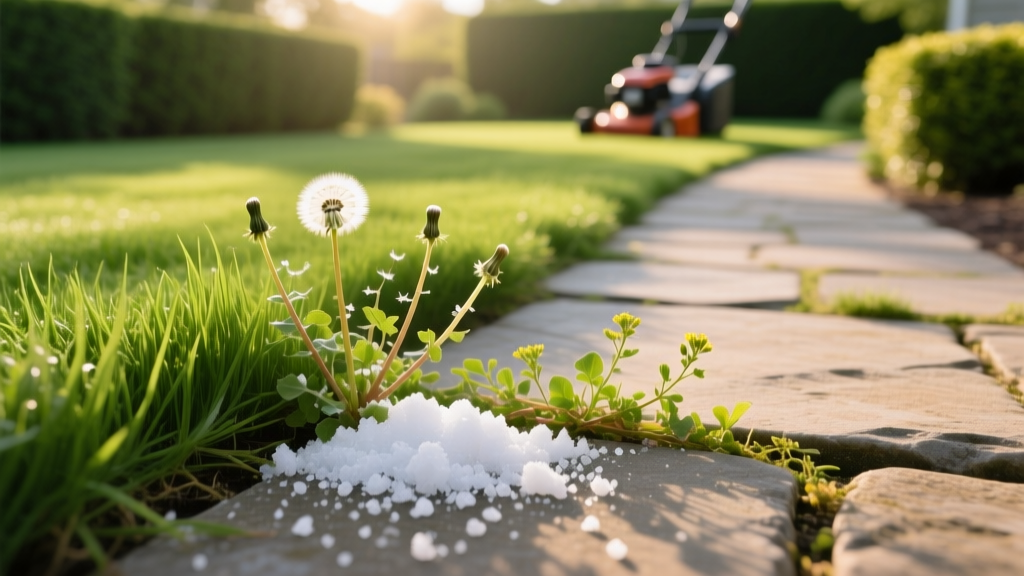
Using Rock Salt to Kill Weeds: A Safe Spot-Treatment Guide
The Mechanics of Halite: How Rock Salt Kills Weeds
Rock salt, chemically known as halite or sodium chloride (NaCl), eliminates weeds through severe osmotic stress and cellular desiccation. When applied to plant tissue, the high concentration of sodium ions draws water out of the weed's cells, causing rapid wilting and necrosis. Below the surface, sodium displaces essential nutrients like potassium and calcium in the soil's cation exchange capacity (CEC), effectively sterilizing the immediate environment and preventing seed germination.
While this makes rock salt an incredibly effective, low-cost herbicide for hardscapes, it is a catastrophic mistake to use it near turfgrass or garden beds. According to Colorado State University Extension, excessive sodium causes soil particles to disperse (deflocculate), destroying soil structure, eliminating pore space, and creating an impermeable crust that suffocates roots and blocks water infiltration.
⚠️ CRITICAL WARNING: Never apply rock salt within 3 feet of your lawn's edge, ornamental beds, or the drip line of trees. Runoff during heavy rain will carry the sodium into the root zone, causing irreversible turf dieback and long-term soil salinization.
Hardscape Suitability Matrix: Where to Use Rock Salt
Because of its aggressive soil-altering properties, rock salt to kill weeds should be strictly confined to specific non-porous or isolated hardscape environments. Use the decision matrix below to determine if your target area is safe for treatment.
| Location | Suitability | Risk Level | Primary Concern |
|---|---|---|---|
| Deep Driveway Cracks | Excellent | Low | Minimal soil contact; isolated environment. |
| Gravel Paths (Center) | Good | Medium | Runoff can affect adjacent borders during heavy rain. |
| Patio Paver Joints | Caution | High | Salt accelerates efflorescence and degrades polymeric sand. |
| Lawn Edges / Borders | Never | Severe | Guaranteed turf death; requires expensive soil remediation. |
| Vegetable / Flower Beds | Never | Severe | Permanently ruins soil biology and future planting viability. |
Step-by-Step Application for Driveway Cracks and Gravel
When treating isolated weeds like plantain, dandelion, or crabgrass growing in concrete crevices, a liquid solution penetrates the taproot more effectively than dry crystals. Penn State Extension notes that targeting the crown and root zone is essential for perennial weed eradication in hardscapes.
The Liquid Injection Method
- Mix the Solution: Combine 1 cup of #1 grade rock salt (approx. 3/16-inch grain size) with 2 cups of boiling water in a heat-resistant pump sprayer or dedicated watering can.
- Add a Surfactant: Stir in 1 tablespoon of liquid dish soap. This breaks the water's surface tension, allowing the saline solution to coat the weed's waxy cuticle and penetrate the soil crack.
- Target the Crown: Apply the mixture directly to the center of the weed during the hottest part of the day (between 12 PM and 3 PM) when the plant's stomata are open and transpiration rates are highest.
- Pack the Crack (Optional): For wide cracks, pour dry rock salt into the fissure after the liquid has dried, packing it down with a putty knife to create a physical and chemical barrier against future seed germination.
The Hidden Cost: Concrete Spalling and Efflorescence
While rock salt is cheap—averaging $10 to $15 per 40-pound bag in 2026—it carries a hidden infrastructure cost. Sodium chloride is highly corrosive to masonry. When salt water penetrates the microscopic pores of concrete or brick and subsequently freezes, the expanding ice crystals cause the surface to flake and pop off, a process known as spalling.
Expert Insight: "If your driveway or patio is less than two years old, or if it was not poured with air-entrained concrete, avoid salt-based weed killers entirely. The freeze-thaw cycle combined with chloride ions will destroy the surface matrix, leading to thousands of dollars in resurfacing costs."
Furthermore, as the water evaporates, it leaves behind a white, powdery residue called efflorescence. While primarily cosmetic on stone, it indicates that salt is actively migrating through your hardscape materials.
Accidental Lawn Exposure: Emergency Remediation Protocol
If rock salt runoff or wind drift accidentally contacts your turfgrass, immediate intervention is required to save the soil structure. You must displace the sodium ions from the soil's CEC before they cause permanent deflocculation.
The Gypsum Flush Technique
- Step 1: Heavy Irrigation. Apply a minimum of 2 inches of water (approximately 1.25 gallons per square foot) to the affected area to dissolve and push the sodium below the root zone.
- Step 2: Calcium Sulfate Application. Broadcast pelletized gypsum (calcium sulfate) at a rate of 40 to 50 lbs per 1,000 square feet. As of 2026, a 40lb bag of high-quality gypsum averages $28.
- Step 3: Cation Exchange. The calcium in the gypsum will naturally swap places with the sodium in the soil. The displaced sodium then binds with the sulfate to form sodium sulfate, which is highly soluble and easily flushed away with a second round of deep watering.
Superior Alternatives for Lawn Edges and Turf Borders
Because rock salt is too volatile for areas bordering your lawn, professional turf managers rely on targeted, soil-safe alternatives for spot treatments near grass. Consider these options for edging and border weed control:
- Pelargonic Acid (Scythe): A fast-acting, non-selective contact herbicide derived from chrysanthemums. It destroys cell membranes on contact but has zero soil residual activity, meaning it will not harm grass roots if minor overspray occurs.
- Chelated Iron (FeHEDTA): Products containing Iron HEDTA exploit the physiological difference between broadleaf weeds and monocot grasses. Weeds absorb the iron to toxic levels and undergo oxidative stress, while turfgrass safely metabolizes it, actually turning your lawn a darker green.
- Thermal Weeding: Using a propane torch to apply 180°F heat for just 0.5 seconds boils the water inside the weed's cells. This is highly effective for driveway edges and leaves no chemical residue in the soil.
For further reading on repairing turf damaged by improper chemical applications or environmental stress, consult the University of Minnesota Extension's guide on lawn repair. By restricting rock salt strictly to deep hardscape cracks and utilizing modern organic acids or iron-based herbicides for your lawn's perimeter, you maintain a pristine landscape without sacrificing your soil's long-term biological health.

