
Lawn Care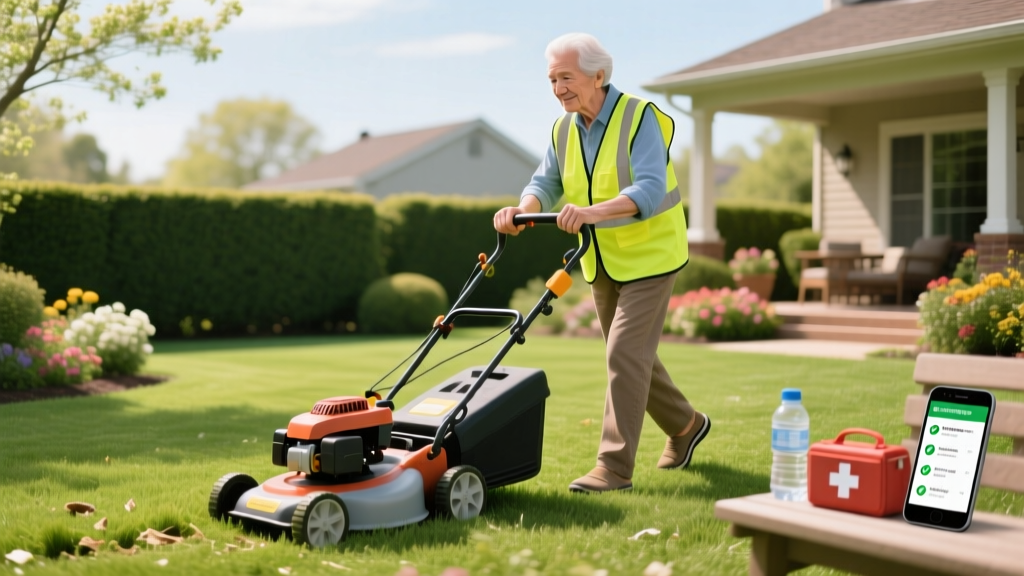
Mowing Lawns for Elderly People: A Step-by-Step Safety Guide
Aging introduces physiological changes that directly impact yard work: reduced grip strength, diminished balance, slower reaction times, and joint degradation. However, maintaining a pristine lawn does not require surrendering your independence to landscaping services. By adapting your approach to mowing lawns for elderly people, you can mitigate physical strain and eliminate common injury vectors. This step-by-step maintenance protocol replaces brute force with ergonomic strategy, leveraging modern battery technology and biomechanical pacing to keep your yard healthy and your joints protected.
Pre-Mow Yard Preparation: The 15-Minute Rule
The most dangerous part of mowing often occurs before the engine starts. Bending over to pick up twigs, rocks, and hidden debris places immense shear force on the lumbar spine. According to the Centers for Disease Control and Prevention (CDC), trips and falls are the leading cause of fatal and nonfatal injuries among older adults, often triggered by uneven terrain or hidden obstacles in the grass.
Implement a strict 15-minute preparation protocol to clear the mowing path without bending:
- Use an Extended Reacher Tool: Invest in a heavy-duty grabber tool, such as the Vive Health Reacher Grabber (approximately $15). This allows you to pick up branches, stones, and debris while maintaining an upright posture.
- Mark Hidden Hazards: Identify sprinkler heads, shallow tree roots, and uneven depressions. Mark them with high-visibility landscaping flags to prevent the mower wheels from dropping in, which can cause sudden jolts to the shoulders and wrists.
- Inspect the Perimeter: Walk the boundary of your lawn to ensure no hoses, toys, or pet waste are in the cutting zone.
Ergonomic Tip: Never attempt to kick debris out of the way with your foot while wearing mowing shoes. The twisting motion combined with a heavy shoe can easily strain the knee meniscus or cause a loss of balance.
Choosing the Right Equipment for Limited Mobility
Traditional gas-powered push mowers are obsolete for seniors. They require repetitive pull-starts that aggravate rotator cuff tendons, emit high-frequency vibrations that exacerbate peripheral neuropathy, and demand significant upper-body strength to maneuver. Transitioning to modern brushless electric mowers or autonomous robotics is a non-negotiable step for safe mowing lawns for elderly people.
| Mower Type | Physical Strain Level | Startup Mechanism | Recommended 2026 Model | Avg. Cost |
|---|---|---|---|---|
| Self-Propelled Electric | Low-Medium | Push-button | EGO Power+ 21" (LM2135SP) | $550 - $650 |
| Robotic Mower | None (Setup only) | App / Automated | Worx Landroid Vision | $1,200 - $1,500 |
| Ride-On Electric | Low (Sitting) | Key / Push-button | Ryobi 42" Zero Turn | $3,500+ |
For walk-behind mowing, the EGO Power+ 21-inch Self-Propelled Mower is the industry benchmark for seniors. Weighing just 65 lbs without the battery, its variable-speed self-propulsion does the heavy lifting, requiring the user only to guide the handle rather than push the dead weight of the machine.
Step-by-Step Mowing Procedure for Joint Protection
Once the yard is prepped and the equipment is selected, the physical act of mowing must follow strict biomechanical guidelines to protect vulnerable joints and prevent cardiovascular overexertion.
Step 1: Timing and Heat Index Limits
Seniors have a diminished physiological ability to regulate core body temperature. The Mayo Clinic warns that older adults are highly susceptible to heat exhaustion, which impairs cognitive function and reaction time. Only mow when the heat index is below 80°F. Schedule your mowing sessions between 8:00 AM and 10:00 AM, after the morning dew has evaporated but before the midday solar peak.
Step 2: The Ergonomic Grip and Posture
Do not grip the mower handle tightly. A death grip transmits high-frequency motor vibrations directly into the carpals and elbows, accelerating osteoarthritis. Wear vibration-dampening gloves, such as the Ergodyne ProFlex 700 ($25), which feature padded palm zones. Adjust the mower handle height so your elbows rest at a relaxed 100-degree angle; reaching too far forward shifts your center of gravity and strains the lower back.
Step 3: Navigating Slopes Safely
Slopes are the primary hazard zone. When using a walk-behind mower on an incline, always mow horizontally (across the slope), never up and down. Mowing up and down creates a severe risk of the mower rolling backward over your feet if you lose traction, or pulling you forward down the hill if the self-propulsion engages too aggressively on a decline. If a slope exceeds a 15-degree gradient, do not attempt it with a walk-behind mower; use a string trimmer or hire a professional.
Step 4: Pacing and Wide-Arc Turning
Avoid sharp, pivoting turns that require twisting the torso while holding a heavy machine. Instead, execute wide, sweeping U-turns at the end of each pass. Pause every 15 minutes in a shaded area to hydrate and allow your heart rate to recover. The Arthritis Foundation emphasizes the importance of pacing and alternating tasks to prevent joint inflammation flare-ups.
Warning Signs to Stop Immediately: If you experience dizziness, shortness of breath, chest tightness, or sudden weakness in your grip, turn off the mower immediately. Do not attempt to "push through" fatigue. Sit down, hydrate, and finish the lawn on a different day.
Post-Mow Cleanup Without the Strain
The mowing process is only half the battle; managing the clippings is where many back injuries occur. Wet grass clippings can easily weigh 30 to 40 pounds when compacted in a collection bag. Lifting and twisting to empty a mower bag places catastrophic torque on the lumbar discs.
- Switch to Mulching: Remove the bagging attachment entirely and install a mulching plug. Modern mulching blades cut clippings into micro-pieces that decompose rapidly, returning nitrogen to the soil and completely eliminating the need to lift heavy bags.
- Use a Harness for Blowing: If you need to clear clippings from your driveway or patio, do not use a heavy, handheld gas blower. Opt for a lightweight electric blower (under 5 lbs) equipped with a shoulder harness to distribute the weight across your torso rather than your wrists.
When to Transition to Professional or Robotic Care
There is a threshold where DIY maintenance becomes medically inadvisable. If your lawn exceeds 0.5 acres, features severe uneven terrain, or if you experience chronic balance issues, it is time to transition away from manual mowing.
Investing $1,500 in a robotic mower like the Worx Landroid Vision pays for itself within two years compared to hiring a weekly landscaping service (which averages $50-$80 per cut). Robotic mowers operate silently, require zero physical exertion, and maintain a pristine carpet-like cut by trimming just a few millimeters every day. For those who prefer human assistance, transition your budget toward a professional service, freeing up your physical energy for lighter, more enjoyable gardening tasks like pruning raised flower beds or tending to container plants.

