
Lawn Care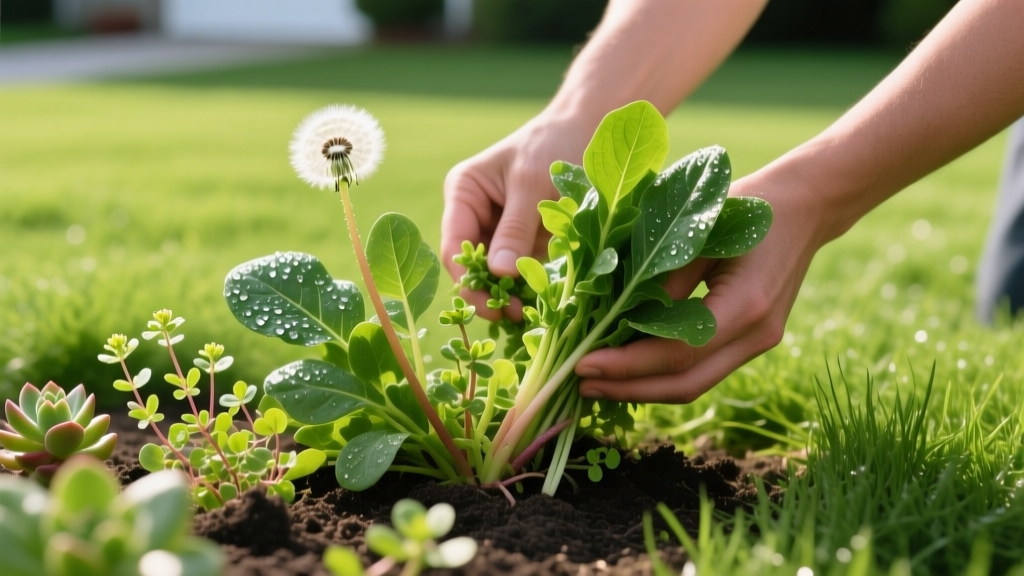
Which Common Lawn Weeds Can You Safely Weed Eat? A Foraging Guide
When managing an organic lawn, traditional spot-treatment often means hand-pulling or applying natural herbicides. However, a highly effective and increasingly popular alternative is to simply eat the problem. Foraging—often referred to in niche gardening circles as 'weed eating'—transforms invasive broadleaf weeds from turfgrass competitors into nutrient-dense culinary ingredients. If you maintain a strictly organic yard, deciding what to safely weed eat can drastically reduce your weeding workload while providing free, highly nutritious greens.
This spot-treatment guide covers the most common edible lawn weeds, how to distinguish them from toxic look-alikes, and the exact harvesting techniques required to protect your surrounding turfgrass.
⚠️ CRITICAL HERBICIDE WARNING
You must never weed eat from a lawn that has been treated with synthetic herbicides. Systemic chemicals like 2,4-D and glyphosate are absorbed directly into the plant tissue. According to the EPA's Safe Pest Control guidelines, these chemicals can persist in plant matter long after they have degraded in the soil. Only harvest weeds from lawns that have been 100% organic and free of synthetic chemical applications for at least three full growing seasons.
The Top 5 Lawn Weeds You Can Safely Weed Eat
1. Dandelion (Taraxacum officinale)
The dandelion is the most recognizable lawn weed and entirely edible from root to flower. Dandelion greens contain approximately 14,000 IU of Vitamin A per 100g, vastly outperforming commercial spinach. For the best flavor, harvest the young, inner leaves before the flower stalk emerges; older leaves develop a sharp bitterness due to high sesquiterpene lactone concentrations. The taproots can be dug up, slow-roasted at 350°F (175°C) for 20 minutes, and ground into a caffeine-free coffee substitute.
2. Purslane (Portulaca oleracea)
Often treated as a nuisance in warm-season lawns, purslane is a succulent annual that thrives in compacted soil. It is a botanical anomaly: purslane contains more EPA (eicosapentaenoic acid) Omega-3 fatty acids—roughly 4mg per gram of fresh weight—than any other leafy green plant. Harvest the thick, paddle-shaped leaves and tender stems. They have a crisp texture and a slightly tart, lemony flavor, making them ideal for raw salads or quick stir-fries.
3. Broadleaf Plantain (Plantago major)
Not to be confused with the banana-like fruit, broadleaf plantain is a low-growing perennial weed with prominent parallel veins. The young leaves are rich in calcium and vitamins A, C, and K. Plantain leaves also contain aucubin, a compound with recognized antimicrobial properties. Because the leaves are heavily fibrous, they are best chopped finely for salads, steeped as a soothing tea, or blanched to soften the tough cellular structure.
4. Wood Sorrel (Oxalis stricta)
Frequently mistaken for clover, wood sorrel features distinct heart-shaped leaflets and small yellow flowers. It contains oxalic acid, which gives it a bright, tangy, lemon-like flavor. While perfectly safe in moderation, individuals prone to calcium oxalate kidney stones should limit their intake. Wood sorrel is best used as a garnish or a zesty addition to summer salads rather than a base green.
5. Common Chickweed (Stellaria media)
A cool-season annual that often takes over thinning lawns in early spring and late fall. Chickweed has a mild, corn-like flavor and a tender, spinach-like texture. It is rich in potassium, zinc, and rutin. Harvest the top two inches of the plant before it flowers for the most tender bites.
Toxic Look-Alikes: The Spurge vs. Purslane Trap
When you weed eat, misidentification is the primary risk. The most dangerous confusion in the lawn occurs between edible purslane and toxic spotted spurge (Euphorbia maculata). Both are low-growing, mat-forming summer annuals that thrive in hot, compacted soil.
The definitive field test is the sap test. Break the stem of the plant in question:
- Purslane (Edible): The stem will snap cleanly and release a clear, watery sap. The stems are thick, fleshy, and often have a reddish tint.
- Spurge (Toxic): The stem will immediately bleed a thick, opaque, white milky sap (latex). This sap contains diterpene esters which are highly irritating to the skin, eyes, and gastrointestinal tract. If a plant bleeds white, do not eat it.
Always cross-reference your findings with a verified botanical database, such as the USDA Plants Database, before consuming any foraged weed for the first time.
Spot-Harvesting Techniques That Protect Turfgrass
Spot-treating weeds by eating them requires a different physical approach than yanking them out with a hoe. Your goal is to remove the weed while leaving the surrounding grass roots and soil structure intact to prevent bare patches where new weeds will germinate.
- Use a Hori-Hori Knife: This Japanese soil knife features a serrated edge and a concave blade. Insert it vertically into the soil about two inches away from the weed's crown, angling toward the taproot.
- Sever the Taproot Deeply: For dandelions and plantain, you must sever the taproot at least 3 to 4 inches below the soil surface. If you leave the upper crown attached to the root, the weed will regenerate within 7 to 10 days.
- Lift and Shake: Gently lift the weed and shake the loose topsoil back into the hole. This preserves the soil microbiome and prevents turf subsidence.
- Overseed the Micro-Patch: If the extraction leaves a hole larger than two inches in diameter, immediately drop a pinch of grass seed and a dusting of compost into the void to encourage rapid turf recovery.
Nutritional Profile of Edible Lawn Weeds
| Weed Species | Edible Parts | Flavor Profile | Key Nutrient Highlight |
|---|---|---|---|
| Dandelion | Leaves, flowers, roots | Bitter, earthy, nutty (root) | Vitamin A (14,000 IU/100g) |
| Purslane | Leaves, stems | Tart, lemony, crisp | Omega-3 EPA (4mg/g) |
| Broadleaf Plantain | Young leaves, seeds | Mild, fibrous, earthy | Calcium, Aucubin |
| Wood Sorrel | Leaves, flowers | Bright, sour, citrusy | Vitamin C, Oxalic Acid |
| Common Chickweed | Leaves, stems | Mild, sweet, corn-like | Potassium, Rutin |
Safe Preparation and Culinary Applications
Foraged weeds are exposed to soil-borne pathogens, wildlife waste, and environmental dust. Proper preparation is non-negotiable. Follow the FDA's guidelines for safe handling of raw produce by washing your harvest thoroughly under cold, running water. Do not use soap or bleach solutions.
Blanching for Oxalate Reduction
For weeds high in oxalic acid (like wood sorrel) or older, fibrous dandelion greens, blanching is highly recommended. Drop the greens into boiling, salted water for exactly 60 seconds, then immediately shock them in an ice-water bath. This process leaches out water-soluble oxalates and neutralizes bitter compounds without destroying the plant's structural integrity or heat-stable vitamins.
Pesto and Fermentation
Dandelion and chickweed make excellent bases for wild-crafted pestos. Substitute traditional basil with a 50/50 mix of foraged greens and cultivated spinach to balance the intense bitterness. Alternatively, broadleaf plantain leaves can be lacto-fermented using a 2.5% salt brine by weight, creating a probiotic-rich, tangy condiment that preserves the harvest for months.
Expert Foraging Rule of Thumb
Never harvest more than 20% of a specific weed population in a single area. Leaving the majority of the plants behind ensures continuous ground cover, prevents soil erosion, and guarantees a sustained food source for native pollinators like early-season solitary bees.

