
Lawn Care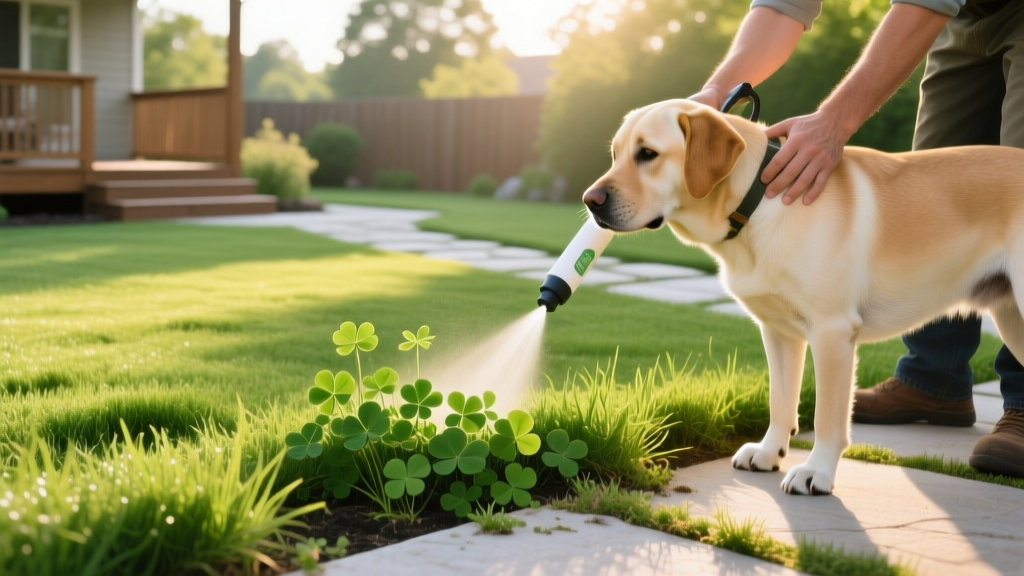
Spot-Treating Weeds in a Clover Lawn for Dogs: A Safe Guide
The Broadleaf Paradox: Why Clover Lawns Complicate Weed Control
Homeowners are increasingly replacing traditional Kentucky Bluegrass and Tall Fescue with a clover lawn for dogs. The reasoning is rooted in basic turfgrass science: dog urine contains high concentrations of nitrogen and salts that cause severe necrotic burn spots on standard grasses. Clover, however, is a legume that fixes its own atmospheric nitrogen and actually thrives in nitrogen-rich soil, making it virtually immune to urine burn.
But establishing a clover-dominant yard introduces a unique agronomic paradox. Clover (Trifolium repens) is a broadleaf plant. The standard selective post-emergent herbicides used by professionals and homeowners—such as 2,4-D, dicamba, and MCPP (mecoprop)—are synthetic auxins specifically engineered to target and destroy broadleaf weeds while leaving monocot grasses unharmed. If you broadcast spray a standard "weed and feed" product on your yard, you will obliterate your clover lawn alongside the dandelions.
To maintain a pristine clover blend without harming your pets or your turf, you must abandon broadcast chemical applications and adopt precision spot-treatment strategies. Below is a comprehensive framework for managing invasive species in a clover-dominant, dog-friendly landscape.
Expert Insight: Microclover vs. Standard White Clover
When establishing a clover lawn for dogs, always opt for microclover (such as Trifolium repens var. 'Pirouette' or 'Nano') rather than standard white clover. Standard white clover produces large, nectar-rich flowers that attract bees, creating a severe stinging hazard for dogs walking barefoot. Microclover varieties have been bred to produce up to 90% fewer flowers and feature smaller leaves that blend seamlessly with turfgrass, offering the durability of clover without the apiary risks. For more on turf blends, consult the University of Minnesota Extension's guide on microclover.
The Pet-Safe, Clover-Friendly Spot-Treatment Matrix
Not all weeds behave the same way, and not all treatments are safe for a yard where dogs roam and graze. The following matrix outlines the most effective spot-treatment protocols for common invaders in a clover lawn, balancing efficacy, clover safety, and pet toxicity.
| Invasive Weed | Recommended Treatment | Clover Impact | Dog Safety Profile | Est. Cost |
|---|---|---|---|---|
| Dandelion (Taraxacum) | Mechanical extraction (Stand-up weeder) | Zero (if done carefully) | 100% Safe | $35 (Tool) |
| Broadleaf Plantain | Iron HEDTA (Wick application) | High (if sprayed); Zero (if wicked) | Safe once dry (2 hrs) | $45/gal |
| Crabgrass | Quinclorac (Precision spot spray) | Moderate phytotoxicity | Safe once dry | $30/bottle |
| Creeping Charlie | Hand-pulling / Smothering | Zero | 100% Safe | Free |
Step-by-Step: Executing Precision Spot-Treatments
Because clover is highly susceptible to broadleaf herbicides, the application method is just as critical as the active ingredient. Broadcast spraying is strictly prohibited in a clover lawn for dogs. Instead, utilize the following techniques.
1. The Wick Applicator Method for Iron HEDTA
Iron HEDTA (FeHEDTA), sold under brand names like Fiesta Turf Weed Killer, is an excellent, lower-toxicity alternative to synthetic auxins. It causes iron toxicity in susceptible broadleaves, leading to rapid desiccation. However, clover is also a broadleaf and will suffer severe necrosis if the product contacts its leaves.
- Prepare the Solution: Mix FeHEDTA according to the label rate (typically 1.5 to 3.0 fl oz per gallon of water).
- Use a Wick or Sponge: Do not use a pump sprayer. Instead, saturate a specialized herbicide wick applicator or a dense cellulose sponge attached to a stick.
- Targeted Wiping: Gently wipe the sponge directly onto the leaves of the target weed (e.g., plantain or thistle). The weed's leaves are usually larger and higher than the microclover canopy, allowing you to paint the herbicide on without dripping onto the clover below.
- Pet Exclusion: Keep dogs off the treated area for at least 2 to 4 hours, or until the liquid has completely dried into the plant tissue. Always refer to the EPA's guidelines on minimum-risk pesticides to verify product safety classifications.
2. Mechanical Extraction for Taproot Weeds
For deep-rooted perennials like dandelions and curly dock, chemical intervention is often unnecessary and risky. Invest in a high-quality stand-up weeder, such as the Fiskars Uproot Weeder (approx. $40-$50).
- Timing: Extract weeds 24 hours after a heavy rainfall or deep irrigation when the soil moisture is at field capacity. Dry soil will cause the taproot to snap, leaving the crown to regenerate.
- Technique: Position the serrated claws directly over the weed's crown. Step firmly on the foot platform to drive the claws 3 to 4 inches into the soil, then pull back on the handle to leverage the entire root system out.
- Repair: Fill the resulting void with a 50/50 mix of compost and topsoil, and press down firmly to prevent the surrounding clover stolons from collapsing into the hole.
Warning: The Danger of Horticultural Vinegar
Many organic blogs recommend 20% or 30% horticultural acetic acid (vinegar) as a "pet-safe" weed killer. Do not use this in a clover lawn. Acetic acid is a non-selective contact burn-down agent. It will instantly scorch your clover. Furthermore, 30% acetic acid is highly corrosive and can cause severe chemical burns to a dog's paw pads or corneas if they walk through wet treated areas or sniff the foliage. Stick to targeted mechanical or iron-based methods.
Pre-Emergent Strategies for Clover-Turf Blends
Spot-treating is reactive; preventing weeds from germinating is proactive. Traditional pre-emergent herbicides like prodiamine (Barricade) can sometimes stunt the stolon growth of establishing clover and carry longer re-entry intervals for pets.
The optimal pre-emergent for a clover lawn for dogs is Corn Gluten Meal (CGM). CGM is a natural byproduct of corn milling that inhibits root formation in germinating seeds without harming established plants or posing any toxicity risk to dogs (it is essentially a high-nitrogen organic fertilizer).
CGM Application Protocol:
- Rate: You must apply CGM at a heavy rate of 20 lbs per 1,000 square feet to achieve effective pre-emergent control. Lower rates will only act as a fertilizer.
- Timing: Apply when soil temperatures at a 2-inch depth consistently reach 50°F to 55°F in early spring (for crabgrass and summer annuals) and again in early fall (for winter annuals like henbit).
- Cost Expectation: A 50 lb bag of high-quality CGM typically costs between $45 and $65, covering 2,500 sq ft.
- Watering: Water the CGM in lightly (about 1/4 inch) immediately after application to activate the allelopathic compounds, then allow the topsoil to dry out to prevent weed seeds from establishing roots.
Frequently Asked Questions
Is clover toxic to dogs if they eat it?
No. White clover and microclover are non-toxic to dogs. While eating massive quantities of any plant matter can cause mild gastrointestinal upset, clover is entirely safe. In fact, many dogs enjoy grazing on it. Ensure your clover is free from chemical herbicide residues and watch out for sharp foxtails (a grassy weed) that might hide in the lawn, as foxtails are the true danger to dogs.
How do I handle grassy weeds like crabgrass in my clover?
Grassy weeds are monocots, meaning clover (a broadleaf) is technically immune to grass-selective herbicides like Fluazifop or Quinclorac. However, these chemicals can cause temporary phytotoxicity (yellowing) in clover if oversprayed. For a few crabgrass plants, hand-pulling is best. For severe infestations, use Quinclorac with a shielded sprayer nozzle, applying only to the crabgrass clumps, and keep dogs off the lawn until the spray is bone-dry.
Will dog feces harm the clover lawn?
Unlike urine, solid dog waste does not burn clover. However, leaving feces on the lawn will smother the clover stolons beneath it, blocking sunlight and causing localized die-off. Furthermore, as it breaks down, it can introduce harmful pathogens and excess phosphorus to the soil. Always pick up solid waste promptly to maintain a uniform, healthy clover canopy.
"Transitioning to a microclover lawn is one of the most effective agronomic decisions a dog owner can make to eliminate urine burn, but it requires a fundamental shift from broadcast chemical warfare to precision, targeted weed management."

