
Lawn Care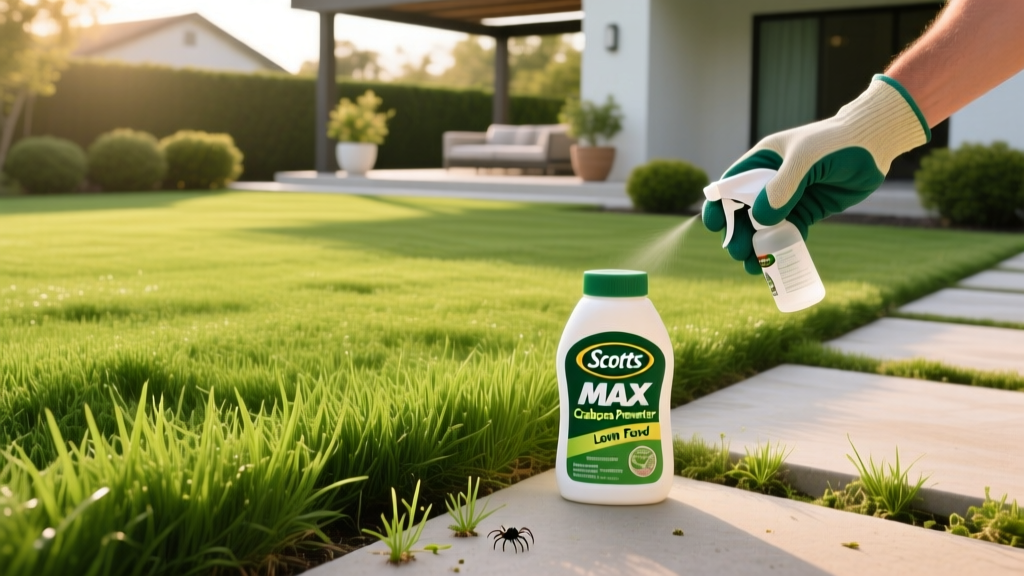
Scotts MAX Crabgrass Preventer with Lawn Food vs Spot Treatments
The Fallacy of Reactive Crabgrass Spot-Treatments
When homeowners search for crabgrass spot-treatment guides, they are typically reacting to a visible infestation in mid-summer. Crabgrass (Digitaria sanguinalis) is an aggressive annual weed that thrives in hot, compacted soil, and its prostrate growth habit allows it to choke out desirable turfgrass. However, relying on post-emergent chemical spot-treatments for crabgrass is fundamentally flawed. By the time crabgrass is visible enough to spot-spray, it has already developed a deep, fibrous root system and is actively dropping seeds for the following year.
Furthermore, post-emergent herbicides effective against mature crabgrass, such as Quinclorac, carry a high risk of phytotoxicity to desirable cool-season grasses like Kentucky bluegrass and tall fescue when applied during summer heat. According to the University of Minnesota Extension, reactive spot-treating often results in dead patches that are quickly recolonized by even more aggressive weeds. The superior strategy is shifting from reactive spot-treatment to proactive, broadcast prevention using advanced formulations like Scotts MAX Crabgrass Preventer with Lawn Food.
Expert Insight: The term "spot-treatment" in modern turf management should refer to treating the seed bank before germination, rather than chasing individual weeds. Scotts MAX bridges the gap between prevention and early post-emergent control, effectively eliminating the need for toxic mid-summer spot sprays.
The Dithiopyr Advantage: Why Scotts MAX Outperforms Standard Preventers
Most standard crabgrass preventers rely on active ingredients like Pendimethalin or Prodiamine. These chemicals create a barrier in the top half-inch of soil that kills seeds as they germinate. If you apply them too late, and the crabgrass has already sprouted, they are entirely useless.
Scotts MAX Crabgrass Preventer with Lawn Food utilizes Dithiopyr as its primary herbicidal active ingredient. Dithiopyr is a game-changer for lawn care professionals and homeowners alike because it possesses early post-emergent activity. It inhibits microtubule formation in plant cells, which stops root development not only in germinating seeds but also in young crabgrass seedlings up to the 3-leaf (early tillering) stage.
Identifying the 3-Leaf Window
To understand why this eliminates the need for traditional spot-treatments, you must understand crabgrass phenology. Crabgrass emerges when soil temperatures at a 2-inch depth reach 55°F to 60°F for consecutive days. If you miss the strict pre-emergent window by two weeks, standard preventers fail. With Scotts MAX, the Dithiopyr will still absorb through the foliage and roots of the young, 3-leaf crabgrass seedling, killing it before it can tiller and spread. This broadcast application acts as a "whole-lawn spot-treatment" for early breakthroughs without harming your established turf.
Decision Matrix: Prevention vs. Post-Emergent Spot-Treatment
Use this framework to determine whether to apply Scotts MAX as a preventative baseline or if you are forced into a reactive post-emergent spot-treatment protocol.
| Lawn Scenario & Timing | Recommended Action | Why Traditional Spot-Treating Fails Here |
|---|---|---|
| Early Spring (Soil < 55°F, Forsythia blooming) |
Apply Scotts MAX Crabgrass Preventer with Lawn Food. | No crabgrass is visible yet; spot-treatment is impossible. Prevention is mandatory. |
| Late Spring (Soil 60°F - 65°F, minor breakthroughs) |
Apply Scotts MAX (Dithiopyr will kill 1-3 leaf seedlings). | Spot-spraying misses the 90% of seeds still germinating in the soil profile. |
| Mid-Summer (Mature crabgrass, seeding out) |
Manual removal or targeted Quinclorac spot-spray. | Dithiopyr cannot kill mature, tillered crabgrass. Spot-spraying risks turf burn in high heat. |
| Late Summer (August/September, overseeding prep) |
Do NOT apply preventers. Mow low and bag clippings. | Crabgrass is dying naturally. Preventers will block your fall grass seed from germinating. |
Step-by-Step Application and Calibration Guide
To maximize the early post-emergent spot-killing power of Scotts MAX, precise application is required. The fertilizer component (typically a 28-0-3 or similar N-P-K ratio depending on the exact 2026 regional formulation) requires proper watering to activate without burning the turf.
- Monitor Soil Temperature: Do not rely on air temperature. Use a soil thermometer at a 2-inch depth. Apply when soil temps hit 55°F for three consecutive mornings. The UMass Amherst Turf Program emphasizes that soil temperature is the only reliable metric for pre-emergent timing.
- Calibrate Your Spreader: For a standard Scotts Rotary Spreader (like the EdgeGuard Mini or Elite), the setting for Scotts MAX is typically 3.5 to 4. Always check the back of the specific bag you purchase, as granule size can vary slightly between manufacturing lots.
- Apply in a Crisscross Pattern: Apply half the product walking North-South, and the other half walking East-West. This ensures uniform coverage and prevents "striping" where crabgrass breaks through in missed wheel tracks.
- Watering In: Dithiopyr requires activation. Apply 0.25 to 0.5 inches of water within 48 hours of application to wash the granules off the turf blades and into the soil surface where the seed bank resides.
Handling the 5% Breakthrough: Mature Spot-Treatment Protocol
Even with perfect application of Scotts MAX, environmental factors like heavy spring rains washing the chemical barrier away, or soil temperatures spiking rapidly, can lead to a 5% to 10% breakthrough of mature crabgrass by July. When the weed has passed the 3-leaf stage and developed multiple tillers, Dithiopyr will no longer kill it. You must now transition to a true, localized post-emergent spot-treatment.
Selecting the Right Post-Emergent Chemistry
Do not use non-selective herbicides like Glyphosate for spot-treating crabgrass in the middle of a lawn; it will kill your desirable grass and leave dead spots. Instead, use a selective herbicide containing Quinclorac (e.g., Drive XLR8 for professionals, or consumer-ready Bayer Advanced Crabgrass Killer). Quinclorac mimics auxin growth hormones, causing the crabgrass to grow itself to death.
Warning: Quinclorac can cause temporary yellowing or stunting in certain desirable turfgrasses, particularly St. Augustinegrass and Centipedegrass. Always verify the product label against your specific warm-season or cool-season grass type before spot-spraying.
Cost Analysis and ROI: Prevention vs. Reaction
Homeowners often hesitate at the upfront cost of premium combination products. Let us break down the financial reality of using Scotts MAX versus relying on reactive spot-treatments in the 2026 market.
- Scotts MAX Crabgrass Preventer with Lawn Food: A 40 lb bag covering 10,000 square feet retails for approximately $80 to $85. This equates to $8.00 to $8.50 per 1,000 sq. ft. This single application provides 4 months of crabgrass prevention, early post-emergent seedling control, and a full feeding of nitrogen for spring green-up.
- Reactive Spot-Treatment (Quinclorac RTU): A 32 oz ready-to-spray bottle of consumer crabgrass killer costs around $15 to $18 and covers roughly 2,000 sq. ft. of targeted spot-spraying. This equates to $7.50 to $9.00 per 1,000 sq. ft. However, mature crabgrass almost always requires a second application 14 days later to achieve full control, effectively doubling the cost to $15.00+ per 1,000 sq. ft., not including the cost of repairing turf damaged by the herbicide or the aesthetic loss of a weedy lawn all summer.
"The cheapest weed control is the one you apply before the weed ever sees the sun. Paying for a premium pre-emergent with integrated fertilizer is an investment in turf density; paying for post-emergent spot-treatments is paying for damage control."
Final Verdict
Scotts MAX Crabgrass Preventer with Lawn Food fundamentally changes the weed species spot-treatment paradigm. By leveraging the unique early post-emergent properties of Dithiopyr, it acts as a broadcast spot-treatment for young seedlings while fortifying the turf canopy to naturally shade out future weed pressure. Reserve traditional chemical spot-treatments strictly for the inevitable mid-summer escapes, and rely on Scotts MAX to do the heavy lifting in the spring.

