
Lawn Care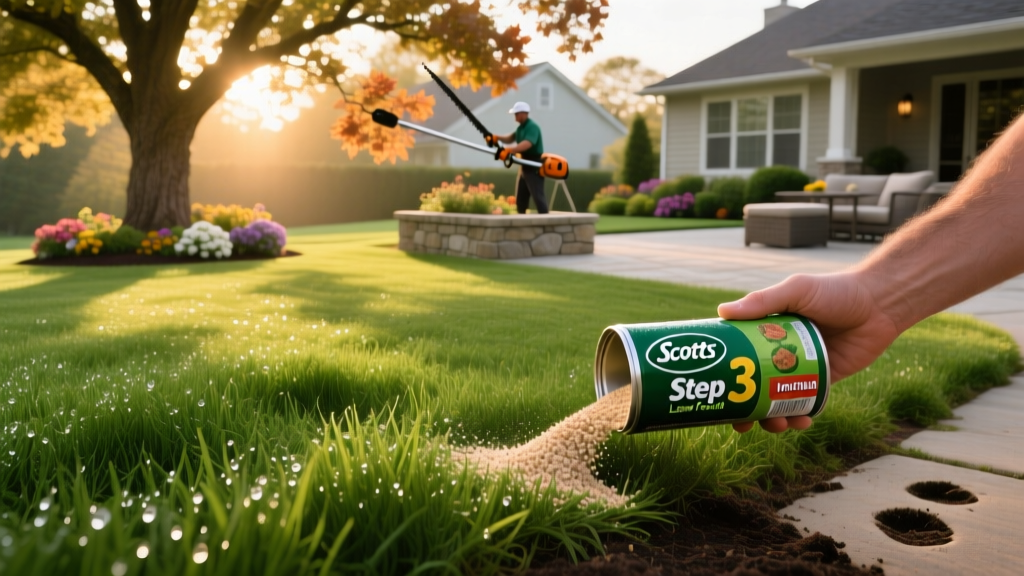
Scotts Step 3 Lawn Food with 2 Iron: 2026 Application & Review
The Science of Mid-Season Iron Supplementation
When homeowners search for the ideal mid-summer or early fall fertilizer, the Scotts Step 3 Lawn Food with 2 Iron frequently emerges as a top contender. While Scotts officially designates 'Step 3' in their traditional 4-step program for summer insect control (SummerGuard), many turf managers and advanced homeowners substitute it with the Scotts Turf Builder Lawn Food featuring 2% Iron. This strategic swap addresses a specific physiological need in cool- and warm-season grasses during high-heat months: the demand for deep greening without the disease-promoting nitrogen flush.
Iron (Fe) is a crucial micronutrient required for chlorophyll synthesis. Unlike nitrogen, which forces rapid vertical blade growth and depletes root carbohydrate reserves during summer stress, iron darkens the turf by enhancing the porphyrin rings in chlorophyll molecules. According to turfgrass research from the University of Minnesota Extension, applying iron during peak summer temperatures allows lawns to maintain a rich, dark green hue while avoiding the fungal vulnerabilities associated with heavy nitrogen applications.
Formulation Breakdown: 32-0-4 + 2% Fe
Nitrogen (32%): Provides a moderate, slow-release energy source (typically using methylene urea or sulfur-coated urea) to sustain the plant without triggering excessive growth.
Phosphorus (0%): Omitted to comply with environmental regulations and prevent runoff, as established lawns rarely require additional phosphorus.
Potassium (4%): Aids in cellular osmoregulation, helping grass blades retain water and withstand drought and heat stress.
Iron (2%): The star micronutrient for deep color enhancement and enzyme activation.
Step 3 SummerGuard vs. Turf Builder with 2% Iron
Choosing between the official Scotts Step 3 SummerGuard (which contains bifenthrin for insect control) and the 2% Iron formula depends entirely on your lawn's specific summer challenges. Applying broad-spectrum insecticides when no pest pressure exists disrupts local soil ecology and wastes budget.
| Feature | Scotts Step 3 SummerGuard | Scotts Lawn Food with 2% Iron |
|---|---|---|
| Primary Active Ingredient | Bifenthrin (Insecticide) | Chelated/Sulfur-Coated Iron |
| NPK Ratio | 26-0-2 | 32-0-4 |
| Best Used When | Active grub or chinch bug damage is visible | Lawn is healthy but lacks deep green color |
| Heat Stress Impact | Moderate (higher N can stress dormant turf) | Low (Iron colors without forcing growth) |
Step-by-Step 2026 Application Protocol
To maximize the efficacy of the 2% iron formula and prevent common application failures, follow this precise protocol. The Texas A&M AgriLife Extension emphasizes that micronutrient timing and soil moisture are critical for root uptake.
- Verify Soil Moisture: Never apply iron to a wilted or drought-stressed lawn. Water the lawn deeply 24 hours before application to ensure the soil profile is moist, which aids in granule dissolution and root absorption.
- Calibrate Your Spreader: For the Scotts Turf Builder Rotary Spreader, set the dial to 5 ½. If using a Scotts Drop Spreader, set it to 8 ½. Incorrect calibration is the leading cause of striping and localized fertilizer burn.
- Execute Perimeter Passes: Walk the perimeter of your lawn first to create a turning zone. This prevents overlapping and double-dosing the edges, which can cause iron toxicity and tip burn.
- Sweep Hardscapes Immediately: Iron granules that land on concrete, pavers, or stone will oxidize (rust) when exposed to morning dew or irrigation. Sweep or blow granules off hardscapes *before* they get wet.
- Water In: Apply ¼ to ½ inch of water immediately after spreading to wash the granules off the grass blades and into the soil thatch layer.
Troubleshooting: Iron Staining and pH Lockout
Even experienced lawn care enthusiasts encounter issues with iron-based fertilizers. Here is how to diagnose and resolve the two most common failure modes.
Problem: Orange Rust Stains on Driveways
Cause: Iron sulfate oxidizes rapidly when wet on alkaline concrete surfaces.
Solution: Do not use a hose to wash the stain, as this spreads the rust. Sweep dry granules immediately. If a stain has already set, apply a commercial rust remover containing oxalic acid. Oxalic acid chemically reduces the iron oxide, lifting the stain from the concrete pores without damaging the surface.
Problem: Lawn Fails to Green Up After 14 Days
Cause: Soil pH lockout. Iron becomes highly insoluble and unavailable to turfgrass roots in soils with a pH above 7.2. The iron is present in the soil, but the grass cannot absorb it.
Solution: Conduct a soil test. If your pH is high, transition to a liquid foliar spray using Fe-EDDHA chelated iron, which remains stable in high-pH environments, or apply elemental sulfur to gradually lower the soil pH over the next 6 to 12 months.
2026 Cost Analysis and Coverage Calculator
Pricing for Scotts turf products has stabilized in 2026 following the supply chain fluctuations of previous years. Below is the current retail pricing and coverage matrix to help you calculate your exact seasonal budget.
| Bag Size | Coverage Area | Avg. 2026 Retail Price | Cost per 1,000 sq. ft. |
|---|---|---|---|
| 12.5 lbs | 5,000 sq. ft. | $38.00 - $42.00 | $7.60 - $8.40 |
| 25 lbs | 10,000 sq. ft. | $68.00 - $74.00 | $6.80 - $7.40 |
| 37.5 lbs | 15,000 sq. ft. | $95.00 - $105.00 | $6.33 - $7.00 |
Pro Tip: Always purchase the larger bag sizes if you have over 8,000 square feet of turf. The cost-per-thousand-square-foot drops significantly, and the granular fertilizer retains its potency for up to 3 years if stored in a climate-controlled, low-humidity environment.
Final Verdict for the 2026 Season
The Scotts Step 3 Lawn Food with 2 Iron remains a highly effective, specialized tool for mid-season turf management. By bypassing unnecessary insecticides and focusing on a high-iron, moderate-nitrogen profile, you protect your lawn from summer fungal pathogens while achieving the deep, emerald color typically reserved for professional golf course fairways. Just remember to respect the concrete, monitor your soil pH, and calibrate your spreader for flawless results.

