
Lawn Care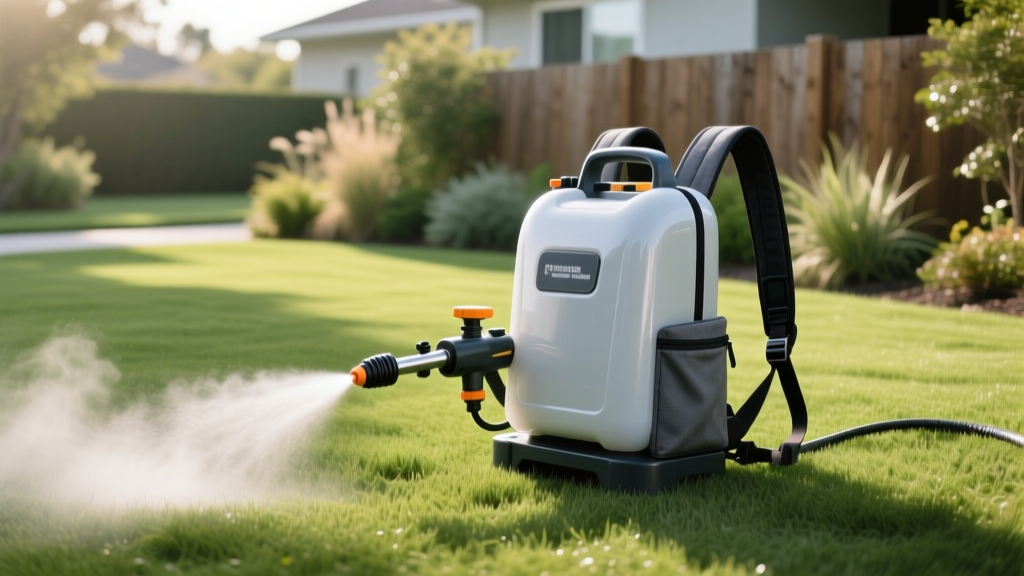
Finding a Good Backpack Sprayer: 2026 Buyer & Maintenance Guide
Why Your Sprayer Choice Dictates Lawn Health
Applying liquid fertilizers, pre-emergent herbicides, and broadleaf weed controls requires precise, even distribution. A substandard sprayer leaks concentrated chemicals onto your skin, drips 2,4-D onto ornamental beds, and delivers uneven pressure that results in streaky, burned turf. Finding a good backpack sprayer is not just about comfort; it is an investment in chemical efficacy and environmental safety. In 2026, the market is saturated with cheap, big-box store sprayers that fail after a single season of use due to degraded seals and cracked wands. This guide breaks down the exact engineering specifications, top-tier models, and maintenance protocols required to keep your equipment operating at professional standards.
The Anatomy of a Professional-Grade Sprayer
To separate professional-grade equipment from disposable consumer models, evaluate these four critical components:
- Tank Material: Look for UV-resistant, high-density polyethylene (HDPE). Translucent tanks with molded-in measurement markers allow you to monitor chemical levels without opening the lid, reducing vapor exposure.
- Pump Mechanism: Piston pumps generate higher pressures (up to 90 PSI), ideal for liquid herbicides and reaching high into shrubbery. Diaphragm pumps operate at lower pressures but excel at handling abrasive wettable powders and thick suspensions without scoring the cylinder walls.
- Seal Composition: This is where cheap sprayers fail. Viton (fluoroelastomer) seals are mandatory for harsh solvents, oil-based carriers, and strong adjuvants. Buna-N (nitrile) seals are acceptable for water-based glyphosate but will swell and fail when exposed to certain ester-based herbicides.
- Wand and Nozzle: Stainless steel or brass wands resist corrosion. More importantly, discard the OEM nozzle. Upgrading to a TeeJet Turbo TeeJet (TT) or Air Induction (AIXR) nozzle reduces chemical drift by up to 80% and ensures a uniform fan pattern.
2026 Market Comparison Matrix: Top Contenders
We evaluated the most reliable models currently available to professional landscapers and serious homeowners. Below is a direct comparison of the top performers that qualify as a genuinely good backpack sprayer for rigorous lawn care.
| Model | Capacity | Pump Type | Seal Material | Avg. Price (2026) | Best Application |
|---|---|---|---|---|---|
| Solo 425 | 4 Gallon | Piston | Viton | $165 - $180 | Liquid herbicides, high-pressure spot treatments |
| Chapin 20096 | 4 Gallon | Piston | Buna-N/Viton mix | $130 - $145 | General lawn fertilization, water-based weed control |
| Field King 190328 | 4 Gallon | Diaphragm | Viton | $150 - $160 | Wettable powders, thick liquid fertilizers |
| Smith Contractor | 2 Gallon | Piston | Viton | $90 - $105 | Small urban lawns, targeted spot-spraying |
WARNING: Never use petroleum-based lubricants (like Vaseline or WD-40) on sprayer O-rings. Petroleum distillates cause Viton and Buna-N seals to swell, permanently deforming them and causing catastrophic pressure leaks. Always use 100% silicone grease.
Calibration: The Hidden Variable in Lawn Care
Owning a good backpack sprayer is useless if it is not calibrated to your specific walking speed and nozzle output. Over-application burns the turf and wastes expensive chemicals; under-application allows weeds to survive and develop resistance.
The 1/128th Acre Method
- Measure your swath width: Spray water on a dry driveway and measure the width of the fan pattern. Assume a standard 40-inch swath for this example.
- Calculate the distance: To cover exactly 1/128th of an acre with a 40-inch swath, you must walk 18.5 feet. (Formula: 340.3 / swath width in inches = distance in feet).
- Mark the distance: Place two stakes 18.5 feet apart.
- Catch the output: Fill your sprayer with clean water. Walk the 18.5-foot distance at your normal application pace, spraying into a measuring cup or graduated cylinder.
- The Magic Conversion: The number of fluid ounces you catch equals the Gallons Per Acre (GPA) your sprayer is applying. If you catch 20 ounces, you are applying 20 GPA. Adjust your walking speed or nozzle size until you hit the manufacturer's recommended GPA for your specific chemical.
Critical Maintenance Protocols to Prevent Failure
The number one reason sprayers end up in the landfill is chemical crystallization and seal degradation. Follow this strict post-application protocol to ensure your equipment lasts for years.
Step-by-Step Winterization and Cleaning
- Triple Rinse: Empty the tank, fill it 1/4 full with clean water, shake vigorously, and spray it out through the wand. Repeat this three times to clear the wand and nozzle body of residual active ingredients.
- Filter Extraction: Unscrew the wand from the handle and remove the inline mesh filter. Scrub it with a nylon brush under running water. A clogged filter causes pressure drops and uneven fan patterns.
- O-Ring Lubrication: Disassemble the pump cylinder annually. Wipe down the piston and apply a generous layer of Parker O-Ring Lube or Super Lube silicone paste. This prevents the rubber from drying out and tearing during the first pump of the spring season.
- Pressure Relief: Never store a pressurized sprayer. Constant pressure stresses the HDPE tank seams and fatigues the internal check valves. Pull the pressure relief valve and squeeze the wand trigger until all air and liquid are expelled.
Troubleshooting Common Pressure & Leak Issues
When your equipment fails mid-application, use this decision tree to diagnose the problem without resorting to buying a replacement unit.
- Symptom: Wand drips continuously after releasing the trigger.
- Cause: Debris trapped in the shut-off valve or a worn internal nylon check valve.
- Fix: Disassemble the shut-off valve handle, flush the chamber with compressed air or water, and inspect the rubber seat for indentations. Replace the seat if scored.
- Symptom: Pump handle becomes incredibly difficult to push down.
- Cause: Lack of lubrication on the piston O-ring, or chemical crystallization inside the cylinder.
- Fix: Flush the cylinder with warm soapy water, dry completely, and apply silicone grease. Never force the handle, as this will bend the internal pump rod.
- Symptom: Fan pattern is curved or heavy on one side.
- Cause: Partial clog in the nozzle tip or damaged nozzle orifice.
- Fix: Remove the nozzle and clean it with a soft-bristle toothbrush. Never use a wire or pin to clear a nozzle, as this alters the precise machining of the orifice and ruins the calibration.
Safety Standards and Expert Sourcing
Handling concentrated herbicides requires strict adherence to safety protocols. The EPA's Safe Pest Control guidelines mandate that applicators wear appropriate Personal Protective Equipment (PPE), including chemical-resistant nitrile gloves and protective eyewear, to prevent dermal absorption. Furthermore, the NIOSH pesticide safety protocols emphasize the importance of proper equipment calibration to minimize off-target drift, which can harm neighboring ecosystems and waterways. Always consult the OSHA Hazard Communication Standard to ensure your chemical storage and labeling practices meet federal safety requirements.
Frequently Asked Questions
Can I use a diaphragm pump sprayer for liquid pre-emergents?
Yes, but diaphragm pumps generally max out around 40-50 PSI. Ensure your nozzle is rated for lower pressures to maintain a proper fan pattern. For high-pressure applications, stick to a piston pump.
How often should I replace the Viton O-rings?
Under normal residential use (10-15 applications per year), Viton O-rings should be replaced every 3 to 4 years. Keep a $6 OEM rebuild kit in your garage to minimize downtime when a leak inevitably occurs.
Is a battery-powered backpack sprayer worth the investment?
Battery sprayers eliminate the physical fatigue of pumping, maintaining a constant 40 PSI. However, they add 4-6 lbs of dead weight to the tank, and the internal diaphragm pumps are notoriously difficult to repair once the warranty expires. For pure reliability and field-serviceability, a manual piston pump remains the industry standard.

