
Lawn Care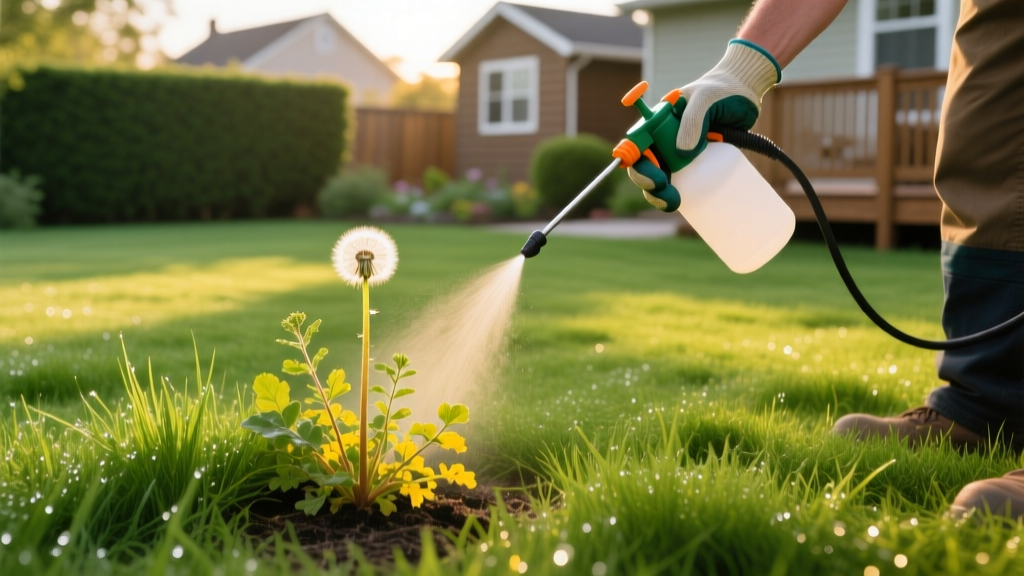
How to Kill Weeds Not Grass: Selective Herbicide Spot-Treatment Guide
The Mechanism of Selective Toxicity
To successfully kill weeds not grass, you must leverage the biochemical differences between monocotyledons (grasses) and dicotyledons (broadleaf weeds). Selective post-emergent herbicides exploit these physiological gaps. For instance, synthetic auxins like 2,4-D mimic natural plant growth hormones. Broadleaf weeds absorb the chemical and undergo uncontrolled, unsustainable cellular division, eventually exhausting their energy reserves and dying. Cool-season and warm-season grasses, however, possess specific cytochrome P450 enzymes that rapidly metabolize and detoxify these synthetic auxins before they can cause systemic damage.
Understanding this mechanism is critical because it dictates your application strategy. Selective herbicides require foliar absorption and translocation through the weed's phloem. If you mow immediately before or after application, you remove the leaf surface area required for absorption or sever the vascular system needed to transport the chemical to the root crown. According to NC State Turfgrass Extension, maximizing leaf contact time and utilizing proper adjuvants are the primary determinants of spot-treatment success.
Active Ingredient Matrix: Match the Chemical to the Weed
Not all selective herbicides are universally safe across all turfgrass species. Applying the wrong active ingredient can result in severe phytotoxicity, bleaching, or total turf loss. Below is a definitive matrix for the most effective selective active ingredients available to homeowners and commercial applicators in 2026.
| Active Ingredient | Target Weeds | Cool-Season Safety | Warm-Season Safety | Approx. Retail Cost |
|---|---|---|---|---|
| 2,4-D Amine | Dandelion, Clover, Plantain | Excellent | Excellent | $15 - $25 / pint |
| Quinclorac | Crabgrass, Foxtail, Bindweed | Excellent | Poor (Avoid St. Augustine) | $45 - $60 / pint |
| Fluazifop-P-butyl | Bermudagrass in Fescue, Poa | Excellent | Poor (Turfgrass injury) | $60 - $80 / 8 oz |
| Mesotrione | Nutsedge, Ground Ivy, Bentgrass | Excellent | Moderate (Avoid Bermuda) | $110 - $130 / 4 oz |
| Halosulfuron-methyl | Yellow/Purple Nutsedge | Excellent | Excellent | $40 - $55 / pouch |
WARNING: Ester vs. Amine Formulations
When purchasing 2,4-D products, always select the amine formulation for spot treatments. The ester formulation is highly volatile and will vaporize in temperatures above 80°F, drifting onto and killing nearby desirable plants, shrubs, and even your own turfgrass.
When purchasing 2,4-D products, always select the amine formulation for spot treatments. The ester formulation is highly volatile and will vaporize in temperatures above 80°F, drifting onto and killing nearby desirable plants, shrubs, and even your own turfgrass.
Step-by-Step Spot-Treatment Protocol
Achieving a clean kill without damaging the surrounding turf requires precise calibration and mixing. Follow this exact protocol for liquid spot-treatments.
- Mow to 3.0 - 3.5 Inches: Wait 48 hours after mowing before spraying. This ensures the weeds have regenerated enough leaf tissue to absorb a lethal dose of the herbicide.
- Calibrate Your Sprayer: Fill a 2-gallon pump sprayer with plain water. Spray a 500 sq. ft. area of your lawn at a normal walking pace. Measure how much water is left. This tells you your exact output rate per 1,000 sq. ft., which is required to calculate the correct chemical dose.
- Condition the Water: Hard water contains calcium and magnesium ions that bind to weak-acid herbicides (like 2,4-D and Glyphosate), rendering them inactive. Add Ammonium Sulfate (AMS) at a rate of 1.0 oz per gallon of water to condition the water and lower the pH to an optimal 4.5 - 5.5.
- Add the Surfactant: Herbicides will bead up and roll off the waxy cuticle of mature weeds without a Non-Ionic Surfactant (NIS). Add NIS at 0.25% v/v (approximately 1 teaspoon per gallon of water). Do not use dish soap, as it contains degreasers that can strip the protective cuticle off your desirable grass.
- Mix and Apply: Add the selective herbicide last. Agitate the tank thoroughly. Apply a fine mist directly to the center of the weed rosette until the leaves are wet but not dripping. Drenching the soil is wasteful and increases the risk of root uptake by surrounding turf.
Cool-Season vs. Warm-Season Turf Restrictions
The most common reason homeowners fail to kill weeds not grass is ignoring turfgrass-specific herbicide restrictions. The metabolic pathways that protect grass from selective herbicides vary wildly between species.
Cool-Season Grasses (Fescue, Kentucky Bluegrass, Ryegrass)
Cool-season grasses are highly resilient to most synthetic auxins and ALS-inhibitors. You can safely use 2,4-D, Dicamba, MCPP, and Quinclorac without fear of severe phytotoxicity. The primary risk to cool-season lawns is applying these chemicals during the peak heat of summer (above 85°F), which causes temporary turf stunting and leaf cupping. For cool-season lawns, schedule spot treatments for early fall (September/October) when weeds are actively pulling nutrients into their roots for winter storage, maximizing herbicide translocation.
Warm-Season Grasses (Bermudagrass, Zoysia, Centipede, St. Augustine)
Warm-season grasses are highly sensitive to certain selective chemicals. According to the UC Agriculture and Natural Resources IPM guidelines, applying Quinclorac to St. Augustinegrass or Centipedegrass will result in severe chlorosis and necrosis. Similarly, Mesotrione (Tenacity) will bleach Bermudagrass and Zoysiagrass white upon contact. If you have a warm-season lawn, stick to Halosulfuron-methyl for nutsedge, and specialized proprietary blends (like those containing Atrazine, which is safe for St. Augustine but lethal to Fescue) for broadleaf control.
Pro-Tip: The 'Paintbrush' Method for High-Risk Weeds
If you need to kill a grassy weed (like Poa Annua or Dallisgrass) growing inside a highly sensitive warm-season turf, liquid spraying is too risky. Instead, mix a non-selective herbicide (Glyphosate) at a 2% solution, wear a nitrile glove covered by a cotton gardening glove, dip your fingers in the solution, and physically wipe the weed blades. This guarantees zero drift and 100% selectivity.
If you need to kill a grassy weed (like Poa Annua or Dallisgrass) growing inside a highly sensitive warm-season turf, liquid spraying is too risky. Instead, mix a non-selective herbicide (Glyphosate) at a 2% solution, wear a nitrile glove covered by a cotton gardening glove, dip your fingers in the solution, and physically wipe the weed blades. This guarantees zero drift and 100% selectivity.
Troubleshooting Herbicide Failure and Turf Injury
Even with the correct chemical, environmental variables can cause spot-treatments to fail or damage the surrounding lawn. Use this diagnostic framework to correct application errors.
- Symptom: Weed turns yellow at the tips but survives.
Cause: Incomplete translocation. The herbicide burned the leaf tissue (necrosis) before it could move to the root crown.
Fix: Reduce the herbicide concentration by 25% and increase the surfactant rate. A slower, systemic kill is more effective than a rapid contact burn. - Symptom: Surrounding grass blades are curled, twisted, or cupped.
Cause: Herbicide drift or volatilization. This happens when spraying 2,4-D on a windy day, or when temperatures exceed 85°F, causing the chemical to turn into a gas.
Fix: Switch to an amine formulation, spray only when winds are under 5 mph, and restrict applications to early morning when temperatures are below 75°F. - Symptom: Weed shows no reaction after 14 days.
Cause: Drought stress. When weeds are drought-stressed, they close their stomata and thicken their waxy cuticles to conserve water, making them nearly immune to foliar herbicides.
Fix: Irrigate the lawn deeply 24 hours before application to ensure the weeds are actively growing and their vascular systems are fully open.
Frequently Asked Questions
Can I mix pre-emergent and post-emergent herbicides in the same tank?
Yes, but only if the carrier is compatible. Many liquid pre-emergents (like Prodiamine) are oil-based or require heavy agitation to stay in suspension. Mixing them with water-soluble post-emergents can cause the chemicals to bind together, forming a sludge that clogs your sprayer nozzle and renders both chemicals ineffective. Always perform a 'jar test' (mixing small proportions in a glass jar) before combining chemicals in your main tank.
How long should I wait to mow after a spot treatment?
Wait a minimum of 48 hours, but 72 hours is optimal. Research from Purdue University Turfgrass Science indicates that it takes roughly 48 to 72 hours for systemic herbicides to fully translocate from the leaf surface down to the root meristems. Mowing too early physically removes the herbicide before it has finished its job.
Is it safe to seed my lawn immediately after spot-treating weeds?
No. Most selective post-emergent herbicides have a residual soil activity that will prevent grass seed from germinating. Quinclorac, for example, can remain active in the soil for up to 90 days. Mesotrione is a rare exception; it is actually used as a pre-emergent during seeding because it inhibits broadleaf weeds while allowing cool-season grass seeds to germinate. Always check the specific product label for the 'reseeding interval' before overseeding.

