
Lawn Care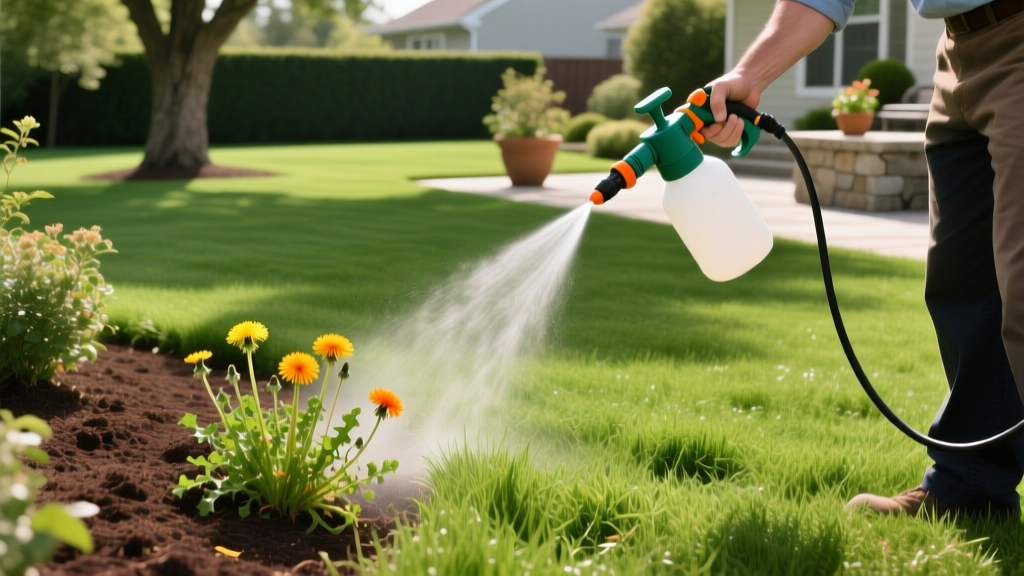
Selective Weed Spray That Won't Kill Plants: Spot-Treatment Guide
The Reality of Selective Herbicides in Garden Beds
Finding a weed spray that won't kill plants requires understanding the biochemical differences between your desired ornamentals and the invasive weeds choking them. The horticultural industry classifies these solutions as selective herbicides. Unlike non-selective systemic killers like glyphosate, which disrupt the EPSP synthase enzyme present in all green plants, selective herbicides exploit specific metabolic pathways unique to either monocots (grasses) or dicots (broadleaf plants).
When homeowners search for a weed spray that won't kill plants, they are usually facing one of two scenarios: eliminating grassy weeds from broadleaf flower beds, or removing broadleaf weeds from a turfgrass lawn. This guide focuses on the former—spot-treating invasive species in ornamental garden beds without causing phytotoxicity, epinasty, or root damage to your prized perennials, shrubs, and trees.
Warning: The Organic Vinegar Myth
Many gardeners turn to 20% or 30% horticultural vinegar (acetic acid) believing it is a safe weed spray that won't kill plants. This is a dangerous misconception. Acetic acid is a non-selective contact desiccant. It will burn the foliage of any plant it touches, including your desired ornamentals. Furthermore, repeated soil applications can severely lower soil pH, locking up essential nutrients like phosphorus and calcium.
Many gardeners turn to 20% or 30% horticultural vinegar (acetic acid) believing it is a safe weed spray that won't kill plants. This is a dangerous misconception. Acetic acid is a non-selective contact desiccant. It will burn the foliage of any plant it touches, including your desired ornamentals. Furthermore, repeated soil applications can severely lower soil pH, locking up essential nutrients like phosphorus and calcium.
The Science of Selectivity: Monocots vs. Dicots
To safely eradicate weeds, you must first identify whether the weed is a monocot or a dicot, and then select an active ingredient that targets that specific plant class while sparing the other.
Targeting Grassy Weeds in Broadleaf Beds
If your garden beds are infested with Bermuda grass, crabgrass, or quackgrass, you need an ACCase inhibitor. Active ingredients like Fluazifop-P-butyl and Sethoxydim specifically target the acetyl-CoA carboxylase enzyme, which is critical for lipid synthesis in grasses. Broadleaf plants (dicots) possess a different form of this enzyme that is naturally resistant to these chemicals, allowing you to spray directly over most flowers and shrubs without harm.
Targeting Broadleaf Weeds in Turfgrass
Conversely, if you are trying to save your lawn from dandelions, clover, or plantain, you need synthetic auxins like 2,4-D, Dicamba, or MCPP. These mimic the plant hormone auxin, causing uncontrolled, lethal growth in broadleaf weeds. Monocots (your lawn grass) rapidly metabolize and detoxify these compounds, leaving the turf unharmed.
Selective Herbicide Matrix by Weed Species
Choosing the correct product is the most critical step in ensuring you use a weed spray that won't kill plants. Refer to this matrix to match your specific weed problem with the correct selective chemistry.
| Target Weed Species | Active Ingredient | Commercial Product Example | Safe Around (Desired Plants) |
|---|---|---|---|
| Crabgrass, Bermuda, Fescue | Fluazifop-P-butyl | Ortho Grass B Gon | Most broadleaf flowers, shrubs, and trees |
| Dandelion, Clover, Plantain | 2,4-D (Amine) + Dicamba | Bonide Weed Beater Ultra | Cool- and warm-season turfgrasses only |
| Yellow & Purple Nutsedge | Halosulfuron-methyl | SedgeHammer+ | Most ornamentals (when used as directed spot spray) |
| Annual Bluegrass (Poa annua) | Clethodim | Envoy Plus | Broadleaf ornamentals and groundcovers |
For comprehensive regional data on weed identification and herbicide safety, consult the University of Minnesota Extension Weed Control database or the UC Statewide IPM Program.
Step-by-Step Spot-Treatment Protocol
Even the safest selective herbicide can cause damage if applied incorrectly. Follow this precise protocol to ensure maximum weed mortality and zero collateral damage to your garden.
- Calibrate Your Equipment: Ditch the adjustable cone nozzle that comes with cheap pump sprayers. Cone nozzles produce fine, aerosolized droplets that drift easily. Swap it for a TeeJet XR11002 flat fan nozzle. This produces larger, heavier droplets that fall straight down. Maintain a steady pressure of 40 PSI using a sprayer with a pressure regulator.
- Mix a Non-Ionic Surfactant (NIS): Water has a high surface tension (~72 dynes/cm), causing it to bead up and roll off waxy weed leaves. Add an alkylpolyoxyethylene ether-based NIS at a rate of 0.25% v/v (exactly 1 teaspoon per gallon of water). This reduces surface tension to ~30 dynes/cm, ensuring the herbicide spreads evenly across the weed's cuticle. Never substitute NIS with household dish soap, which lacks penetrant properties and can cause severe phytotoxicity.
- Check the Weather Window: Apply only when temperatures are between 60°F and 85°F. Wind speeds must be strictly under 5 mph. Check for temperature inversions (common in early morning and late evening), which can trap spray droplets in a low-hanging fog that eventually drifts onto non-target plants.
- Execute the Spot Spray: Hold the wand 12 to 18 inches above the weed. Apply just enough solution to wet the leaves until they glisten, but stop before the liquid begins to drip onto the soil. Soil saturation increases the risk of root uptake by nearby desirable plants.
Mechanical Shielding and Wick Application
When dealing with weeds growing intimately close to the crown of a sensitive plant (like a prized hosta or a delicate rose bush), even a selective herbicide might pose a risk if the desired plant falls outside the herbicide's safety profile. In these scenarios, physical barriers are mandatory.
The Cardboard Cone Method
Cut the bottom off a heavy-duty cardboard box to create a shield. Place the cone directly over the weed, pressing the edges into the mulch or soil. Insert your flat-fan nozzle into the top of the cone and spray. The cardboard catches any overspray and bounce-back, protecting the surrounding foliage.
Wick Applicators for Precision
For ultra-precise application, use a rope wick applicator or a sponge-tipped herbicide dauber. These tools transfer the herbicide directly to the weed's foliage via physical contact, completely eliminating the risk of airborne drift. This is the ultimate method for applying a weed spray that won't kill plants when the weeds are entangled in the branches of your desired shrubs.
Troubleshooting Herbicide Drift and Volatility
The most common reason a selective weed spray damages desired plants is not the active ingredient itself, but the formulation. Herbicides like 2,4-D are sold in two primary formulations: Amine and Ester.
Expert Insight: Ester formulations (e.g., 2,4-D EHE) are highly effective in cool weather because they penetrate waxy cuticles rapidly. However, they have a high vapor pressure. When ambient temperatures exceed 80°F, esters volatilize into a gas. This invisible gas can drift hundreds of yards, causing severe epinasty (leaf cupping and stem twisting) in sensitive broadleaf plants like tomatoes, redbuds, and grapes. Always purchase and use Amine formulations (e.g., 2,4-D DMA4) for spot-treatments near garden beds, as they have near-zero vapor pressure and will not volatilize.
For more information on safe handling and environmental protections regarding chemical formulations, review the EPA Herbicide Guidelines.
Frequently Asked Questions
Can I use grass-selective herbicides on all broadleaf plants?
While Fluazifop-P-butyl is safe for the vast majority of broadleaf ornamentals, there are exceptions. Certain monocot-like ornamentals, such as daylilies, irises, and some lilies, can exhibit stunting or leaf burn if sprayed with grass-selective herbicides. Always check the product label's 'Ornamental Safety' list before treating.
How long does it take for selective herbicides to work?
Unlike contact herbicides that show results in 24 hours, systemic selective herbicides take time to translocate to the roots. Expect to see yellowing and stunting in 7 to 10 days, with complete weed death occurring in 14 to 21 days. Do not reapply if you do not see immediate results.
Will selective herbicides harm my soil microbiome?
When applied as a spot-treatment at the correct label rates, selective herbicides bind tightly to soil organic matter and are broken down by soil microbes within 14 to 30 days. They do not cause long-term sterilization or harm to the broader soil food web when used responsibly.

