
Lawn Care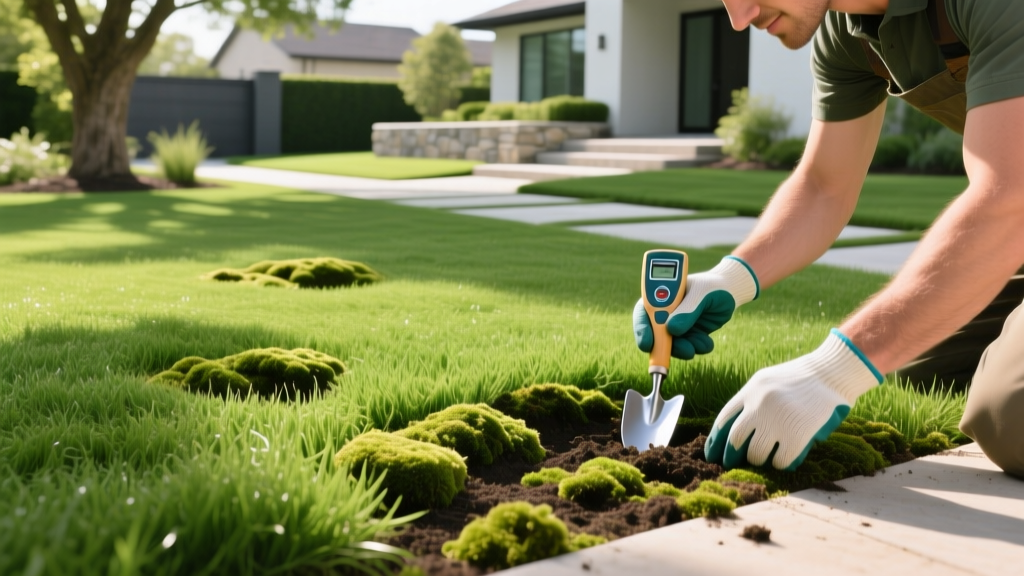
Overcoming Moss Growing in the Lawn: Turf Establishment Guide
Diagnosing the Root Cause of Moss Growing in the Lawn
Moss is not a pathogen that attacks healthy grass; it is an opportunistic indicator of underlying environmental failures. When you see moss growing in the lawn, it means the soil conditions have become inhospitable for turfgrass but ideal for bryophytes. Moss thrives in environments characterized by low soil pH (below 5.5), severe soil compaction, poor drainage, and heavy canopy shade. Attempting to establish new grass seed without first correcting these abiotic stressors will result in germination followed by rapid seedling death, allowing the moss to recolonize within a single season.
According to research from the University of Minnesota Extension, moss species like Ceratodon purpureus often indicate highly acidic, disturbed soils, while Hypnum species point to heavy shade and chronic moisture retention. Identifying your specific moss type and soil profile is the mandatory first step in the establishment process.
| Visual Symptom | Underlying Soil/Environmental Condition | Required Corrective Action Before Seeding |
|---|---|---|
| Dense, velvety green mats in deep shade | Insufficient PAR (Photosynthetically Active Radiation) & chronic dampness | Crown thinning of overhead trees; install French drains |
| Patchy moss interspersed with bare, hard dirt | Severe soil compaction (bulk density > 1.6 g/cm³) | Deep core aeration (3-4 inches) & compost topdressing |
| Moss concentrated near tree drip lines | Extreme acidity (pH < 5.0) & root competition | Apply pulverized agricultural lime (50 lbs/1,000 sq ft) |
| Yellowish-green moss on soil surface | Low soil fertility & nitrogen deficiency | Apply high-phosphorus starter fertilizer at seeding |
Step-by-Step Moss Eradication and Soil Preparation
You cannot plant grass seed directly over a moss mat. The moss will block seed-to-soil contact, and its shallow root system will steal surface moisture from germinating turf. Eradication must be both chemical and physical.
Chemical Desiccation with Ferrous Sulfate
While some homeowners use harsh soaps or bleach, the most effective and turf-safe chemical eradicator is ferrous sulfate heptahydrate. Products like Lilly Miller Moss Out! For Lawns or Bonide Moss Control utilize iron to desiccate the moss cells without permanently harming the underlying soil biology. Apply the granular iron at a rate of 4 to 6 ounces per 1,000 square feet. Within 24 to 48 hours, the moss will turn black and die. Warning: Iron sulfate will stain concrete driveways and stone patios rust-orange. Keep the spreader at least 12 inches away from hardscapes.
Physical Removal and Core Aeration
Once the moss is blackened, use a heavy-duty thatch rake or a power dethatcher (set to a shallow 1/4-inch depth) to physically rip the dead moss mat from the soil surface. Rake the debris away completely. Next, rent a walk-behind core aerator (typically $80-$100 per day at local equipment yards). Make two passes over the area in perpendicular directions to pull 3-to-4-inch soil plugs. This fractures the compaction layer that originally invited the moss.
⚠️ Critical Pre-Emergent Warning: If you applied a crabgrass pre-emergent (like prodiamine or dithiopyr) earlier in the spring, you cannot establish grass seed in that area. Pre-emergents create a chemical barrier that prevents all seeds, including turfgrass, from germinating. You must wait until the chemical barrier breaks down (usually 60-90 days) or physically remove the top 2 inches of soil and replace it with fresh topsoil before planting.
Turfgrass Selection for Shade and Moisture
The most common reason for moss returning after lawn renovation is planting the wrong grass species. Kentucky Bluegrass and Bermuda grass require 6 to 8 hours of direct sunlight. If moss was growing in the lawn due to shade, planting sun-loving grasses guarantees failure. According to Rutgers NJAES turfgrass specialists, Fine Fescues are the superior choice for moss-prone, shaded environments.
- Creeping Red Fescue: Excellent for dry shade and low-fertility soils. Spreads via rhizomes to fill gaps.
- Chewings Fescue: Bunch-type growth habit that tolerates wetter, poorly drained soils where moss typically thrives.
- Hard Fescue: Highly drought-tolerant and requires minimal nitrogen, reducing the risk of fungal diseases in damp shade.
For a premium, pre-mixed option, look for Jonathan Green Black Beauty Ultra or Pennington Smart Seed Dense Shade. These blends combine fine fescues with shade-adapted perennial ryegrass to ensure rapid establishment and long-term density. Expect to pay between $45 and $65 for a 3-pound bag, which covers roughly 600 square feet.
The Seeding and Establishment Protocol
Proper establishment requires meticulous attention to moisture and seed-to-soil contact. Follow this exact sequence for the highest germination rates in formerly moss-infested zones:
- Level and Topdress: After raking out the dead moss and aerating, spread a 1/4-inch layer of screened compost or high-quality topsoil over the area. This provides a nutrient-rich bed for the seeds. Budget roughly $40 per cubic yard for bulk screened compost.
- Apply Starter Fertilizer: Use a starter fertilizer with a high phosphorus content (e.g., 24-25-4 NPK ratio) to stimulate rapid root development. Phosphorus is critical for seedling establishment, though some states restrict its use unless a soil test proves a deficiency or you are actively seeding.
- Sow the Seed: Calibrate your broadcast spreader to drop 4 to 5 pounds of Fine Fescue blend per 1,000 square feet. Walk in overlapping grid patterns to ensure even distribution.
- Rake and Roll: Lightly drag the area with a leaf rake turned upside down (tines facing up) to barely cover the seeds with 1/8 inch of soil. Follow up with a water-filled lawn roller to press the seeds firmly into the compost bed.
- Mulch: Cover the seeded area with a thin layer of peat moss or weed-free straw (never use hay, which introduces agricultural weeds). Peat moss is superior for moisture retention and won't blow away in the wind.
The 21-Day Watering Schedule
Germinating fine fescues cannot tolerate drying out, nor can they survive in waterlogged soil (which will invite the moss back). For the first 14 days, water the seeded area lightly 3 times a day for 5 to 10 minutes per zone. The goal is to keep the top 1/2 inch of soil consistently damp like a wrung-out sponge. Once the seedlings reach 1.5 inches tall, reduce watering to once daily for 20 minutes to encourage roots to chase the moisture deeper into the aeration holes.
Post-Establishment Canopy and Soil Management
Establishing the grass is only half the battle; maintaining the environment prevents the moss from returning. Overhead tree canopies that block sunlight and restrict airflow must be managed. Hire a certified arborist to perform "crown thinning" (removing 15-20% of interior branches) and "crown raising" (removing lower limbs to allow angled morning sunlight to reach the turf). This service typically costs $400 to $800 depending on tree size, but it fundamentally alters the microclimate of the lawn.
Finally, commit to an annual fall core aeration and topdressing routine. By continually opening the soil profile and introducing organic matter, you maintain the soil structure necessary for turfgrass roots to outcompete moss rhizoids, ensuring your newly established lawn remains dense, healthy, and moss-free for years to come.

