
Lawn Care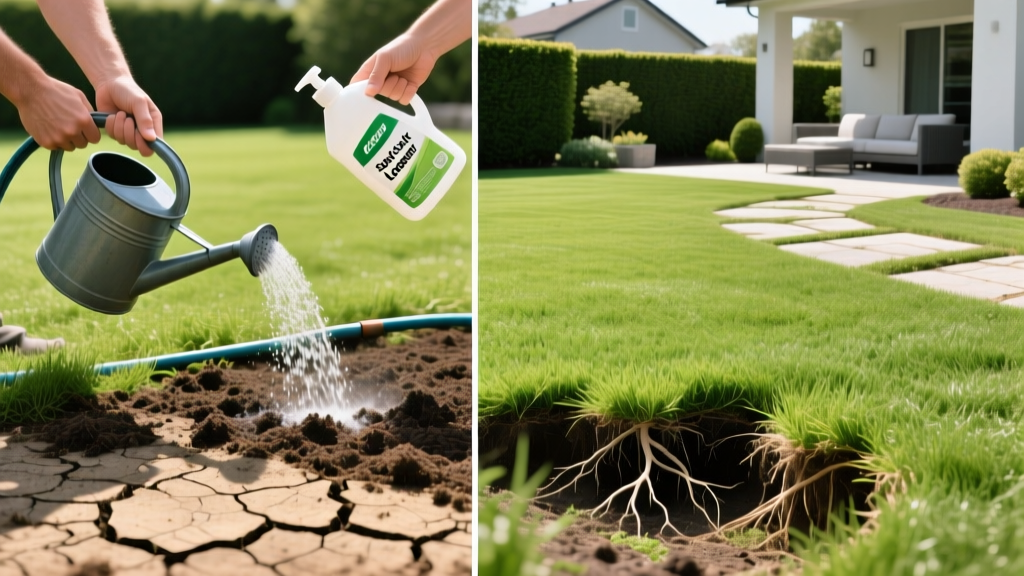
How to Use Simple Lawn Solutions Liquid Soil Loosener Step-by-Step
The Science of Liquid Soil Aeration
Soil compaction occurs when bulk density exceeds 1.4 g/cm³ in clay-heavy soils or 1.6 g/cm³ in sandy loams, suffocating turfgrass roots and blocking nutrient uptake. While mechanical core aeration physically removes soil plugs, liquid aeration offers a chemical and biological alternative. The Simple Lawn Solutions Liquid Soil Loosener (typically sold in a 32 oz hose-end sprayer bottle covering up to 3,200 square feet for roughly $28) relies on a tripartite formula: humic acid, fulvic acid, and non-ionic surfactants.
The surfactants lower the surface tension of water from roughly 72 mN/m down to 30 mN/m. This allows moisture to slip between tightly bound clay platelets, effectively softening the hardpan. Simultaneously, the humic and fulvic acids act as chelating agents and microbial food sources, stimulating the soil microbiome to naturally aggregate soil particles over time. According to University of Minnesota Extension, improving soil structure via organic amendments and wetting agents is critical for long-term turf resilience in high-traffic zones.
Expert Note: Liquid soil loosener is not a 1:1 replacement for mechanical aeration in severely compacted, heavily thatched lawns. It is best utilized as a maintenance tool, a pre-overseeding soil prep, or for lawns where mechanical aerators cannot reach (e.g., tight side yards or newly sodded areas).
Pre-Application Checklist
Before connecting the hose-end sprayer, prepare the turf to maximize soil penetration.
- Mow the Lawn: Cut cool-season grasses (fescue, Kentucky bluegrass) to 2.5 inches and warm-season grasses (Bermuda, Zoysia) to 1.5 inches. This prevents the spray from being intercepted by tall grass blades.
- Clear Debris: Rake away leaves, twigs, and excessive thatch (over 0.5 inches thick) that could block the liquid from reaching the soil surface.
- Pre-Water (If Bone Dry): If the soil is hydrophobic or cracking from drought, apply 0.25 inches of water 24 hours prior. Surfactants require baseline moisture to activate and pull the solution into the root zone.
- Check Weather: Ensure no heavy rain is forecasted for at least 4 hours post-application to prevent runoff before the solution infiltrates the soil profile.
Step-by-Step Application Procedure
Follow this exact sequence to ensure even coverage and prevent chemical pooling.
- Shake Vigorously: Humic acid is dense and prone to settling. Shake the 32 oz Simple Lawn Solutions bottle for a full 30 seconds before attaching it to your standard garden hose.
- Attach and Set the Dial: Screw the hose-end sprayer onto the hose. Turn the water spigot on fully to ensure maximum water pressure (typically 40-60 PSI), which is required to properly siphon the concentrate.
- Begin the Spray Pattern: Hold the sprayer at waist height. Start walking before you pull the trigger to avoid dumping a concentrated puddle of surfactant on a single spot.
- Maintain Walking Speed: Walk at a steady, brisk pace of approximately 3 feet per second. The 32 oz bottle is calibrated to empty over roughly 3,200 square feet at standard water pressure.
- Overlap Passes: Overlap each spray pass by 30% (about 2 feet on a standard 6-foot spray swath) to ensure no strips of compacted soil are missed.
- Empty the Bottle: Continue spraying until the bottle is completely empty. If you finish your lawn and product remains, do a second, lighter pass over the most heavily compacted areas (e.g., along sidewalks, driveways, and high-traffic pathways).
Liquid Loosener vs. Core Aeration Matrix
Understanding when to deploy liquid loosener versus renting a mechanical core aerator is crucial for budget and labor management.
| Feature | Liquid Soil Loosener | Mechanical Core Aeration |
|---|---|---|
| Average Cost (3,000 sq ft) | $28 (Retail Product) | $45-$65 (Equipment Rental) |
| Labor Intensity | Low (15-20 minutes) | High (2-3 hours, heavy lifting) |
| Soil Disruption | None (No plugs left behind) | High (Leaves 2-3 inch soil cores) |
| Thatch Management | Minimal direct impact | Excellent (Brings microbes to thatch) |
| Ideal Timing | Anytime during growing season | Strictly early fall or early spring |
Post-Application Watering and Overseeding Timeline
The application is only phase one. The surfactants must be pushed into the root zone to be effective.
Immediate Watering (0-2 Hours)
Within two hours of application, irrigate the lawn with exactly 0.25 to 0.5 inches of water. This secondary watering acts as a carrier, dragging the surfactants and humic acids down 4 to 6 inches into the soil profile where the compaction actually resides. If you skip this step, the solution will sit on the surface and degrade under UV light.
Overseeding Window (24-48 Hours)
Because the liquid loosener reduces soil surface tension and improves seed-to-soil moisture contact, it is an excellent primer for overseeding. You can drop grass seed and starter fertilizer 24 to 48 hours after the liquid application. The Penn State Extension recommends maintaining constant surface moisture for seed germination; the residual surfactants in the soil will help prevent the seedbed from drying out unevenly.
Warning: Do not apply pre-emergent herbicides (like Prodiamine or Dithiopyr) within 14 days of using the liquid soil loosener if you plan to overseed. The improved water infiltration can inadvertently pull pre-emergent barriers deeper into the soil, potentially compromising their efficacy against crabgrass while still inhibiting your new grass seed.
Troubleshooting Common Application Mistakes
- Sprayer Clogging: If the siphon tube clogs, it is usually due to unmixed humic acid particulates. Detach the bottle, fill it with warm water, shake, and spray to clear the nozzle. Always store the product in a climate-controlled garage to prevent freezing and separation.
- Wind Drift: Surfactants can cause leaf burn if they dry on the foliage of sensitive ornamental shrubs bordering the lawn. Avoid spraying when wind speeds exceed 10 MPH, and keep the nozzle pointed downward near garden beds.
- Heat Stress Application: Never apply liquid soil loosener when ambient temperatures exceed 85°F. High heat causes rapid evaporation, leaving concentrated salts and surfactants on the grass blades, which can lead to phytotoxicity and tip burn.
Expert FAQ
Can I mix Simple Lawn Solutions Liquid Soil Loosener with liquid fertilizer?
No. The 32 oz hose-end sprayer is pre-calibrated for the specific viscosity and dilution rate of the soil loosener concentrate. Mixing in liquid nitrogen or iron supplements will alter the siphon rate, resulting in uneven application and potential turf burn. Apply liquid fertilizers in a separate pass 48 hours later.
How frequently should I apply this product?
For moderately compacted clay soils, apply once every 4 to 6 weeks during the active growing season (spring through early fall). For sandy loam soils that only suffer from minor surface crusting, a single application in early spring and another in early fall is sufficient.
Will this product fix standing water and poor drainage?
It will improve infiltration rates in compacted topsoil, but it cannot fix sub-surface drainage issues caused by hardpan clay layers deeper than 6 inches or improper yard grading. If water pools for more than 4 hours after heavy rain, you likely need mechanical French drains or deep-tine aeration, not just a liquid surfactant.

