
Lawn Care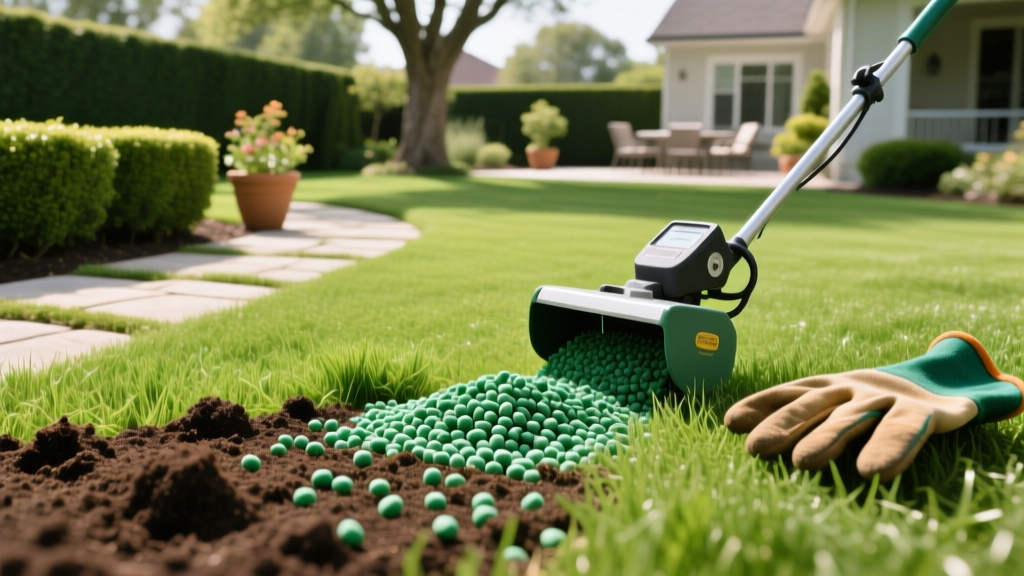
Slow Release Lawn Fertilizer: Polymer-Coated vs Organic Guide
Choosing the right nitrogen source dictates the difference between a lawn that grows steadily for months and one that suffers from rapid flush-burn cycles. Slow release lawn fertilizer provides a regulated nutrient supply, but not all slow-release mechanisms function identically. The two dominant categories—polymer-coated synthetics and microbially dependent organics—react to entirely different environmental triggers. Understanding these mechanics prevents wasted money, autumn nitrogen lockout, and spring surge-burning.
The Mechanics of Water Insoluble Nitrogen (WIN)
When evaluating any slow release lawn fertilizer, ignore the total nitrogen percentage on the front of the bag and look at the guaranteed analysis on the back for Water Insoluble Nitrogen (WIN). WIN represents the fraction of nitrogen that will not dissolve immediately upon contact with water. According to turfgrass nutrient guidelines from the University of Minnesota Extension, high-quality turf programs rely on fertilizers where at least 50% of the total nitrogen is derived from WIN sources.
Pro Tip: If a fertilizer bag reads 24-0-6 with 12% WIN, exactly half of its nitrogen is slow-release. The other half is quick-release urea or ammonium sulfate, which will green the lawn in 48 hours but fade in three weeks. For true 90-day feeding, seek formulations with WIN percentages matching at least 70% of the total N.
Polymer-Coated Urea vs. Organic Slow-Release
The fundamental difference between synthetic polymer coatings (like Polyon or Scotts Turf Builder) and organic meals (like Milorganite or feather meal) is the release trigger. Polymer coatings rely on temperature and moisture diffusion, while organics rely entirely on soil microbe respiration.
| Feature | Polymer-Coated Urea (Synthetic) | Organic Meals (Milorganite/Feather) |
|---|---|---|
| Primary Trigger | Soil Temperature & Moisture Diffusion | Microbial Activity (Requires >55°F soil) |
| Longevity | 90 to 120 days | 60 to 90 days (variable by microbe health) |
| Nutrient Profile | High N, zero/low P, moderate K | Low N, moderate P, high Iron/Calcium |
| Burn Risk | Extremely Low (Salt index buffered) | Zero (Non-burning) |
| Cost per lb of N | ~$5.40 / lb | ~$10.15 / lb |
The Cost-Per-Nitrogen Reality Check
A common misconception is that organic fertilizers are cheaper. While a 36 lb bag of Milorganite (6-4-0) costs around $22, it only contains 2.16 lbs of actual nitrogen, bringing the cost to $10.18 per pound of nitrogen. Conversely, a 50 lb bag of Lesco Polyon 24-0-11 costs roughly $65 but delivers 12 lbs of nitrogen, dropping the cost to $5.41 per pound of nitrogen. For homeowners strictly managing nitrogen inputs, premium synthetics offer superior economic efficiency.
Top Slow Release Lawn Fertilizer Formulations
1. Lesco Polyon 24-0-11 (Premium Polymer-Coated)
Polyon utilizes a reactive polymer coating that is exceptionally uniform. Unlike sulfur-coated urea (SCU), which can crack prematurely when stepped on or hit by mower blades, Polyon's resin coating remains intact until soil temperatures consistently reach 65°F to 75°F. At these temperatures, water vapor penetrates the membrane, dissolves the urea core, and slowly diffuses out. It is the gold standard for late-spring applications on warm-season grasses like Bermuda and Zoysia, providing steady growth without the aggressive vertical surges that require weekly mowing.
2. Milorganite 6-4-0 (Organic Standard)
Milorganite is a heat-dried biosolid composed of 85% organic matter. Because it requires soil microbes to break down the nitrogen bonds, it is entirely dependent on your soil's biological health. If your soil is compacted, highly acidic (pH below 5.5), or biologically dead from years of synthetic fungicide use, Milorganite will sit inert on the surface. It excels in established, biologically active cool-season lawns (Fescue, Kentucky Bluegrass) applied in early autumn when soil moisture is high and microbial populations are peaking.
3. Scotts Turf Builder EdgeGuard (Budget Hybrid)
This formulation utilizes a hybrid approach: a mix of fast-release ammonium sulfate for immediate greening and methylene urea (MU) for slow release. MU is a synthetic organic compound that breaks down via both microbial action and chemical hydrolysis. It is a cost-effective middle ground for homeowners who want a 6-to-8-week feeding window without the premium price tag of fully encapsulated polymer prills.
Application Timelines Based on Soil Temperature
Calendar dates are irrelevant; soil temperature dictates nutrient availability. Invest in a $15 digital soil thermometer and probe the ground at a 2-inch depth before spreading any slow release lawn fertilizer.
Spring Application (Cool-Season Grasses)
- Wait for 55°F Soil Temps: Applying polymer-coated fertilizers when soil is 45°F results in "nitrogen lockout." The coating will not diffuse. When temps finally spike in May, months of trapped nitrogen will release simultaneously, burning the turf.
- Rate: Apply 0.75 to 1.0 lbs of Nitrogen per 1,000 sq ft. For a 24-0-11 Polyon blend, this requires 3.1 to 4.1 lbs of product per 1,000 sq ft.
- Watering: Polymer coatings require a single, deep watering (0.5 inches) immediately after application to initiate the osmotic diffusion process.
Late Summer / Early Fall Application
- Target Late August to Mid-September: Soil temps are dropping from 80°F to 65°F. This is the ideal window for organic slow-release fertilizers like Milorganite. The cooling soil keeps microbial breakdown steady, feeding the root system for winter carbohydrate storage.
- Avoid Late Fall Synthetics: Never apply polymer-coated synthetics after October 15th in northern zones. If soil temps drop below 50°F, the prills will remain sealed all winter, dumping a massive nitrogen load in April just as the grass is trying to prioritize root growth over blade growth.
Troubleshooting Common Application Failures
Warning: The "Ghost Grass" Phenomenon
If you notice small, hard green or brown spheres on your lawn months after application, your mower is hitting un-released polymer prills. This happens when the fertilizer was applied to dry soil without follow-up irrigation, or if the soil pH is extremely low (< 5.0), inhibiting the microbial breakdown of organic variants. Always calibrate your spreader to ensure you are not overlapping passes, which doubles the application rate and leaves excess prills on the surface.
For comprehensive data on managing soil pH and biological activity to maximize organic fertilizer breakdown, consult the nutrient management archives at NC State TurfFiles. Proper soil testing via your local university extension is mandatory before switching from synthetic to organic slow-release programs.
Frequently Asked Questions
Can I mix quick-release and slow-release fertilizers?
Yes, but only if they are pre-blended by the manufacturer. Manually mixing fast-release urea with polymer-coated prills in your spreader hopper will cause the urea dust to coat the polymer shells, altering their diffusion rates and potentially causing localized burn spots.
Does slow release lawn fertilizer prevent thatch buildup?
Indirectly, yes. Thatch accumulates when grass grows faster than soil microbes can decompose the dead tissue. Quick-release nitrogen causes explosive cellular growth and rapid die-off. Slow-release nitrogen promotes steady, moderate growth, allowing the soil microbiome to process organic matter at the same rate it is produced.
How long do polymer prills last in the soil after they empty?
The empty polymer shells (ghost prills) can remain visible in the soil profile for 1 to 3 years. They are chemically inert and do not harm the soil structure, but they will be visible on the surface after aeration or heavy dethatching. The EPA's guidelines on lawn care note that these inert coatings pose no groundwater leaching risk once the nitrogen core has been fully depleted.

