
Lawn Care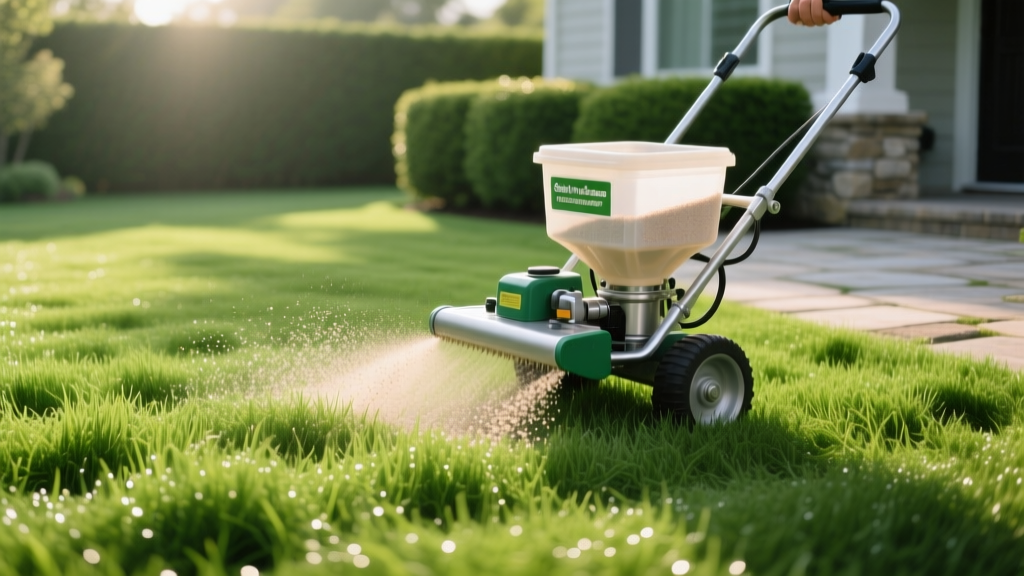
Slow Release Nitrogen Fertilizer for Grass: Application Guide
The Chemistry of Water-Insoluble Nitrogen (WIN)
When evaluating turf nutrition, the distinction between quick-release and slow release nitrogen fertilizer for grass dictates your entire seasonal maintenance schedule. Quick-release sources like urea (46-0-0) or ammonium sulfate (21-0-0) dissolve immediately, triggering a massive, short-lived growth flush that demands frequent mowing and carries a high risk of foliar burn. In contrast, slow-release fertilizers utilize Water-Insoluble Nitrogen (WIN) technologies that meter out nutrients over 8 to 16 weeks, matching the natural uptake rate of turfgrass roots.
Key Agronomic Insight: The primary advantage of WIN is not just longevity; it is the reduction of the 'salinity index.' Quick-release salts draw moisture out of grass blades via osmosis, causing chemical burn if not watered in immediately. Slow-release granules maintain a low salinity index, making them vastly safer for application during temperature fluctuations or if irrigation is delayed.
According to turfgrass research from the University of Minnesota Extension, lawns fed with slow-release nitrogen develop denser root systems and exhibit superior drought tolerance compared to those fed exclusively with quick-release synthetics. The steady nutrient drip prevents the 'flush and crash' cycle, keeping the turf in a constant state of moderate, sustainable growth.
Top Slow Release Nitrogen Fertilizer for Grass Types Compared
Not all slow-release technologies function identically. The release mechanism dictates how soil temperature, moisture, and microbial activity influence nutrient availability. Below is a technical comparison of the four primary WIN categories used in modern turf management.
| Nitrogen Source | Release Mechanism | Longevity | Microbe Dependent? | Common Brand Examples |
|---|---|---|---|---|
| Polymer-Coated Urea (PCU) | Osmosis through semi-permeable resin coating | 12-16 weeks | No (Temp/Moisture driven) | Lesco Polyon, Osmocote |
| Sulfur-Coated Urea (SCU) | Microbial degradation of sulfur/wax shell | 8-12 weeks | Yes | Nutri-S, various generics |
| Methylene Urea (MU) | Chemical hydrolysis and microbial breakdown | 8-12 weeks | Partially | Andersons Contec, Nutralene |
| Organic (Biosolids/Feather Meal) | Complete microbial mineralization | 10-16 weeks | Strictly Yes | Milorganite, Espoma |
The Math: Calculating Actual Nitrogen and Application Rates
A critical failure point for homeowners is misunderstanding the N-P-K ratio on the bag. The first number represents the percentage of total nitrogen by weight, but you must calculate the actual pounds of nitrogen to determine your spreader settings and coverage area. The UMass Amherst Turf Program recommends applying 0.5 to 1.0 pounds of actual nitrogen per 1,000 square feet per application for slow-release products.
Step-by-Step Calculation Framework
- Identify Total Nitrogen: Look at the first number on the bag. A 50 lb bag of 24-0-11 PCU fertilizer contains 24% nitrogen. (50 lbs × 0.24 = 12 lbs of total nitrogen).
- Determine WIN Percentage: Check the guaranteed analysis on the back label. If it states '75% Water Insoluble Nitrogen', then 9 lbs of that 12 lbs is slow-release.
- Calculate Product Needed per 1,000 sq ft: To apply exactly 1 lb of actual nitrogen per 1,000 sq ft, divide 100 by the first number on the bag (100 ÷ 24 = 4.16 lbs of product).
- Set the Spreader: Calibrate your rotary spreader to distribute exactly 4.16 lbs of granules over a 1,000 square foot test area (e.g., a 20x50 ft section of driveway).
Seasonal Timing and Soil Temperature Triggers
Calendar dates are unreliable for scheduling fertilizer applications. Turfgrass nutrient uptake is governed by soil temperature at a 2-inch depth, not ambient air temperature. Use a soil probe thermometer to verify conditions before deploying slow release nitrogen fertilizer for grass.
Cool-Season Grasses (Fescue, Kentucky Bluegrass, Ryegrass)
Cool-season turf builds its root reserves in the fall and utilizes them in the spring.
- Spring Application: Apply when soil temperatures consistently reach 55°F. Use a product with a higher quick-release fraction (e.g., 30% water-soluble) to wake the lawn up, backed by 70% WIN for sustained early-summer feeding.
- Fall Application (The Most Critical): Apply when soil temperatures drop below 70°F but remain above 50°F (typically late August to early October). A 100% slow-release polymer-coated product applied here will feed the lawn through the fall and leave residual nitrogen in the soil profile for early spring green-up.
Warm-Season Grasses (Bermuda, Zoysia, St. Augustine)
Warm-season grasses enter active growth much later and are highly susceptible to winter kill if fertilized too late in the year.
- Spring Kickoff: Wait until soil temperatures hit a consistent 65°F at a 2-inch depth. Applying nitrogen before this threshold forces top growth at the expense of root development and increases vulnerability to late spring frosts.
- Summer Maintenance: Apply every 8-10 weeks during peak heat. Polymer-coated urea is ideal here, as high soil temperatures accelerate the osmotic release rate, perfectly matching the aggressive summer growth habit of Bermuda and Zoysia.
- Fall Cutoff: Cease all nitrogen applications 6 to 8 weeks before your area's historical first frost date to allow the grass to harden off.
'Polymer-coated fertilizers are highly predictable because their release is driven by osmotic pressure and temperature. However, organic and sulfur-coated products rely entirely on soil microbes. If you apply Milorganite when soil temperatures are below 60°F, the microbial population is dormant, and the nitrogen will remain locked up until the soil warms, potentially causing a delayed, unwanted growth flush in late spring.' — Turfgrass Management Field Notes
Real-World Cost Analysis: Slow-Release vs. Quick-Release
While slow-release fertilizers carry a higher upfront price tag, the total cost of ownership and labor must be factored into your annual budget. Here is a breakdown based on average 2026 retail pricing for a 10,000 square foot lawn, targeting 3 lbs of actual nitrogen per year.
- Quick-Release Urea (46-0-0): Costs roughly $1.30 per 1,000 sq ft per application. Requires 4 to 5 applications per year to maintain color without burning. Annual cost: $65.00. Hidden costs include increased mowing frequency (up to 2x per week during flushes) and higher water usage to support rapid blade growth.
- Polymer-Coated Synthetic (24-0-11): Costs roughly $5.40 per 1,000 sq ft per application. Requires only 2 applications per year (Spring and Fall). Annual cost: $108.00. Reduces mowing time by 30% and eliminates foliar burn risk.
- Organic Biosolids (Milorganite 6-4-0): Costs roughly $8.80 per 1,000 sq ft per application. Requires 3 applications per year. Annual cost: $264.00. Provides excellent soil conditioning and iron content, but is the most expensive nitrogen source per pound.
Troubleshooting Common Application Failures
Even with premium slow release nitrogen fertilizer for grass, environmental variables and application errors can compromise results. Monitor for these specific edge cases:
- The 'Hollow Shell' Phenomenon: If you use polymer-coated urea (PCU) and notice tiny, empty, translucent spheres on the lawn surface months after application, this is normal. The resin shell remains intact after the nitrogen has osmotically leached out. These shells are photodegradable and will break down over a single season; do not mistake them for plastic contamination or un-dissolved fertilizer.
- Pound-off and Thatch Accumulation: Sulfur-coated urea (SCU) leaves behind a sulfur residue. In highly alkaline soils (pH above 7.5), this residual sulfur is actually beneficial as it acts as a mild acidifier. However, in already acidic soils, heavy reliance on SCU can drive the pH down further, requiring more frequent lime applications.
- Mower Vacuum Effect: If you apply slow-release granules and mow the lawn the next day with a bagging mower, you may physically vacuum up a significant percentage of the product before it has been watered into the thatch layer. Always irrigate with at least 0.25 inches of water immediately after application to knock the granules off the leaf blades and into the soil profile.
Selecting the correct slow-release technology requires matching the release mechanism to your specific grass type, local soil temperatures, and maintenance bandwidth. By prioritizing water-insoluble nitrogen sources and calculating exact application rates based on actual nitrogen weight, you transition your lawn from a cycle of chemical dependency to a sustainable, deeply rooted ecosystem.

