
Lawn Care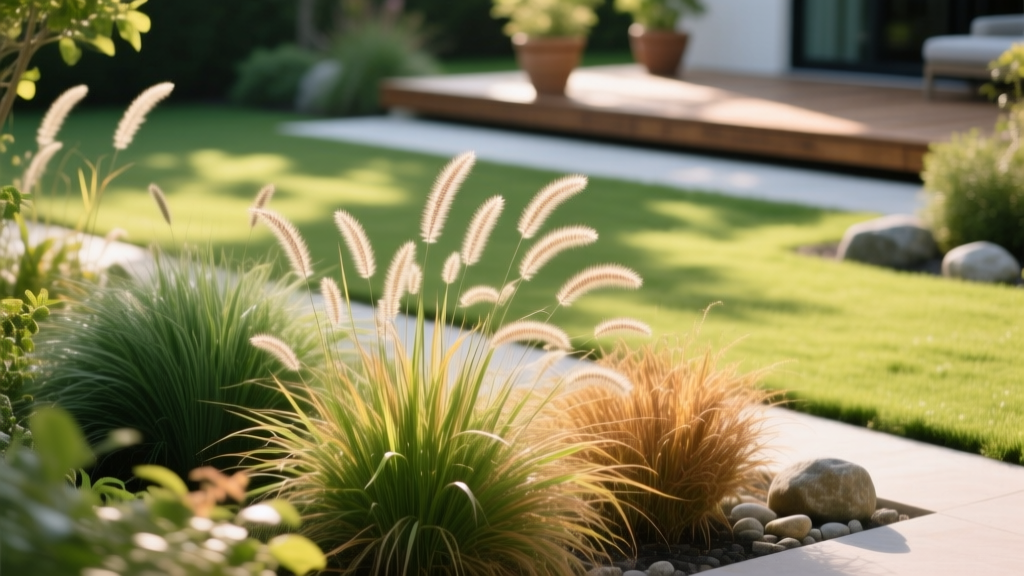
Small Ornamental Grass Care: Step-by-Step Maintenance Guide
Integrating small ornamental grass into your landscape design provides critical textural contrast, erosion control, and seamless transitions between turfgrass and hardscaping. Unlike sprawling turf, clumping and dwarf grasses under 24 inches in height—such as Festuca glauca (Blue Fescue) and Hakonechloa macra (Japanese Forest Grass)—require highly specific, low-impact maintenance protocols. Over-fertilizing, improper cutting heights, and aggressive edging can quickly destroy the architectural form of these plants. This guide outlines the exact seasonal procedures required to keep dwarf and small ornamental grasses thriving in USDA Zones 4 through 9.
Selecting the Right Species for Your Hardiness Zone
Before executing maintenance procedures, verify that your grass species aligns with your microclimate. Small ornamental grasses generally fall into two categories: cool-season grasses (which grow actively in spring and fall, and may brown in high summer heat) and warm-season grasses (which peak in mid-summer and go dormant in winter). According to the University of Minnesota Extension, matching the grass's growth cycle to your region's precipitation patterns is the most critical factor in long-term survival.
| Common Name | Botanical Name | Mature Height | Growth Habit | USDA Zones |
|---|---|---|---|---|
| Blue Fescue | Festuca glauca | 8-12 inches | Clumping (Cool-season) | 4-8 |
| Dwarf Mondo Grass | Ophiopogon japonicus 'Nanus' | 2-4 inches | Rhizomatous Spread | 6-11 |
| Japanese Forest Grass | Hakonechloa macra | 12-18 inches | Clumping (Cool-season) | 5-9 |
| Prairie Dropseed | Sporobolus heterolepis | 18-24 inches | Clumping (Warm-season) | 3-9 |
Phase 1: Spring Awakening and Cleanup
Spring maintenance focuses on removing winter dormancy debris without damaging the central crown, which is highly susceptible to rot if buried under decaying foliage. The Clemson University Home & Garden Information Center recommends delaying major cutbacks until late winter or early spring, just before new basal growth emerges.
- Assess Crown Vitality: Gently part the dead foliage at the base. Look for pale green or white basal shoots. If the center is entirely brown and brittle, the plant has suffered crown rot and requires replacement.
- Shear to the Correct Height: Using bypass hedge shears (such as the ARS HS-KR1000) or a string trimmer fitted with a brush blade, cut the dormant foliage down to exactly 2 to 3 inches above the soil line. Cutting closer than 2 inches risks severing the emerging meristematic tissue.
- Extract the Thatch Core: Small grasses trap moisture against the crown. Use a narrow hand cultivator or a bamboo rake to gently pull out the severed thatch from the center of the clump. Do not pull upward aggressively; rake outward from the center.
- Apply Pre-Emergent Barrier: If your small ornamental grass is bordering a lawn, apply a granular pre-emergent (like prodiamine at 0.5 lbs per 1,000 sq ft) to the immediate perimeter to prevent crabgrass from infiltrating the grass clump.
Phase 2: Summer Hydration and Weed Competition
Small ornamental grasses possess dense root systems that make manual weeding nearly impossible once the clump is established. Summer maintenance is entirely focused on moisture management and preventing invasive lawn grasses from creeping into the root zone.
Warning: The 'Die-Out' Center Effect
During peak summer heat, cool-season grasses like Blue Fescue may experience central die-out. This is a natural survival mechanism, not a disease. Do not attempt to overwater the center to force growth; this will only accelerate fungal crown rot. Allow the plant to enter summer dormancy and resume normal watering in early autumn.
During peak summer heat, cool-season grasses like Blue Fescue may experience central die-out. This is a natural survival mechanism, not a disease. Do not attempt to overwater the center to force growth; this will only accelerate fungal crown rot. Allow the plant to enter summer dormancy and resume normal watering in early autumn.
Precision Edging and Rhizome Control
For spreading varieties like Dwarf Mondo Grass, summer is when rhizomes attempt to invade adjacent turf or mulch beds. Use a half-moon edger to cut a 4-inch deep trench along the border of the planting bed. Sever any visible white rhizomes. For clumping varieties like Prairie Dropseed, monitor for 'flopping' (when blades bend and break under their own weight). Flopping is almost always caused by excess nitrogen or insufficient sunlight, not a lack of water.
Phase 3: Late Fall Division and Winter Prep
Division is the most physically demanding maintenance procedure for small ornamental grasses. Over time, clump-forming grasses develop a dead, woody center as the outer edges continue to expand outward. Division resets the plant's vigor and provides material for landscape expansion.
Division Decision Matrix
Use the following matrix to determine the exact timing and method for dividing your specific grass type:
| Grass Type | Division Trigger | Optimal Season | Tool Required |
|---|---|---|---|
| Cool-Season Clumping | Center die-back (approx. every 3 years) | Early Fall (Sept) | Spade & Trenching Shovel |
| Warm-Season Clumping | Clump exceeds 18 inches diameter | Mid-Spring (May) | Axe or Reciprocating Saw |
| Rhizomatous Spreaders | Encroaching on hardscape/turf | Early Spring or Fall | Garden Fork & Hand Trowel |
Execution Steps for Clump Division: Water the grass deeply 24 hours before dividing to soften the soil. Drive a sharp, flat spade directly through the center of the clump, splitting it into two or four quarters. Discard the dead, woody center section. Replant the outer, vigorous quarters at the exact same soil depth they were originally growing. Amending the new planting hole with a 10% ratio of compost to native soil will encourage rapid root re-establishment before winter.
Troubleshooting Common Small Grass Failures
Even with meticulous care, small ornamental grasses can exhibit stress responses. Diagnose and correct these issues using the following protocols:
- Symptom: Foliage turning rust-colored with powdery spores on the underside of blades.
Cause: Puccinia (Rust Fungus), exacerbated by overhead watering and poor air circulation.
Fix: Switch to drip irrigation immediately. Prune out the most severely infected blades. Apply a copper-based fungicide (such as Bonide Liquid Copper) at a rate of 2 oz per gallon of water, covering all remaining foliage. - Symptom: Grass blades collapsing outward in a circular pattern (lodging).
Cause: Excessive nitrogen fertilizer or heavy, water-retentive clay soil.
Fix: Do not stake the grass. Cease all nitrogen applications. If the soil is heavy clay, aerate the immediate perimeter of the clump using a hand fork and top-dress with a 1/2 inch layer of coarse horticultural grit to improve drainage. - Symptom: Entire clump fails to emerge in spring.
Cause: Vole damage to the root crown during winter.
Fix: Gently tug the dead foliage; if it lifts away with no root resistance, voles have eaten the crown. Remove the dead material, collapse the tunnels, and replant with a new specimen protected by a subterranean wire mesh basket.
Soil Amendment and Fertilization Protocol
Unlike turfgrass, which demands high nitrogen inputs to maintain a dense, green carpet, small ornamental grasses thrive in lean, marginal soils. Over-fertilization is the leading cause of premature death in landscape grasses because it forces rapid, weak cellular growth that cannot support the plant's physical structure.
If a soil test indicates severe nutrient deficiency (organic matter below 2%), apply a slow-release, balanced fertilizer with an NPK ratio of 10-10-10 or 5-10-5. The application rate must be strictly limited to 0.5 lbs of actual nitrogen per 1,000 square feet, applied only once in early spring just as basal shoots break the soil surface. For established clumps in average garden soil, an annual top-dressing of 1 inch of leaf mold or screened compost provides all necessary micronutrients without the risk of nitrogen-induced lodging. Always maintain a soil pH between 5.8 and 6.8; highly alkaline soils (pH above 7.5) will induce iron chlorosis in species like Japanese Forest Grass, resulting in stunted, yellowed foliage that fails to produce its characteristic cascading habit.

