
Lawn Care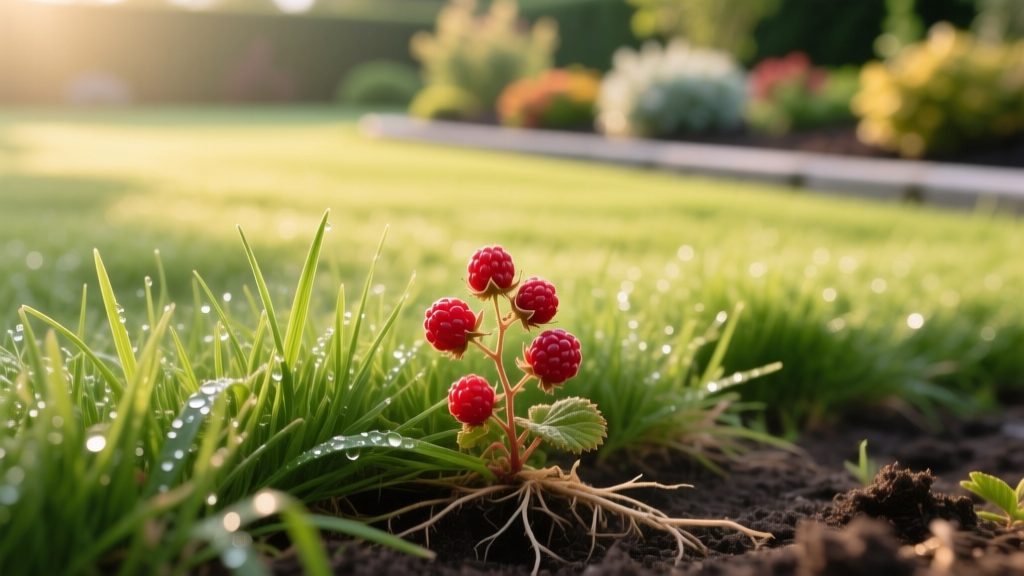
Small Red Berries Growing in Grass: Weed ID & Lawn Establishment Guide
Spotting small red berries growing in grass is a common frustration for homeowners preparing soil for a new lawn or maintaining an existing turf. These berries are rarely random anomalies; they are the fruiting bodies of aggressive, stoloniferous broadleaf weeds. If left unmanaged during the lawn establishment phase, their dense root networks and creeping stolons will outcompete vulnerable grass seedlings for water, nutrients, and sunlight.
This guide provides a definitive framework for identifying the specific species invading your yard, eradicating them during soil preparation, and successfully establishing a clean turfgrass lawn—or intentionally planting a berry-producing groundcover alternative.
The Culprits: Identifying Small Red Berries in Turf
Before initiating any lawn establishment or eradication protocol, you must accurately identify the plant. The two most common offenders in North American lawns are Wild Strawberry and Mock Strawberry. A third, less common but highly toxic option, is Snake Berry.
| Feature | Wild Strawberry (Fragaria virginiana) | Mock Strawberry (Potentilla indica) | Snake Berry (Solanum dulcamara) |
|---|---|---|---|
| Flower Color | White with yellow center | Bright Yellow | Purple/White star-shape |
| Berry Appearance | Deep red, seeds on surface, glossy | Red, dry, bumpy, seeds on surface | Oval, clustered, glossy red |
| Taste / Toxicity | Sweet, highly edible | Bland, dry, non-toxic | Highly toxic (solanine) |
| Growth Habit | Creeping stolons, roots at nodes | Aggressive creeping stolons | Climbing/trailing vine |
| Leaf Structure | Trifoliate, heavily serrated, hairy | Trifoliate, lighter green, less hairy | Lobed, ovate, alternate |
⚠️ Toxicity Warning: If the plant features purple flowers and oval, clustered berries resembling tiny tomatoes, you are dealing with Solanum dulcamara (Bittersweet Nightshade/Snake Berry). This plant is highly toxic to humans and pets. Do not compost it; bag it and dispose of it in municipal waste. For detailed botanical profiles, consult the NC State Extension Plant Database.
Why Berry-Producing Weeds Invade New Lawn Establishments
When establishing a new lawn, homeowners often wonder how these weeds bypassed their soil prep. The survival of wild and mock strawberries during lawn renovation comes down to three biological advantages:
- Stolon Fragmentation: Standard rototilling chops their creeping stolons (runners) into dozens of pieces. Every node on a stolon can generate a new crown and root system. Tilling without prior eradication actually propagates the weed.
- Deep Crown Survival: The central crown of Fragaria virginiana can sit 2 to 3 inches below the soil surface. Shallow aeration or topdressing fails to smother or remove the primary growth point.
- Seed Contamination: Cheap, uncertified grass seed mixes or contaminated straw mulch often harbor wild strawberry seeds, introducing them directly to your freshly prepped seedbed.
Pre-Planting Eradication Protocol for Clean Soil
If you are preparing a site for new grass seed or sod, you must eliminate these weeds before planting. Attempting to use selective broadleaf herbicides on newly germinated grass will kill your turf. Follow this 3-step pre-establishment protocol:
Step 1: Targeted Non-Selective Herbicide Application
Apply a 41% Glyphosate solution to the existing weeds. Because strawberries have a waxy leaf cuticle, add a non-ionic surfactant (at 0.25% v/v) to ensure the herbicide penetrates the leaf tissue and translocates down to the crown. Wait 14 days for complete systemic kill. The plants will turn yellow and desiccate.
Step 2: Soil Solarization (For Severe Infestations)
If the infestation is dense and you are planting in late spring or summer, utilize soil solarization. Mow the dead vegetation to the soil line, wet the soil to a depth of 12 inches, and cover the area with 4-mil clear polyethylene sheeting. Bury the edges in a 6-inch trench. Leave it for 4 to 6 weeks. This traps solar radiation, raising soil temperatures to 120°F–140°F in the top 6 inches, effectively cooking weed crowns, seeds, and soil-borne pathogens.
Step 3: Safe Mechanical Removal
If you cannot use chemicals or solarization, you must manually extract the weeds. Use a spading fork to loosen the soil to a depth of 6 inches. Pull the plants by the base, ensuring the entire crown and attached stolon nodes are removed. Rake the soil with a steel landscape rake to sift out any remaining root fragments before leveling.
The Pivot: Establishing Alpine Strawberry as a Lawn Alternative
Not all small red berries growing in grass are a mistake. If your yard features heavy shade or poor soil where traditional turfgrass fails, you might intentionally establish Fragaria vesca (Alpine or Wild Strawberry) as a low-maintenance groundcover.
Site Preparation and Seeding Rates
Unlike aggressive mock strawberry, alpine strawberry forms neat, clumping rosettes without invasive runners, making it an excellent, manageable lawn alternative for shaded pathways and ornamental beds.
- Soil pH: Amend soil to a slightly acidic pH of 5.8 to 6.5 using elemental sulfur if necessary.
- Seeding Rate: Sow seeds at a rate of 2 to 3 grams per 100 square feet. Mix the tiny seeds with dry sand for even broadcasting.
- Germination: Seeds require light to germinate. Do not bury them; press them lightly into a finely raked, moist seedbed.
- Spacing: If planting plugs or bare-root crowns, space them 8 to 12 inches apart in a staggered grid pattern to ensure rapid canopy closure.
Re-Establishing Turfgrass Post-Eradication
Once the berry-producing weeds are eradicated and the soil is clean, proper establishment techniques are required to prevent their return. A dense, thick turf canopy is the best natural pre-emergent against broadleaf weeds.
According to turfgrass specialists at Penn State Extension, maintaining optimal soil fertility and mowing heights is critical for turf density. Apply a high-phosphorus starter fertilizer (such as a 10-18-10 NPK ratio) at a rate of 1 lb of nitrogen per 1,000 square feet on the day of seeding. For cool-season lawns, use certified Turf-Type Tall Fescue (TTTF) blends seeded at 6 to 8 lbs per 1,000 square feet. TTTF establishes a deep, 3-foot root system that outcompetes shallow-rooted strawberry weeds for subsurface moisture.
Pro Establishment Tip: Avoid using straw mulch to cover your new grass seed, as it frequently contains agricultural weed seeds, including wild strawberry. Opt for peat moss or composted leaf mold applied at a thin 1/4-inch layer to retain moisture without introducing contaminants.
Managing Breakouts in Established Lawns
If small red berries appear in an already established lawn, manual pulling is often futile due to stolon fragmentation. Instead, utilize a selective broadleaf herbicide containing a three-way mix of 2,4-D, Dicamba, and Triclopyr (e.g., Lesco Three-Way or Ortho WeedClear). Triclopyr is specifically highly effective against the Fragaria and Potentilla genera. Apply when daytime temperatures are between 65°F and 85°F, and avoid mowing for 48 hours before and after application to maximize leaf surface absorption.
Frequently Asked Questions
Are the small red berries in my lawn safe for my dog to eat?
Wild strawberries (Fragaria virginiana) are non-toxic and safe for dogs in small quantities. However, Mock Strawberries (Potentilla indica) can cause mild gastrointestinal upset if consumed in large amounts, and Bittersweet Nightshade (Snake Berry) is highly toxic and potentially fatal. Always identify the plant definitively before allowing pets to graze.
Will pre-emergent herbicides stop wild strawberries from growing?
Pre-emergent herbicides like Prodiamine or Dithiopyr are highly effective at preventing wild strawberry seeds from germinating. However, they will not stop established plants from spreading vegetatively via stolons (runners). You must kill existing plants with post-emergent broadleaf herbicides or manual extraction before applying a pre-emergent barrier.
How deep do wild strawberry roots go?
The primary crown and taproot of a wild strawberry typically reside in the top 3 to 4 inches of soil, but their fibrous feeder roots can extend up to 6 inches deep in loose, well-aerated soils. When digging them out, ensure you excavate at least 4 inches deep to remove the entire crown.

