
Lawn Care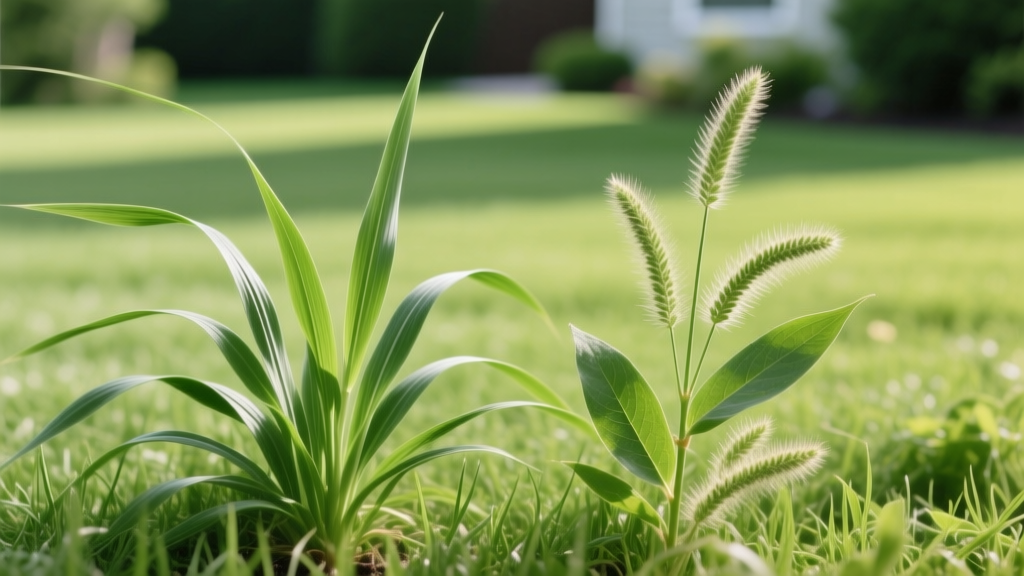
Identifying Types of Crabgrass: Smooth vs Hairy Weed Guide
Misidentifying the specific types of crabgrass invading your turf is the leading cause of failed herbicide applications and recurring summer infestations. While both dominant North American species belong to the Digitaria genus, smooth crabgrass (Digitaria ischaemum) and hairy crabgrass (Digitaria sanguinalis) exhibit distinct morphological traits, germination windows, and chemical vulnerabilities. Treating them as a monolith results in wasted chemicals and thinning turf. This guide provides a forensic breakdown of these two summer annual weeds, equipping you with the exact identification markers and targeted control protocols required to eradicate them from your lawn.
Morphological Identification Matrix
Accurate identification requires examining the weed at the seedling and vegetative stages before it fully matures and produces seedheads. Use this comparison matrix to diagnose the exact types of crabgrass present in your yard.
| Botanical Feature | Smooth Crabgrass (D. ischaemum) | Hairy Crabgrass (D. sanguinalis) |
|---|---|---|
| Leaf Blade Width | 1/8 to 1/4 inch (narrower) | 1/4 to 1/3 inch (broader) |
| Stem & Leaf Hairs | Completely hairless (glabrous) | Prominent long, white hairs on sheath and blade |
| Ligule (Collar Region) | Membranous, smooth margin, slightly pointed | Membranous, jagged/fringed margin, taller |
| Stem Base Color | Often purplish or reddish tint | Typically pale green to white |
| Mature Growth Habit | Prostrate, roots at lower nodes, max 6-12 inches | Upright then sprawling, aggressive stolons, up to 3 feet |
| Seedhead Structure | 2 to 6 finger-like spikes, whorled at tip | 3 to 13 finger-like spikes, alternating on stalk |
Smooth Crabgrass: The Compaction Opportunist
Smooth crabgrass is the most prevalent type found in highly maintained, irrigated lawns, particularly in the Northern and Transition zones. Unlike its hairy cousin, smooth crabgrass thrives in compacted, poorly drained soils where desirable turfgrass roots struggle to penetrate. You will frequently find it thriving in the 'heat sinks' of your lawn: the 12-inch strips adjacent to concrete driveways, sidewalks, and patios where soil temperatures rise rapidly in spring.
Pro-Tip: Microclimate Germination
Smooth crabgrass exploits hardscape heat sinks to germinate up to two weeks earlier than the rest of the lawn. When applying pre-emergent herbicides, heavily target the 2-foot perimeter around all concrete structures first, as soil temperatures here will hit the critical 50°F threshold long before the center of your yard.
Smooth crabgrass exploits hardscape heat sinks to germinate up to two weeks earlier than the rest of the lawn. When applying pre-emergent herbicides, heavily target the 2-foot perimeter around all concrete structures first, as soil temperatures here will hit the critical 50°F threshold long before the center of your yard.
Hairy Crabgrass: The Aggressive Invader
Hairy crabgrass (often called large crabgrass) is a more aggressive, drought-tolerant weed that frequently invades thin, under-fertilized, or neglected lawns. According to weed science data from University of Minnesota Extension, hairy crabgrass develops a much deeper and more fibrous root system than smooth crabgrass, allowing it to outcompete Kentucky bluegrass and fine fescues during mid-summer droughts.
Its most dangerous biological trait is its aggressive stoloniferous growth. Once hairy crabgrass matures, it sends out thick, hairy lateral stems that root at every node they touch the soil. Attempting to pull mature hairy crabgrass by hand usually results in the main taproot breaking off while the rooted nodes remain, allowing the weed to regenerate within days.
Targeted Chemical Control Protocols
Because these two types of crabgrass have different growth rates and cuticle thicknesses, your chemical strategy must be precise. The days of spraying generic 'weed and feed' products and expecting total control are over.
Pre-Emergent Strategies (Spring)
Pre-emergents create a chemical barrier in the top 1-2 inches of soil, killing the weed as the radicle (first root) emerges.
- Dithiopyr (e.g., Dimension 2EW): The gold standard for professional-grade control. Unlike older pre-emergents, Dithiopyr provides early post-emergent control, meaning it will kill smooth and hairy crabgrass seedlings even if they have already sprouted and are in the 1- to 2-tiller stage. Application rate: 0.5 to 0.75 oz per 1,000 sq ft. Cost: ~$140 per gallon (covers 4+ acres).
- Pendimethalin (e.g., Scotts Halts): A consumer-grade option that strictly prevents germination. It has zero post-emergent activity. If your soil temps have exceeded 55°F for three consecutive days and the crabgrass has already sprouted, Pendimethalin will be entirely ineffective.
Post-Emergent Strategies (Summer)
If you miss the spring window, you must use selective post-emergent herbicides. The efficacy varies heavily based on the crabgrass type and its maturity.
- Quinclorac (e.g., Drive XLR8): Highly effective on both smooth and hairy crabgrass, but it is exceptionally lethal to hairy crabgrass. Quinclorac mimics plant hormones, causing rapid, uncontrolled growth that tears the weed's vascular system apart. Critical Requirement: Quinclorac must be mixed with a Methylated Seed Oil (MSO) adjuvant at 1% v/v to penetrate the thick, hairy leaf cuticle of D. sanguinalis. Standard non-ionic surfactants (NIS) will result in a 40% failure rate on hairy crabgrass. Rate: 0.367 fl oz per 1,000 sq ft.
- Fenoxaprop-p-ethyl (e.g., Acclaim Extra): The safest option for cool-season lawns during high summer heat (above 85°F). While Quinclorac can severely stunt or burn tall fescue and Kentucky bluegrass in high heat, Fenoxaprop is highly selective and safe for turf, though it may require two applications spaced 14 days apart to fully kill mature hairy crabgrass.
'Crabgrass is a symptom of poor turf density, not just a random invasion. If your mowing height is below 2.5 inches, you are actively inviting both smooth and hairy crabgrass seed germination by exposing the soil surface to direct UV radiation.' - Turfgrass Science Program, NC State University
Cultural Exploitation: Starving the Weed
Chemicals provide the knockout punch, but cultural practices dictate whether the crabgrass returns next year. Both types of crabgrass require light to germinate and thrive in stressed turf.
Warning: The Nitrogen Trap
Applying high-nitrogen, quick-release fertilizers (like urea) in late May or June will feed actively growing crabgrass more efficiently than your cool-season turf. Shift your heavy nitrogen applications to the fall (September/October) when crabgrass is naturally senescing and your desirable grass is storing energy for winter.
Applying high-nitrogen, quick-release fertilizers (like urea) in late May or June will feed actively growing crabgrass more efficiently than your cool-season turf. Shift your heavy nitrogen applications to the fall (September/October) when crabgrass is naturally senescing and your desirable grass is storing energy for winter.
Implement these exact cultural parameters to suppress Digitaria species:
- Elevate Mowing Height: Set your mower deck to a minimum of 3.0 inches (preferably 3.5 to 4.0 inches for Tall Fescue). Research shows that maintaining a 3.5-inch canopy shades out 80% of crabgrass seedlings by blocking the photosynthetically active radiation (PAR) they need to establish.
- Deep, Infrequent Irrigation: Smooth crabgrass loves shallow, frequent moisture. Train your turf roots to grow deep by watering only 2 times per week, applying 0.5 to 0.75 inches of water per session. This dries out the top inch of soil where crabgrass seedlings attempt to root.
- Core Aeration: Because smooth crabgrass dominates compacted soils, perform double-pass core aeration in the early fall. Pulling 2-to-3-inch soil plugs relieves compaction, allowing turfgrass roots to reclaim the territory.
Frequently Asked Questions
Can I use vinegar or boiling water to kill types of crabgrass?
While acetic acid (horticultural vinegar at 20-30% concentration) and boiling water will burn the top growth of both smooth and hairy crabgrass, they are non-selective contact burners. They will not kill the deep taproot of hairy crabgrass, nor will they spare your surrounding desirable grass. You will be left with dead patches of turf that crabgrass will rapidly recolonize the following spring.
Why did my pre-emergent fail to stop the crabgrass?
Pre-emergent failure usually stems from three errors: applying too late (after soil temps at a 1-inch depth consistently exceed 55°F), watering the product in with more than 0.5 inches of water (pushing the chemical barrier below the weed germination zone), or physically breaking the barrier through heavy foot traffic, dethatching, or core aeration after application.
Is goosegrass the same as crabgrass?
No. Goosegrass (Eleusine indica) is a completely different summer annual weed. It is often mistaken for smooth crabgrass because it also thrives in compacted soils, but goosegrass has a distinct silvery-white, flattened stem base and its seedheads resemble a zipper. Standard crabgrass pre-emergents like Pendimethalin often fail on goosegrass; you must use Oxadiazon or a specific post-emergent like MSMA (where legally permitted) or Tribute Total for control.

