
Lawn Care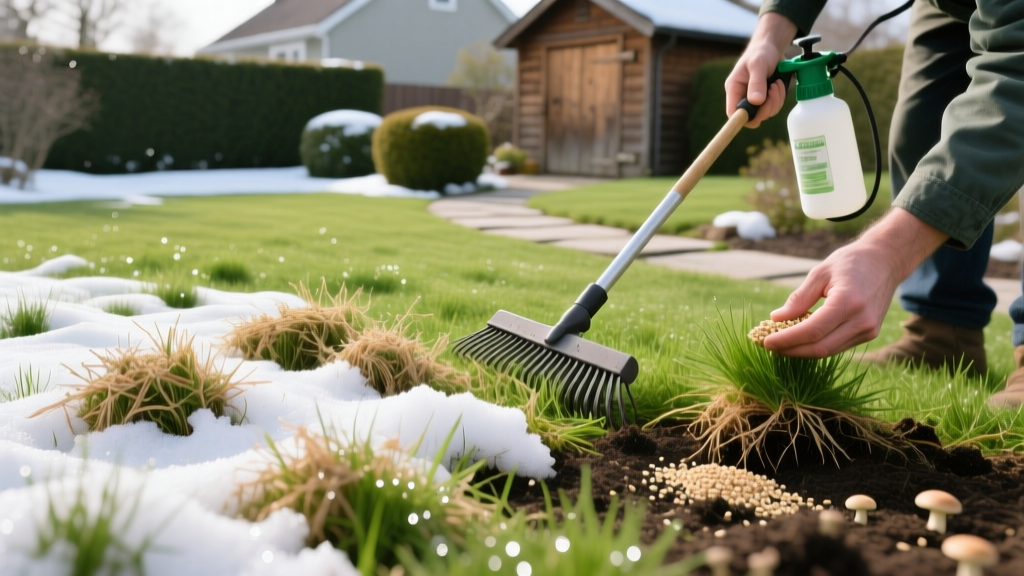
Step-by-Step Guide to Treating Snow Mould on Grass After Winter
Understanding the Pathogens: Gray vs. Pink Snow Mould
When the winter snowpack recedes, discovering matted, discolored patches across your turf is a common frustration for homeowners in northern climates. Snow mould on grass is not a single disease but rather a complex of fungal pathogens that thrive in cold, wet environments beneath snow cover or in prolonged autumn rain. To execute an effective treatment and prevention protocol, you must first identify which strain has infected your lawn.
According to turfgrass pathology research from the University of Minnesota Extension, the two primary culprits are Typhula incarnata (Gray Snow Mould) and Microdochium nivale (Pink Snow Mould). While both cause severe cosmetic damage and can kill grass crowns if left unmanaged, their biological triggers and visual signatures differ significantly.
| Feature | Gray Snow Mould (Typhula Blight) | Pink Snow Mould (Microdochium Patch) |
|---|---|---|
| Pathogen | Typhula incarnata | Microdochium nivale |
| Optimal Temp Range | 32°F to 50°F (0°C to 10°C) | 32°F to 60°F (0°C to 15°C) |
| Snow Cover Requirement | Requires prolonged snow cover (60+ days) | Can develop without snow in cold, wet conditions |
| Visual Symptoms | Straw-colored circular patches (6-12 inches); gray mycelium at margins | Circular patches (2-8 inches); white-to-pinkish mycelium; reddish-brown borders |
| Diagnostic Key | Presence of hard, reddish-brown sclerotia (mustard seed-sized) on leaf blades | No sclerotia present; mycelium often has a distinct pinkish hue in early morning dew |
Phase 1: Fall Prevention Procedures
Treating snow mould on grass after it appears in spring is largely reactive and often yields poor results. The most effective turf management strategy relies on rigorous autumn preparation. The UMass Center for Agriculture, Food and the Environment emphasizes that cultural practices combined with targeted chemical barriers are required to halt fungal sporulation before the ground freezes.
CRITICAL WARNING: Never apply preventative fungicides to frozen ground or active snow cover. The chemical barrier must be established on living, dry leaf tissue before the first permanent snowfall.
Step 1: Tapering Mowing Heights
Tall grass mats down under the weight of snow, creating a humid, stagnant microclimate ideal for fungal growth. Over the final three mowing sessions of autumn, gradually reduce your cutting height. If your summer maintenance height is 3.5 inches, drop the deck by 0.5 inches per week until you reach a final cut of 2.0 inches. This prevents the leaf blades from bending and trapping moisture against the soil surface while avoiding the shock of scalping the lawn all at once.
Step 2: Strategic Late-Fall Fertilization
Excessive nitrogen in late autumn promotes lush, tender tissue that is highly susceptible to fungal penetration. Halt all high-nitrogen applications by early September. Instead, apply a winterizer fertilizer focused on potassium (K), which thickens cell walls and improves cold tolerance. Look for a formulation like 8-2-12 or apply Sulfate of Potash (0-0-50) at a rate of 2 lbs per 1,000 square feet. This fortifies the grass crown without stimulating vulnerable top-growth.
Step 3: Preventative Fungicide Application
For lawns with a history of severe snow mould damage, a late-autumn fungicide application is non-negotiable. You must use a product with systemic or translaminar activity. In 2026, the most reliable and cost-effective options for residential applicators include:
- Azoxystrobin (Scotts DiseaseEx): A granular strobilurin fungicide. Apply at the preventative rate of 1.43 lbs per 1,000 sq ft. A 10 lb bag costs approximately $25-$30 and covers 7,000 sq ft.
- Propiconazole 14.3 (Quali-Pro or Banner Maxx): A liquid demethylation inhibitor (DMI). Mix 1.5 fluid ounces per 1,000 sq ft with water and spray evenly. A 16 oz bottle costs around $35-$45 and treats over 10,000 sq ft.
Apply your chosen fungicide in mid-to-late November, ideally within 48 hours of raking all fallen leaves and debris from the turf canopy.
Phase 2: Spring Recovery and Treatment Steps
If preventative measures failed, or if you recently moved into a home with an existing snow mould problem, spring intervention must be handled delicately. The grass crowns are often still dormant or semi-dormant, and aggressive mechanical action can rip the plants from the soil entirely.
Step 1: Gentle Raking and Canopy Disruption
Once the lawn is dry enough to walk on without leaving deep footprints, use a flexible bamboo or poly-resin leaf rake to gently lift the matted grass blades. Do not use a rigid metal thatching rake; the goal is to introduce airflow and sunlight to the soil surface, not to dethatch. Raking breaks up the fungal mycelium crust, allowing the turf canopy to dry out, which immediately halts the progression of both Gray and Pink snow mould.
Step 2: Targeted Overseeding
In areas where the fungal infection penetrated the crown and killed the plant, bare patches will remain. Wait until soil temperatures consistently reach 50°F (usually mid-to-late April in northern zones) before overseeding. Select turfgrass cultivars with documented resistance to Typhula and Microdochium. For cool-season lawns, fine fescues (such as 'Navigator' creeping red fescue) and specific Kentucky bluegrass varieties (like 'Midnight' or 'NuGlade') exhibit significantly higher genetic resistance compared to standard perennial ryegrass.
Expert Turfgrass Tip: Avoid the temptation to apply a high-nitrogen "spring green-up" fertilizer to damaged areas. Rapid nitrogen spikes force the surviving grass to produce thin, watery cell walls, making it highly vulnerable to secondary spring diseases like dollar spot or brown patch. Stick to a balanced 16-4-8 slow-release formula at half-rate.
Troubleshooting Edge Cases and Failure Modes
Even with meticulous execution, environmental variables can compromise your lawn care program. Here is how to handle common edge cases when managing snow mould on grass:
Edge Case 1: Ice Encasement Over Fungicide
If an early freezing rain event seals your lawn in a layer of ice before the snow falls, the fungicide barrier may be compromised by anoxic (oxygen-deprived) conditions. Ice encasement causes direct cellular asphyxiation to the grass crown, which mimics snow mould damage. Solution: Do not attempt to break the ice with tools, as this will shatter the frozen grass blades. Allow it to melt naturally, and be prepared to execute a heavy spring overseeding protocol, as ice damage is usually fatal to the crown.
Edge Case 2: Persistent Sclerotia in Spring
After raking Gray Snow Mould patches, you may notice tiny, hard, mustard-seed-like structures clinging to the dead grass blades. These are Typhula sclerotia—the survival structures of the fungus. Solution: Bag your clippings immediately when mowing infected areas in the spring to physically remove the sclerotia from the property. If left in the thatch layer, they will germinate the following winter, restarting the infection cycle.
Edge Case 3: Pink Snow Mould in Autumn Rain
Unlike Gray Snow Mould, Pink Snow Mould does not require snow. If your region experiences prolonged autumn rain with temperatures hovering around 45°F, Microdochium nivale can actively destroy turf before winter even begins. Solution: Monitor local 14-day weather forecasts. If 10+ consecutive days of cold rain are predicted, apply a liquid Propiconazole treatment immediately, even if the grass is still actively growing. Ensure the spray dries on the leaf for at least 2 hours before the rain begins by checking hourly radar forecasts.

