
Lawn Care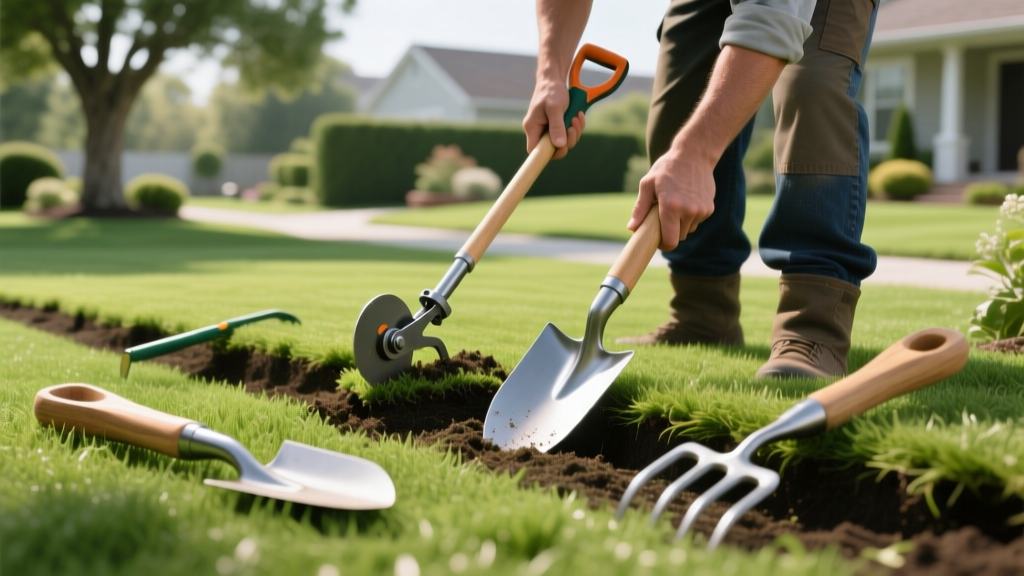
Essential Tools for Removing Lawn Sod: Step-by-Step Guide
Assessing the Scope: Manual vs. Mechanical Removal
Removing an existing lawn is a foundational step for xeriscaping, hardscaping, or complete turf renovation. The success of your project hinges on selecting the correct tools for removing lawn grass based on your total square footage and end goal. Stripping sod intact for transplantation requires entirely different equipment than destroying the root mat to prepare a base for pavers.
According to the EPA WaterSense landscaping guidelines, removing water-intensive turfgrass is one of the most effective ways to reduce residential outdoor water use. However, improper removal can leave behind invasive rhizomes (like Bermudagrass or Quackgrass) that will penetrate new landscape fabric or hardscape joints.
Decision Framework:
• Under 500 sq. ft.: Manual tools (sod kicker, spading fork). Cost-effective, high physical exertion.
• 500 to 2,000 sq. ft.: Walk-behind mechanical sod cutter. Preserves topsoil, fastest clearance.
• Over 2,000 sq. ft. or Hardscape Prep: Rear-tine rototiller and bobcat. Destroys roots, grades soil simultaneously.
• Under 500 sq. ft.: Manual tools (sod kicker, spading fork). Cost-effective, high physical exertion.
• 500 to 2,000 sq. ft.: Walk-behind mechanical sod cutter. Preserves topsoil, fastest clearance.
• Over 2,000 sq. ft. or Hardscape Prep: Rear-tine rototiller and bobcat. Destroys roots, grades soil simultaneously.
The Essential Toolkit for Lawn Removal
To execute a clean removal, you need tools that sever the root zone precisely without hauling up excessive subsoil. Here are the industry-standard tools for removing lawn turf, complete with current pricing and model recommendations.
Manual Stripping Tools
- True Temper 18-Inch Sod Kicker ($45 - $55): Features an adjustable steel blade and a knee-pad striking block. Ideal for slicing through the rhizome layer in tight spaces where machines cannot reach.
- Fiskars 46-Inch Steel D-Handle Spading Fork ($40 - $60): Unlike a shovel, the tines of a spading fork slide under the severed sod to leverage it upward without slicing the turf into unusable fragments.
- Bully Tools 12-Inch Trenching Shovel ($35): Used exclusively for cutting the perimeter border and severing lateral root spread before lifting.
Mechanical Removal Equipment
- Walk-Behind Sod Cutter (e.g., Billy Goat SC1800): Available at most equipment rental yards for $90 to $130 per day. Uses a reciprocating blade to slice under the turf at a precise, adjustable depth (typically 1 to 2.5 inches).
- Rear-Tine Rototiller (e.g., Troy-Bilt Bronco): Rental costs average $75 to $100 per day. Rear-tine models are mandatory for lawn removal; front-tine tillers will bounce off compacted root mats and fail to penetrate.
Step-by-Step Procedure: Stripping the Sod
Follow this exact sequence to ensure efficient clearance while minimizing soil erosion and physical strain. Always contact your local utility marking service (like 811 in the US) at least 48 hours before breaking ground to avoid severing buried irrigation or gas lines.
- Hydrate the Root Zone: Apply 0.5 to 1 inch of water 48 hours before removal. Dry soil shatters and makes sod cutting impossible; saturated soil creates heavy, muddy clumps that tear during lifting.
- Establish the Perimeter: Use a manual trenching shovel or an edger to cut a 2-inch deep boundary line around the entire work area. This prevents the mechanical sod cutter from tearing into adjacent landscaping or garden beds.
- Set the Cutting Depth: If harvesting sod for reuse, set the mechanical cutter blade to 1.5 inches. If removing for disposal or hardscape prep, set it to 2.5 inches to capture the densest part of the thatch and root layer.
- Execute Parallel Passes: Run the sod cutter in straight, parallel lines. Overlap each pass by exactly 1 inch to ensure no uncut strips of grass are left behind.
- Cross-Cut and Roll: Use a manual sod kicker or a flat spade to make perpendicular cuts every 3 to 4 feet along the strips. Roll the severed strips tightly, root-side out, for easy transport.
Tool Comparison Matrix: Sod Cutters vs. Rototillers
Choosing between a sod cutter and a rototiller depends entirely on what you plan to do with the cleared space. The Water Use It Wisely lawn removal protocols emphasize that leaving decomposing grass roots under new hardscapes can cause severe nitrogen tie-up and ground settling.
| Feature | Mechanical Sod Cutter | Rear-Tine Rototiller |
|---|---|---|
| Primary Action | Slices horizontally under turf | Chops and mixes soil/roots vertically |
| Topsoil Preservation | Excellent (leaves subsoil intact) | Poor (mixes topsoil with subsoil) |
| Ideal End-Use | Xeriscaping, replanting, sod harvest | Hardscape base, deep grading |
| Average Daily Rental | $90 - $130 | $75 - $100 |
| Edge Case Warning | Blade jams on hidden rocks/roots | Spreads invasive rhizome fragments |
Warning on Invasive Grasses: Never use a rototiller to remove Bermudagrass, Kikuyu, or Quackgrass. The tines will chop the rhizomes into hundreds of viable pieces, guaranteeing a massive weed outbreak in your new landscape. Always use a sod cutter to physically extract these species.
Disposal and Soil Remediation Post-Removal
Once the physical tools for removing lawn have done their job, you are left with heavy biomass and exposed soil. A standard 1,000-square-foot lawn yields approximately 4,000 to 5,000 pounds of wet sod.
Managing the Removed Biomass
Do not attempt to compost whole sod strips in a standard backyard bin; the anaerobic center will rot and produce foul odors. Instead, stack the sod strips root-side up in a designated corner of your property, cover them with a heavy black tarp, and leave them for 12 to 18 months. The grass will die and decompose into incredibly rich, loamy topsoil that can be reused in garden beds.
Soil Grading and Amendment
After stripping the sod, the exposed subsoil is often heavily compacted. Use a heavy-duty steel landscaping rake to grade the area. If you are installing permeable pavers or a patio, compact the exposed soil with a mechanical plate compactor (rental: ~$65/day) to prevent future sinking. If planting new drought-tolerant shrubs, incorporate 2 inches of organic compost into the top 6 inches of the exposed soil to rebuild the microbial network destroyed during the removal process.
Frequently Asked Questions
Can I use a sod cutter on heavily sloped terrain?
Walk-behind sod cutters are dangerous on slopes exceeding a 15-degree grade due to the risk of the machine slipping backward while the blade is engaged. For steep inclines, rely on manual tools like the sod kicker and spading fork, working horizontally across the slope rather than vertically to maintain safe footing and prevent erosion trenches.
How deep do I need to cut to remove St. Augustine grass?
St. Augustine develops a thick, spongy thatch layer and a shallow but dense root system. Set your sod cutter blade to exactly 2 inches. Cutting shallower will leave the stolons behind, while cutting deeper will unnecessarily remove valuable topsoil and make the sod rolls too heavy to lift manually.
Will solarization work instead of physical removal?
Solarization (covering the lawn with clear plastic for 6-8 weeks during peak summer) is a viable chemical-free alternative to physical removal, but it does not remove the physical bulk of the dead grass. If your goal is to lay down gravel, pavers, or artificial turf, you must still physically strip the dead biomass to ensure a level, stable base.

