
Lawn Care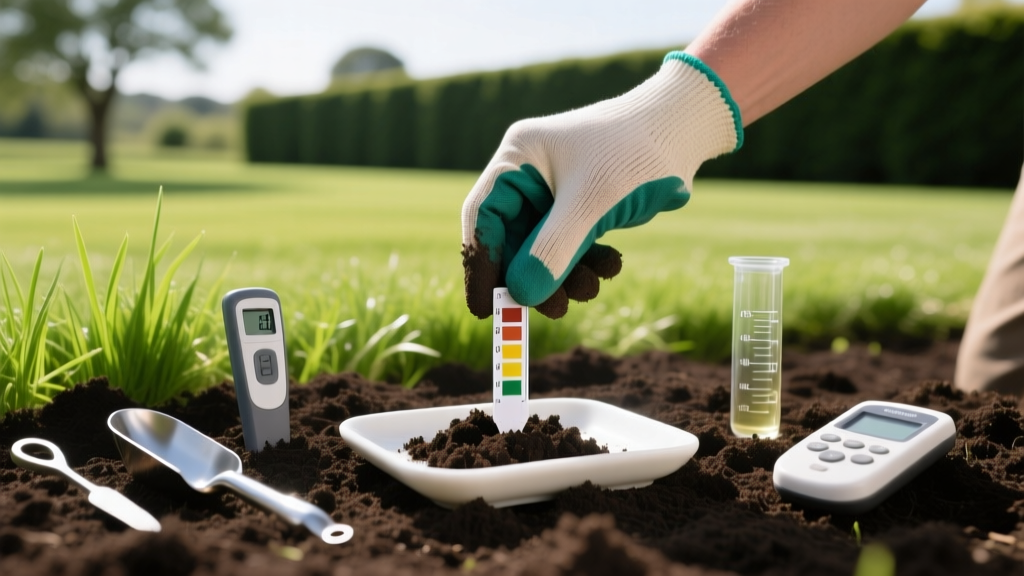
Soil pH Testing for Lawns: The Complete Guide
Marcus ReevesPublished
Why Soil pH Matters for Your Lawn
Soil pH directly affects how well your grass absorbs nutrients. Most turfgrasses thrive in a pH range of 6.0 to 7.0. Outside this window, essential nutrients like nitrogen, phosphorus, and potassium become chemically locked in the soil — even if you're applying fertilizer regularly.
University of Minnesota extension research shows that lawns with pH below 5.5 suffer up to 40% reduced nitrogen uptake. This means you could be wasting money on fertilizer your grass simply can't use.
Signs Your Lawn Has pH Problems
Acidic Soil (pH Below 6.0)
When soil becomes too acidic, grass roots struggle to access phosphorus and calcium. You'll notice thin, pale green growth despite adequate watering and feeding. Moss often colonizes acidic patches, especially in shaded areas.
Weeds like plantain, sorrel, and yarrow flourish in acidic conditions. If these weeds keep returning after treatment, your soil pH is likely the underlying cause.
Alkaline Soil (pH Above 7.5)
High pH locks up iron and manganese, causing chlorosis — yellowing between green leaf veins. This is especially common in regions with limestone bedrock or where construction debris raised soil alkalinity.
How to Test Your Lawn's Soil pH
DIY Test Kit Method
Affordable test kits from brands like Rapitest and Luster Leaf cost $10-15 and give results in minutes. Collect soil from 4-6 spots across your lawn, mix them together, and follow the kit instructions. The color-coded results show pH on a scale from 3.5 to 8.0.
Professional Lab Testing
For the most accurate results, send samples to your state's cooperative extension lab. Tests typically cost $15-30 and include pH plus detailed nutrient analysis. The A&L Agricultural Laboratories network processes over 500,000 soil samples annually with turnaround times of 5-7 business days.
Digital pH Meter
Insert-style meters like the SONKIR MS02 ($12) provide instant readings. Push the probe 2-3 inches into moist soil and wait 60 seconds for a stable reading. Take measurements at multiple locations and average the results.
Reading Your Test Results
| pH Range | Classification | Lawn Impact | Action Needed |
|---|---|---|---|
| Below 5.5 | Very Acidic | Severe nutrient lockout, moss growth | Apply 40-50 lbs lime per 1,000 sq ft |
| 5.5-6.0 | Moderately Acidic | Reduced nutrient uptake | Apply 20-30 lbs lime per 1,000 sq ft |
| 6.0-7.0 | Ideal | Optimal nutrient availability | No adjustment needed |
| 7.0-7.5 | Slightly Alkaline | Minor iron/manganese reduction | Monitor; apply sulfur if above 7.3 |
| Above 7.5 | Alkaline | Chlorosis, poor root development | Apply 5-10 lbs elemental sulfur per 1,000 sq ft |
How to Lower Soil pH (Make It More Acidic)
Elemental Sulfur
Elemental sulfur is the most cost-effective way to reduce soil pH. Soil bacteria convert sulfur to sulfuric acid over 2-3 months. Apply 5 lbs per 1,000 sq ft to lower pH by approximately 0.5 units in sandy soils, or 10 lbs per 1,000 sq ft for clay soils.
Brands like Bonide Sul-Po-Mag and Jobe's Organics Soil Acidifier are widely available at garden centers. Apply in early spring or fall when soil temperatures are above 50°F for fastest bacterial activity.
Aluminum Sulfate
Works faster than elemental sulfur (within 2-4 weeks) but requires larger application rates. Use 10-15 lbs per 1,000 sq ft for each 0.5 pH unit reduction. Note: excessive aluminum can be toxic to some grass varieties, so use sparingly.
How to Raise Soil pH (Make It Less Acidic)
Calcitic Limestone
The standard choice for raising pH, calcitic lime adds both calcium and pH buffering. Apply 20-50 lbs per 1,000 sq ft depending on your soil type and current pH. Pelletized lime (like Pelletized Dolomitic Lime from Encap) is easier to spread with a broadcast spreader than powdered forms.
Dolomitic Limestone
Contains both calcium and magnesium. Use dolomitic lime when your soil test also shows magnesium deficiency. The magnesium-to-calcium ratio is typically 1:1.5, which matches the ideal ratio for most turfgrass root systems.
Timing Your pH Adjustments
Expert tip from Purdue Extension: "Apply lime or sulfur at least 2-3 months before you want the pH change to take effect. Soil chemistry doesn't change overnight — plan pH adjustments as seasonal maintenance, not quick fixes."
- Spring application: Apply 4-6 weeks before your first fertilizer application so nutrients can be absorbed efficiently
- Fall application: Ideal for lime — winter freeze-thaw cycles help incorporate it into the soil profile
- Summer: Avoid applying sulfur during hot, dry periods — soil bacteria need moisture to work
- After overseeding: Wait 4-6 weeks after seeding before applying any pH amendment
Common Mistakes When Adjusting Soil pH
Over-applying amendments: More isn't always better. Changing pH by more than 1.0 unit per year stresses grass roots. If your soil is very far from ideal, split the correction over two seasons.
Ignoring soil type: Clay soils require 2-3 times more amendment than sandy soils for the same pH change. Always base application rates on your soil's cation exchange capacity (CEC), which your lab test will report.
Skipping re-testing: Re-test your soil every 6-12 months after making adjustments. Over time, rainfall, fertilization, and organic matter decomposition gradually shift pH back toward your region's natural baseline.
Maintaining Optimal pH Year After Year
Once your lawn reaches the ideal 6.0-7.0 range, maintain it with annual testing each spring. Light annual applications of 5-10 lbs of lime per 1,000 sq ft counteract the natural acidification that occurs from rainfall and nitrogen fertilizer use.
Keep a log of your pH readings and amendment applications. Over 2-3 years, you'll see the seasonal pattern for your specific lawn and can time applications more precisely. The upfront investment in soil testing pays dividends through reduced fertilizer waste and a thicker, healthier lawn.

