
Lawn Care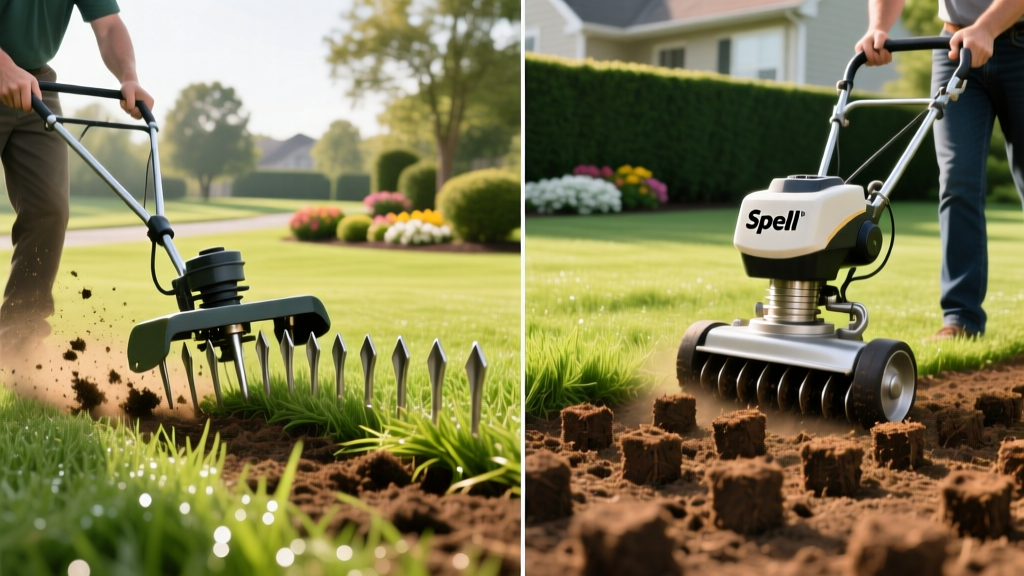
Spike vs. 'Spell' Aerating: Step-by-Step Lawn Maintenance
The "Spell Aerating" Autocorrect: Spike vs. Core Explained
If you have found yourself searching for "spell aerating," you are not alone. Modern smartphones frequently autocorrect spike aerating into this phrase. However, whether you meant spike aeration or are genuinely wondering how to manage aeration during a summer "dry spell," the mechanical processes and soil science remain identical. Aeration is the process of creating pathways for oxygen, water, and nutrients to reach the root zone, but executing it incorrectly can sever roots and invite weed infestations.
Terminology & Timing Note: "Spell aerating" is a common typo for spike aerating. If you are asking how to aerate during a literal "dry spell" (drought), the rule is strict: never aerate parched soil. Aerating during a drought accelerates moisture loss and shocks the turf. This guide covers the exact step-by-step procedures for both spike and core aeration to ensure your turf thrives.
Step 1: Soil Compaction Diagnostics
Before renting equipment, you must verify that your soil actually requires aeration. Over-aerating disrupts the soil microbiome and damages healthy root structures. According to Penn State Extension, lawns with heavy clay soils or those subjected to high foot traffic require annual aeration, while sandy soils may only need it every three to four years.
The 6-Inch Screwdriver Test
Take a standard 6-inch flathead screwdriver and push it into the soil at multiple points across your lawn. If you cannot easily sink the blade past the 3-inch mark without twisting aggressively, your soil is compacted. For precise measurement, use a soil probe to extract a core. If the soil is dense, platy, and lacks visible pore space below the thatch layer, aeration is mandatory.
| Feature | Spike Aeration | Core (Plug) Aeration |
|---|---|---|
| Mechanism | Punctures soil with solid tines | Extracts 2-3 inch cylindrical soil plugs |
| Best For | Sandy loam, mild compaction, mid-season refresh | Heavy clay, severe compaction, pre-overseeding |
| Risk of Worsening Compaction | High (compresses soil laterally) | None (relieves lateral pressure) |
| Equipment Cost (2026 Avg) | $40 - $150 (Tow-behind/Manual) | $85 - $120/day (Walk-behind Rental) |
Step 2: Site Preparation & Moisture Calibration
Proper preparation dictates the success of the aeration. Dry soil will shatter core tines, while muddy soil will clog them and tear the turf canopy.
- Moisture Calibration: Water the lawn deeply 48 hours before aeration. The goal is 1 inch of water penetration, achieving a volumetric water content of roughly 25-30%. The soil should be moist but not saturated.
- Mowing Protocol: Drop your mowing deck 20% lower than your standard maintenance height. For Tall Fescue, mow down to 2.5 inches. For Zoysia or Bermuda, drop to 1.25 inches. This prevents the aerator tines from getting tangled in long grass blades and ensures deeper soil penetration.
- Utility Mapping: Call 811 to mark underground utilities. Additionally, use high-visibility irrigation flags to mark shallow sprinkler heads, valve boxes, and invisible dog fences. Aerator tines will easily crush unmarked PVC sprinkler lines.
Step 3: Equipment Selection & Execution Patterns
For residential lawns under 5,000 square feet, manual spike aerators or tow-behind models like the Agri-Fab 45-0299 48-inch Tow Plug Aerator (approx. $130) are sufficient. For severe compaction or lawns requiring overseeding, rent a walk-behind core aerator like the Billy Goat PL1800H. As of 2026, expect to pay between $85 and $110 per day for a commercial-grade rental.
The Criss-Cross Execution Pattern
According to the University of Minnesota Extension, a single pass is rarely enough to alleviate deep compaction. Follow this operational sequence:
- Pass One: Drive the aerator in straight, parallel lines across the length of the lawn, overlapping each pass by 2 inches.
- Pass Two: Make a second set of passes perpendicular (or at a 45-degree angle) to the first. This creates a diamond grid pattern, maximizing soil fracture and seed-to-soil contact.
- The Turning Rule: Never turn the machine while the tines are engaged in the ground. Lift the tines, pivot, and re-engage. Turning with tines down will tear massive divots out of your turf canopy.
"Leave the extracted soil plugs on the lawn. They contain beneficial microorganisms and will break down within two to three weeks, returning topsoil to the thatch layer and aiding in thatch decomposition."
Step 4: Post-Aeration Fertilization and Overseeding
The 48-hour window immediately following core aeration is the most critical time for lawn renovation. The open holes provide direct access to the root zone.
Overseeding Rates & Seed Selection
If you are overseeding a cool-season lawn (Fescue, Kentucky Bluegrass, Ryegrass), apply seed immediately after aeration. For Tall Fescue, use a premium blend like Jonathan Green Black Beauty Ultra at a rate of 8 lbs per 1,000 square feet. The seed will fall directly into the aeration holes, protecting it from birds and wind while maintaining the moisture required for germination.
Starter Fertilizer Application
Apply a high-phosphorus starter fertilizer to promote rapid root development. A formulation like Scotts Turf Builder Starter Food for New Grass (24-25-4) is ideal. Apply at a rate of 3.5 lbs per 1,000 square feet using a broadcast spreader. Avoid weed-and-feed products containing mesotrione or dithiopyr, as these pre-emergents will halt grass seed germination.
Warning: The "Dry Spell" Danger Zone
If an unexpected late-summer dry spell hits immediately after aeration, you must increase irrigation frequency. Water the lawn for 15 minutes twice daily (morning and early afternoon) for the first 14 days to keep the top 1 inch of soil consistently damp. Allowing aeration holes to dry out during seed germination will result in 100% seedling mortality.
If an unexpected late-summer dry spell hits immediately after aeration, you must increase irrigation frequency. Water the lawn for 15 minutes twice daily (morning and early afternoon) for the first 14 days to keep the top 1 inch of soil consistently damp. Allowing aeration holes to dry out during seed germination will result in 100% seedling mortality.
Frequently Asked Questions
Can I use liquid aeration instead of mechanical spell/spike aerating?
Liquid aerators (surfactants like ammonium lauryl sulfate) can help reduce water surface tension and improve water infiltration in mildly compacted soils. However, they do not physically fracture the soil matrix or relieve deep mechanical compaction like core aeration. Use liquid aeration as a supplementary maintenance tool between physical core aeration cycles, not as a total replacement.
How soon can I mow after aerating and overseeding?
Wait until the new grass seedlings reach a height of 3.5 to 4 inches before the first post-aeration mow. Ensure your mower blades are freshly sharpened to prevent tearing the tender young turf. When you do mow, never remove more than the top 1/3 of the grass blade.

