
Lawn Care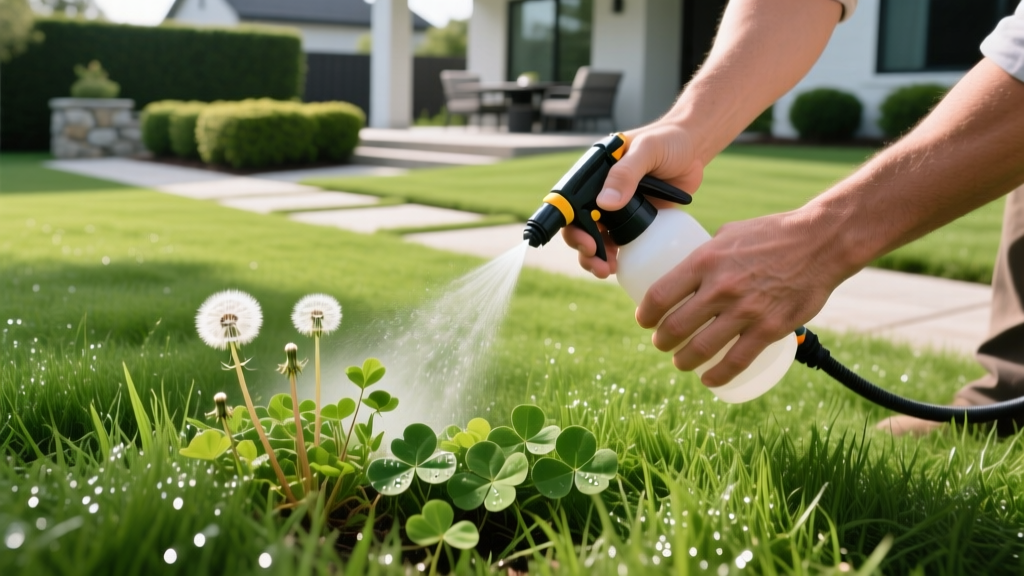
Spraying Weeds by Species: Spot-Treatment Guide for Home Lawns
Broadcast spraying herbicides across an entire lawn is an inefficient, environmentally taxing approach that wastes chemical, harms soil microbiology, and accelerates herbicide resistance. Modern turf management demands precision. Spot-spraying weeds targets the specific physiological vulnerabilities of individual weed species while preserving the surrounding desirable turfgrass. This guide provides exact mixing ratios, surfactant pairings, and application protocols for the most stubborn lawn invaders, ensuring your spot-treatment strategy is both lethal to the weed and safe for your grass.
The Decision Matrix: Match the Weed to the Herbicide
Selecting the correct active ingredient is the most critical step in spot-spraying weeds. Using a broadleaf herbicide on a grassy weed, or vice versa, will result in total failure and wasted product. Below is a targeted selection matrix for common, difficult-to-control species.
| Weed Species | Active Ingredient | Recommended Product (2026 Market) | Approx. Cost |
|---|---|---|---|
| Yellow/Purple Nutsedge | Halosulfuron-methyl | SedgeHammer+ (includes surfactant) | $22 - $28 / box |
| Wild Violet & Ground Ivy | Triclopyr + Dicamba | Bonide Chickweed, Clover & Oxalis Killer | $15 - $18 / 16oz |
| Crabgrass & Dallisgrass | Quinclorac | Drive XLR8 or Bayer BioAdvanced All-In-One | $35 - $45 / 8oz |
| Dandelion & Plantain | 2,4-D + MCPP | Ortho WeedClear Lawn Weed Killer | $12 - $15 / 32oz |
Calibration and Mixing: Getting the Spot-Spray Ratio Right
When spot-spraying weeds with a 1-gallon or 2-gallon pump sprayer, you are not measuring by the acre; you are measuring by the gallon. A standard rule of thumb is that 1 gallon of mixed solution, applied at a steady walking pace with a flat-fan nozzle, covers approximately 1,000 square feet. However, for spot treatments, your goal is to wet the leaf surface to the point of just before runoff.
The Hard Water Problem and pH Buffers
Many homeowners fail when spraying weeds because they use hard tap water. Weak-acid herbicides like 2,4-D, Dicamba, and Glyphosate bind to the calcium and magnesium ions in hard water, rendering the chemical inert before it even hits the leaf.
Expert Tip: Always add Ammonium Sulfate (AMS) to your sprayer tank before adding the herbicide. Use a rate of 1 to 2 ounces of AMS per gallon of water. This conditions the water, prevents ion lock-up, and can increase herbicide efficacy by up to 30% on stubborn broadleaves.
Species-Specific Spot-Treatment Protocols
1. Nutsedge (Yellow and Purple)
Nutsedge is a sedge, not a grass or a broadleaf. It reproduces via underground tubers (nutlets). Pulling it snaps the shoot, leaving the nutlets to sprout three new plants.
- Chemical: Halosulfuron-methyl (SedgeHammer+).
- Mixing Ratio: 1/3 oz (one packet) per 1 gallon of water.
- Application: Spray directly onto the foliage. Halosulfuron is systemic and xylem-mobile; it will travel down to the nutlets over 14 to 21 days.
- Crucial Rule: Do not mow for 48 hours before or 48 hours after spraying to maximize leaf surface area for absorption.
2. Wild Violet and Ground Ivy (Creeping Charlie)
These perennial broadleaves possess a thick, waxy cuticle that causes water-based herbicides to bead up and roll off onto the soil.
- Chemical: Triclopyr is the undisputed king for wild violets. Dicamba is required for Ground Ivy.
- Surfactant Requirement: You must add a Non-Ionic Surfactant (NIS) at a rate of 0.25% v/v (roughly 1/2 teaspoon per gallon). This breaks the surface tension and allows the chemical to penetrate the waxy cuticle.
- Timing: Spot-spray these species in early autumn when soil temperatures drop below 70°F. The plants are actively pulling carbohydrates (and the herbicide) down into their root systems for winter storage.
3. Crabgrass and Dallisgrass
While pre-emergents are the primary defense against crabgrass, post-emergent spot-spraying is necessary for late-summer breakouts or perennial Dallisgrass.
- Chemical: Quinclorac.
- Surfactant Requirement: Unlike broadleaves, Quinclorac requires a Methylated Seed Oil (MSO) surfactant, not an NIS. MSO penetrates the thick silica layer of grassy weeds. Use 1 tablespoon of MSO per gallon.
- Warning: Quinclorac can cause temporary yellowing in St. Augustine and Centipede grasses. If you have these warm-season turf types, rely on manual removal or targeted Atrazine applications instead.
Environmental Safeguards and Drift Mitigation
When spraying weeds in a residential setting, protecting adjacent ornamental beds, vegetable gardens, and neighboring properties is non-negotiable. Volatilization and physical drift are the primary risks.
Warning: Temperature Inversions and Volatilization
Never spray herbicides containing 2,4-D or Dicamba when ambient temperatures exceed 85°F. At high temperatures, these chemicals vaporize (volatilize) off the leaf surface and drift as an invisible gas, which can severely twist and stunt sensitive plants like tomatoes, hydrangeas, and dogwoods. Spray in the early morning when temperatures are between 60°F and 75°F.
Never spray herbicides containing 2,4-D or Dicamba when ambient temperatures exceed 85°F. At high temperatures, these chemicals vaporize (volatilize) off the leaf surface and drift as an invisible gas, which can severely twist and stunt sensitive plants like tomatoes, hydrangeas, and dogwoods. Spray in the early morning when temperatures are between 60°F and 75°F.
To physically prevent drift, invest in a shielded sprayer. The Chapin 1949 Slide Pump Sprayer or a simple DIY shield (cutting the bottom off a 1-gallon plastic milk jug and placing it over the nozzle) confines the spray pattern to a 4-inch diameter, completely eliminating off-target physical drift.
Post-Spray Recovery and Overseeding Timelines
Spot-spraying weeds leaves small, bare patches in your turf. Knowing when you can safely drop grass seed into these treated areas is critical, as residual herbicides will kill germinating grass seedlings. According to turfgrass extension research from Purdue University, adhering to the following waiting periods is mandatory:
- 2,4-D / MCPP / Dicamba: Wait 3 to 4 weeks before overseeding cool-season grasses.
- Triclopyr: Wait a minimum of 3 weeks; 4 weeks is safer for fine fescues.
- Quinclorac: This is the most restrictive. You must wait 21 to 28 days before seeding. If you seed too early, the Quinclorac residual will cause severe root pruning in the new seedlings.
- Halosulfuron-methyl (SedgeHammer): Wait at least 4 weeks before reseeding or sprigging.
For comprehensive regulatory guidelines on pesticide application and environmental safety, always consult the EPA's Safe Pest Control Lawn Care resources before purchasing commercial-grade concentrates. Additionally, the UC Statewide IPM Program offers excellent visual identification tools to ensure you are accurately diagnosing the weed species before mixing your tank.
Final Equipment Maintenance Protocol
After spraying weeds, never store your pump sprayer with the chemical mixture inside. Triple-rinse the tank, flush the wand and nozzle with clean water, and spray the rinse water onto a gravel driveway or bare dirt area—never into a storm drain. Dedicate one sprayer exclusively for herbicides and a completely separate, distinctly colored sprayer for liquid fertilizers and foliar feeds to prevent catastrophic cross-contamination.

