
Lawn Care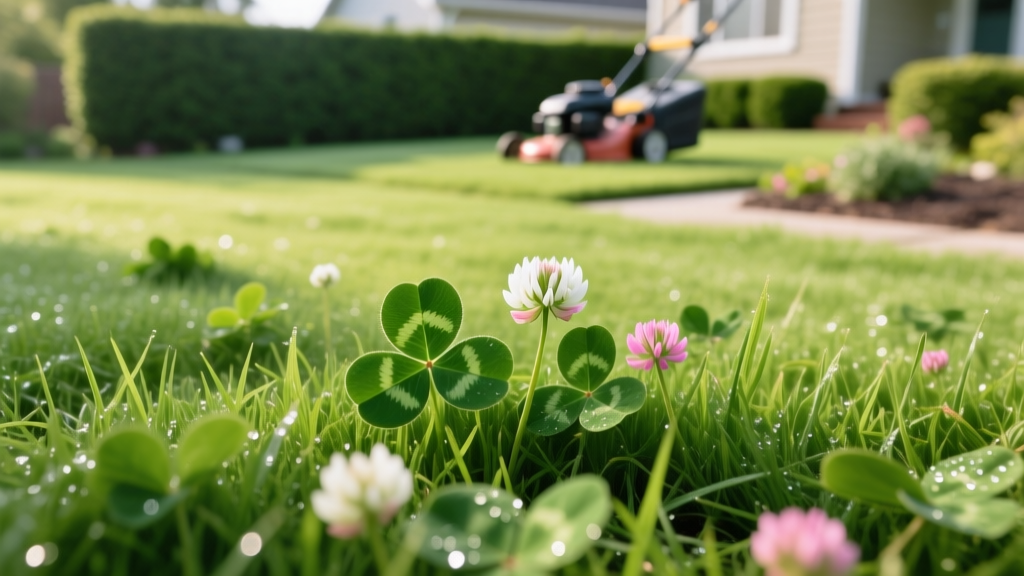
How to Spot-Treat Clovers in Lawns: ID and Control
The Bio-Indicator in Your Turf: Understanding Clover Invasions
Finding clovers in your lawn is rarely a random occurrence; it is a direct biological signal about your soil's health. While many homeowners view clovers as mere aesthetic nuisances, turfgrass agronomists recognize them as bio-indicators of nitrogen depletion and soil compaction. Because clovers belong to the legume family, they form symbiotic relationships with Rhizobium bacteria in their root nodules, allowing them to fix atmospheric nitrogen. When your turfgrass starves for nitrogen, clovers thrive, outcompeting the surrounding grass.
Broadcast spraying an entire lawn for a few scattered clover patches is an inefficient use of chemicals and money. Spot-treatment targets the invasive broadleaf weeds while preserving the beneficial soil microbiome and minimizing chemical runoff. This guide provides precise, actionable protocols for identifying, treating, and eradicating clover patches using both synthetic and organic methodologies.
Identifying the Invader: Clover Species Matrix
Before mixing any herbicide, accurate identification is critical. While White Clover is the most prevalent lawn invader, misidentifying the species can lead to ineffective treatment timing. According to the USDA Plants Database, Trifolium repens (White Clover) is a perennial broadleaf weed, but other variants require slightly different approaches.
| Species | Scientific Name | Leaf Structure | Flower Color | Growth Habit |
|---|---|---|---|---|
| White Clover | Trifolium repens | Three leaflets, often with white 'V' chevron | White to pale pink | Creeping stolons, roots at nodes |
| Red Clover | Trifolium pratense | Larger leaflets, prominent white V-marks | Magenta to deep pink | Upright, bushy, short-lived perennial |
| Strawberry Clover | Trifolium fragiferum | Similar to white clover, slightly glossier | Pinkish-white, spherical | Aggressive creeping stolons |
The Hydrophobic Cuticle: Why Surfactants are Non-Negotiable
The most common failure mode in DIY clover spot-treatment is herbicide runoff. Clover leaves possess a thick, hydrophobic waxy cuticle designed to retain moisture. If you spray a standard aqueous herbicide solution onto clover, the droplets will bead up and roll off the leaf surface, wasting the product and damaging the grass below.
To breach this barrier, you must add a Non-Ionic Surfactant (NIS) to your tank mix. The NIS reduces the surface tension of the water, causing the herbicide droplet to flatten, spread, and adhere to the waxy leaf. For standard spot-treatments, mix your herbicide at the label rate and add 0.25% v/v of NIS (approximately 1/2 teaspoon per gallon of mixed solution).
Chemical Spot-Treatment Protocols
For rapid eradication of established clover patches, synthetic auxin herbicides are the most effective. These chemicals mimic plant growth hormones, causing the broadleaf weed to grow uncontrollably until its vascular system collapses.
Active Ingredients and Product Selection
- Triclopyr: The gold standard for clover control. It is highly effective on legumes and safe for most cool-season grasses. Found in products like Ortho WeedClear for Lawns ($20-$25 for 32oz ready-to-spray).
- Carfentrazone-ethyl + 2,4-D + MCPP + Dicamba: A four-way combination that provides rapid burndown. SpeedZone Broadleaf Herbicide for Turf ($45-$60 for 16oz concentrate) is a professional-grade option. Mix at 1.0 to 1.5 fl oz per gallon of water for spot treatments.
- Quinclorac: Less effective on mature clovers but useful if white clover is mixed with creeping charlie or dandelions.
⚠️ Temperature & Volatility Warning: Never apply Triclopyr or 2,4-D based herbicides when ambient temperatures exceed 85°F. At high temperatures, these chemicals vaporize and drift, causing severe phytotoxicity (leaf curling and stunting) to nearby desirable plants, shrubs, and even your own turfgrass. Apply in the early morning or late evening when temperatures are between 65°F and 80°F.
Organic and Cultural Spot-Treatments
If you prefer to avoid synthetic auxins, organic spot-treatments require more physical effort and precise timing but can be highly effective when integrated with cultural practices.
Chelated Iron (FeHEDTA) Herbicides
Iron-based herbicides, such as Fiesta Turf Weed Killer ($40-$50 per gallon), utilize chelated iron (FeHEDTA). Broadleaf weeds like clovers absorb and accumulate the iron to toxic levels, causing rapid oxidative stress and cellular necrosis (blackening of the leaves). Grasses, however, naturally regulate iron uptake and remain unharmed. Apply FeHEDTA heavily to the clover patch until runoff. Expect to see necrosis within 24 hours, but plan for a second application 14 days later to kill any regrowth from the root system.
Manual Extraction with Taproot Tools
Pulling clover by hand almost always leaves the deep taproot intact, guaranteeing regrowth within three weeks. For spot-treating isolated plants, use a specialized extraction tool like the Fiskars 3-Claw Stand-Up Weeder ($35).
- Water the clover patch deeply the night before to soften the soil profile.
- Position the three stainless steel claws directly over the center crown of the clover.
- Step on the foot platform to drive the claws 4 inches deep, engaging the taproot.
- Pull back on the handle to lever the entire root system out of the soil.
Step-by-Step Spot-Treatment Execution Plan
Follow this precise sequence to maximize herbicide efficacy and minimize turf stress. This protocol is endorsed by turfgrass extension programs, including guidelines published by the University of Minnesota Extension.
Phase 1: Preparation (Days 1-3)
- Day 1: Mow the lawn at your standard height (e.g., 3 inches for Tall Fescue). Do not scalp the clover.
- Day 2: Water the lawn lightly. Herbicides translocate best when weeds are actively growing and not drought-stressed.
- Day 3: Mix your chosen herbicide with NIS in a 1-gallon or 2-gallon pump sprayer. Agitate the tank thoroughly.
- Spray the clover leaves until they are visibly wet, but avoid creating puddles on the soil.
- Do not mow the lawn for at least 48 hours post-application to allow the chemical to translocate down to the taproot.
- Inspect the treated patches. The clover should be yellow, brittle, or completely desiccated.
- If green tissue remains at the crown, apply a second, lighter spot-treatment.
Post-Treatment Lawn Recovery and Prevention
Eradicating the clover is only half the battle. The Washington State University Hortsense program emphasizes that failing to correct the underlying soil deficiency will result in a new flush of clover seeds germinating the following spring.
Correcting the Nitrogen Deficit
Clover invasion indicates your soil lacks sufficient plant-available nitrogen. Once the clover is dead, apply a high-quality, slow-release nitrogen fertilizer (such as Milorganite or a polymer-coated urea) at a rate of 1.0 to 1.5 lbs of actual Nitrogen per 1,000 square feet. This will stimulate the surrounding turfgrass to thicken and outcompete any remaining clover seedlings.
Overseeding Bare Patches
Dead clover patches leave circular voids in the turf canopy, which are prime real estate for crabgrass and spurge. Rake out the dead clover debris to expose bare soil. Overseed these specific spots with a grass seed blend that matches your existing lawn. For cool-season lawns, use a mix of Kentucky Bluegrass and Turf-Type Tall Fescue. Keep the overseeded spots consistently moist (watering 2-3 times daily for 5 minutes) for 14 days until germination is complete.
Frequently Asked Questions
Will clover kill my grass?
Clover does not release allelopathic toxins to kill grass, but it will outcompete it for sunlight, water, and space. As the clover's stolons spread, they form dense mats that smother the turfgrass crowns, eventually leading to thin, patchy grass.
Is clover beneficial for pollinators?
Yes, white clover flowers are an excellent nectar source for honeybees and native pollinators. If you maintain a naturalized or low-input lawn, allowing a small percentage of clover (under 10% of the total turf canopy) can support local ecosystems while still providing a green, walkable surface.
Can I use vinegar to spot-treat clover?
Horticultural vinegar (20% to 30% acetic acid) will burn the foliage of the clover, but it is a contact herbicide with no systemic action. It will not kill the taproot, meaning the clover will regrow within two weeks. Furthermore, acetic acid lowers soil pH and can harm the soil microbiome, making it an inferior choice compared to targeted broadleaf herbicides or manual extraction.

