
Lawn Care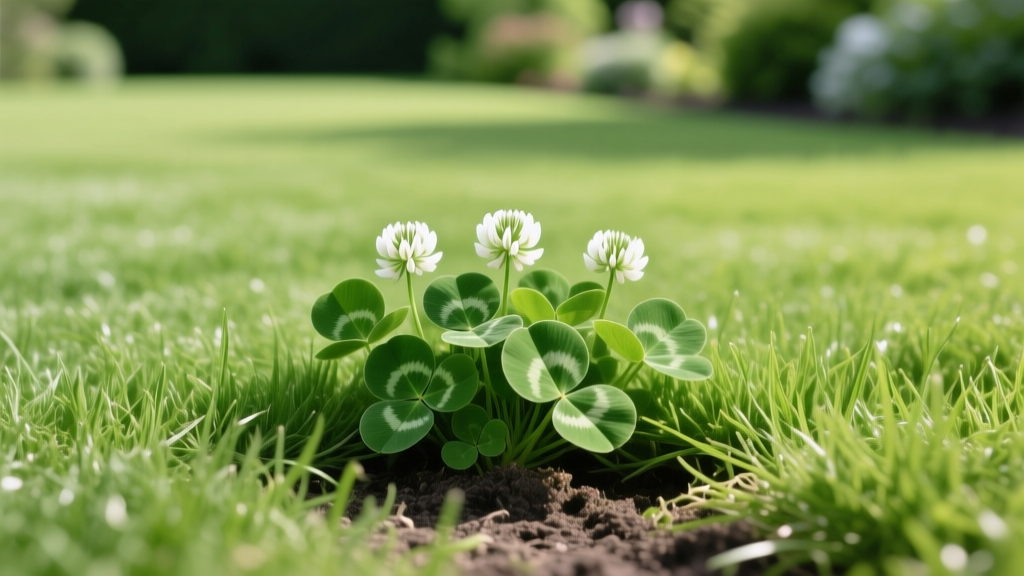
How to Spot-Treat a Dutch White Clover Lawn Invasion
Dutch white clover (Trifolium repens) is a persistent, cool-season perennial legume that aggressively colonizes thinning turfgrass. While some eco-conscious homeowners intentionally cultivate a clover lawn for its drought tolerance and pollinator benefits, traditional turf managers view it as a highly competitive weed. When it invades a Kentucky bluegrass, fescue, or bermudagrass lawn, it forms dense, low-growing mats that choke out desirable grass species. Because clover spreads via above-ground stolons and maintains a deep taproot, broadcast spraying entire lawns is often unnecessary and ecologically wasteful. This guide details precision spot-treatment protocols to eradicate isolated Dutch white clover patches while preserving surrounding turf health.
Botanical Profile & Identification Markers
Before initiating any treatment, accurate identification is critical. Dutch white clover is frequently confused with black medic (Medicago lupulina) or oxalis. According to NC State TurfFiles, accurate identification relies on three distinct morphological traits:
- Leaflet Structure: Trifoliate leaves (three leaflets) measuring 0.5 to 1 inch across, typically featuring a pale green or white 'chevron' (V-shape) watermark near the center.
- Growth Habit: Creeping stolons (above-ground stems) that root at the nodes, allowing the plant to spread laterally up to 12 inches per year.
- Flower Heads: Spherical, white to pale pink flower clusters (0.5 to 1 inch in diameter) that emerge on long stalks from late spring through early autumn.
The Nitrogen Indicator: Why Clover Invades
Insight: Clover is a Symptom, Not Just a Problem
As a legume, Dutch white clover harbors Rhizobium bacteria in its root nodules, allowing it to fix atmospheric nitrogen. If your lawn is heavily infested with clover, it is a primary bio-indicator that your soil is nitrogen-deficient. Eradicating the weed without addressing the underlying soil fertility will result in rapid reinvasion or secondary invasions by opportunistic weeds like crabgrass or spurge.
As a legume, Dutch white clover harbors Rhizobium bacteria in its root nodules, allowing it to fix atmospheric nitrogen. If your lawn is heavily infested with clover, it is a primary bio-indicator that your soil is nitrogen-deficient. Eradicating the weed without addressing the underlying soil fertility will result in rapid reinvasion or secondary invasions by opportunistic weeds like crabgrass or spurge.
A mature turfgrass lawn requires 2 to 4 pounds of actual nitrogen per 1,000 square feet annually. Clover thrives in soils where available nitrogen drops below 1 pound per 1,000 square feet, utilizing its biological nitrogen-fixing advantage to outcompete starving turfgrass roots.
Spot-Treatment Decision Matrix
Select your treatment modality based on the size of the clover patch, your turfgrass species, and environmental constraints. The University of Minnesota Extension notes that treatment efficacy is heavily dependent on the clover's growth stage and the surrounding turf's tolerance to chemical stress.
| Infestation Size | Recommended Modality | Estimated Cost (per 1,000 sq ft) | Turfgrass Safety |
|---|---|---|---|
| < 5 sq ft (Isolated) | Manual Extraction / Hand Weeding | $0 (Labor only) | 100% Safe |
| 5 - 50 sq ft (Patches) | Selective Systemic Herbicide (Triclopyr) | $1.50 - $3.00 | Safe for most cool/warm grasses |
| 50 - 200 sq ft (Scattered) | Broadleaf Blend (2,4-D + Carfentrazone) | $2.00 - $4.00 | Caution on St. Augustine / Centipede |
| > 200 sq ft (Widespread) | Cultural Renovation + Broadcast Fertilizer | $15.00 - $25.00 | Requires overseeding protocol |
Chemical Spot-Treatment Protocol
For patches ranging from 5 to 200 square feet, targeted chemical application is the most efficient eradication method. Dutch white clover's waxy leaf cuticle and extensive stolon network require systemic herbicides that translocate down to the taproot.
Selecting the Active Ingredient
While 2,4-D amine is the most common broadleaf herbicide, it is notoriously weak against mature clover. For superior efficacy, utilize products containing Triclopyr or a multi-active blend featuring Carfentrazone-ethyl. Carfentrazone provides rapid 'burn-down' of the foliage (visible within 24 hours), while Triclopyr or 2,4-D translocates to the roots for long-term control.
- Top Recommendation: SpeedZone Broadleaf Herbicide for Turf (Contains 2,4-D, MCPP, Dicamba, and Carfentrazone). Priced around $120 per gallon, it treats up to 43,000 sq ft, making the per-application cost negligible for spot treatments.
- Alternative: T-Zone SE (Contains Triclopyr, 2,4-D, and Dicamba). Highly effective on stubborn, mature clover networks in cool-season lawns.
Exact Mixing & Application Rates
Do not rely on the 'spray until wet' visual cue. Precision mixing prevents turf phytotoxicity and ensures a lethal dose reaches the clover roots.
- Equipment: Use a 1-gallon or 2-gallon handheld pump sprayer with an adjustable cone nozzle. Avoid hose-end sprayers, which lack the precision required for spot-treating and risk drifting onto desirable ornamentals.
- Mixing Ratio: For SpeedZone, mix 1.5 fluid ounces of herbicide per 1 gallon of water. This volume will accurately cover 1,000 square feet.
- Surfactant Addition: Clover leaves are hydrophobic. Add a non-ionic surfactant (e.g., Hi-Yield Spreader Sticker) at a rate of 0.25% v/v (approximately 0.33 teaspoons per gallon). This breaks the surface tension, allowing the chemical to coat the leaflet rather than beading up and rolling off.
- Application Technique: Apply using a coarse, low-pressure spray (20-30 PSI). Keep the nozzle 12 to 18 inches from the ground to minimize drift. Spray only until the clover leaves are uniformly wet, not dripping.
Organic & Cultural Spot-Controls
For homeowners managing organic lawns or those with herbicide-sensitive turfgrasses (like St. Augustinegrass), chemical options are limited. Ammonium nonanoate (sold under brand names like A.D.I.O.S. or Avenger Weed Killer) acts as a contact desiccant. It will burn back the clover foliage rapidly but will not kill the taproot. Expect to reapply every 14 to 21 days to exhaust the root's carbohydrate reserves. Horticultural vinegar (20% acetic acid) is another contact option, but it is non-selective and will severely burn surrounding turfgrass if overspray occurs. Always use a physical shield (like a piece of cardboard) when spot-spraying organic acids in tight spaces.
Application Timing & Phytotoxicity Risks
Warning: Temperature Constraints
Never apply broadleaf herbicides when daytime air temperatures exceed 85°F (29°C) or when soil temperatures are above 80°F. High temperatures increase the volatility of ester-based herbicides, causing chemical vapor drift that can severely damage nearby trees, shrubs, and desirable turfgrass. Optimal application windows are early morning or late evening when temperatures are between 60°F and 75°F.
Never apply broadleaf herbicides when daytime air temperatures exceed 85°F (29°C) or when soil temperatures are above 80°F. High temperatures increase the volatility of ester-based herbicides, causing chemical vapor drift that can severely damage nearby trees, shrubs, and desirable turfgrass. Optimal application windows are early morning or late evening when temperatures are between 60°F and 75°F.
Furthermore, ensure no rainfall is forecast for at least 48 hours post-application. While carfentrazone is rainfast in 2 hours, the systemic components (Triclopyr/2,4-D) require 24 to 48 hours to fully translocate into the clover's root system before being washed away.
Post-Eradication Void Management
Once the Dutch white clover turns black and dies back (typically 14 to 21 days post-application), it will leave behind a network of bare soil voids where the stolons previously rooted. If left untreated, these bare patches will immediately invite summer annual weeds like prostrate spurge or crabgrass. To prevent secondary invasions, rake out the dead clover debris, loosen the top 1 inch of soil, and spot-seed the voids with a turfgrass cultivar that matches your existing lawn. Apply a starter fertilizer (high in phosphorus, e.g., 10-18-10) strictly to the seeded areas, and maintain consistent moisture until the new grass establishes. According to Purdue University Turfgrass Science, maintaining a dense, aggressively growing turf canopy is the ultimate biological barrier against future clover germination.

