
Lawn Care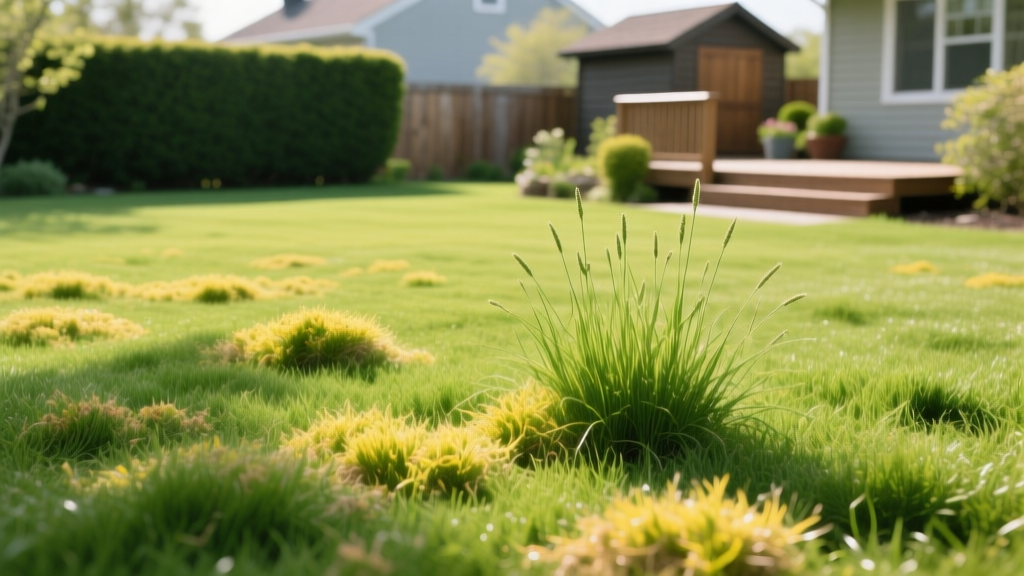
Spot-Treating a Mowed Crabgrass Lawn: A Recovery Guide
The Dilemma of the Mowed Crabgrass Lawn
Mowing a lawn heavily infested with crabgrass (Digitaria sanguinalis) is a common late-summer reality for homeowners who missed their pre-emergent window. When crabgrass is mowed, it does not die; instead, it adapts. The removal of the apical meristem (the central growing tip) triggers aggressive lateral tillering. The weed lowers its growing point to just below the mower blade height and spreads outward, forming a dense, prostrate mat that chokes out desirable cool- and warm-season turf.
Spot-treating a mowed crabgrass lawn requires a fundamentally different approach than treating tall, unmowed weeds. The drastically reduced leaf surface area immediately following a mow limits the foliar absorption of post-emergent herbicides. If you spray a freshly cut crabgrass patch, the chemical will likely fail to translocate to the root system, resulting in a temporary burn followed by rapid regrowth. This guide details the exact physiological protocols, chemical selections, and timing frameworks required to eradicate mowed crabgrass and recover your turf.
Why Mowing Alters Herbicide Efficacy
Post-emergent systemic herbicides rely on active leaf tissue to absorb the chemical and transport it down to the roots. According to University of Minnesota Extension turf specialists, crabgrass that has been recently mowed lacks the necessary photosynthetic surface area to pull a lethal dose of herbicide into its vascular system.
Warning: Never apply post-emergent crabgrass herbicides on the same day you mow. The open wounds on the cut grass blades will cause the herbicide to leak out rather than absorb, while the desirable turfgrass will absorb the chemical through the cut tips, leading to severe phytotoxicity (lawn burn).
Post-Emergent Herbicide Matrix for Cut Weeds
Not all crabgrass killers are effective on mature, mowed specimens. Dimethylamine salts of 2,4-D and standard broadleaf weed killers will not touch grassy weeds. You must use specific graminicides. Below is a comparison of the three most effective active ingredients for spot-treating a mowed crabgrass lawn.
| Active Ingredient | Top Product Example | Avg. Cost | Efficacy on Mowed Crabgrass | Seeding Restriction |
|---|---|---|---|---|
| Quinclorac (18.9%) | Drive XLR8 | $115 / pint | Excellent (requires MSO surfactant) | 28 days |
| Fenoxaprop-p-ethyl | Acclaim Extra | $85 / 2.5 oz | Moderate (struggles with mature/mowed) | None (can seed same day) |
| Mesotrione (40%) | Tenacity | $60 / 8 oz | Good (bleaches weed, slow kill) | 28 days (pre-emergent rate) |
For a mowed crabgrass lawn, Quinclorac is the undisputed industry standard. It mimics auxin (a plant growth hormone), causing the weed to grow itself to death. However, because the leaf area is compromised from mowing, Quinclorac must be paired with a high-quality adjuvant to penetrate the weed's cuticle.
The 7-Day Spot-Treatment Protocol
To maximize herbicide absorption and minimize turf stress, follow this strict chronological framework when managing a mowed crabgrass lawn.
Day 1: The Initial Mow
Set your mower deck to the highest recommended setting for your specific turfgrass (e.g., 3.5 to 4 inches for Tall Fescue, 2 to 2.5 inches for Bermudagrass). Mow the lawn to remove excess top growth from the desirable turf, which prevents the turf from shading the herbicide away from the crabgrass below. Bag the clippings if the crabgrass has already begun dropping seed heads to prevent further soil contamination.
Days 2 and 3: The Regeneration Window
Do nothing. Allow the mowed crabgrass 48 to 72 hours to push out 1 to 2 inches of fresh, uncut leaf tissue. This new growth is highly metabolically active and will act as the primary vector for pulling the herbicide down to the roots.
Day 4: Targeted Application
Mix your Quinclorac solution. For professional-grade Drive XLR8, the standard spot-treatment rate is 0.36 fluid ounces per 1,000 square feet, mixed in 1 to 2 gallons of water.
Critical Step: Add a Methylated Seed Oil (MSO) surfactant at a rate of 0.5% v/v (roughly 1.3 tablespoons per gallon of water). MSO dissolves the waxy cuticle of the mature crabgrass leaf, which is especially thick on prostrate, mowed weeds. Apply only to the crabgrass patches using a low-pressure pump sprayer with a fan nozzle to minimize drift.
Days 5 and 6: The Translocation Period
Avoid mowing, watering, or walking on the treated areas. The herbicide requires 48 hours of uninterrupted time to translocate from the leaves into the fibrous root system of the crabgrass. Watering or mowing during this window will halt the systemic movement of the chemical.
Day 7: Resume Normal Maintenance
You may now resume normal mowing and deep, infrequent watering schedules. The crabgrass will begin showing signs of chlorosis (yellowing) and necrosis (browning) within 7 to 14 days post-application.
Edge Cases and Failure Modes
Even with the correct chemicals, spot-treating a mowed crabgrass lawn can fail if environmental variables are ignored. NC State TurfFiles notes that environmental stress severely impacts herbicide performance.
- Heat Stress Application: Never apply Quinclorac when daytime air temperatures exceed 85°F (29°C). High heat causes the desirable turfgrass to close its stomata to conserve water, but the chemical can still cause severe foliar burn to cool-season grasses like Kentucky Bluegrass and Fescue. Spray only in the early morning when temperatures are below 80°F.
- Drought Conditions: If the lawn is drought-stressed, the crabgrass is not actively growing, and its vascular system is not pulling water (and therefore herbicide) upward. Irrigate the lawn deeply 24 hours before your Day 4 application to ensure the weed is actively transpiring.
- Wrong Surfactant: Using a standard Non-Ionic Surfactant (NIS) or dish soap instead of MSO will result in a 40% to 60% reduction in Quinclorac efficacy on mature, mowed crabgrass. MSO is non-negotiable for cut weeds.
Pro Tip: If your mowed crabgrass has already developed a thick, woody stem at the base (common in late August), a single application of Quinclorac may only achieve an 80% kill rate. Plan for a follow-up spot treatment 21 days after the initial application to catch any surviving tillers.
Turf Recovery and Overseeding Timelines
Once the mowed crabgrass dies and turns brown, it leaves bare patches in your lawn. If you are managing a cool-season lawn, late summer and early fall are the optimal times to overseed. However, your herbicide choice dictates your recovery timeline.
If you used Quinclorac (Drive XLR8), you must wait a minimum of 28 days after application before sowing new grass seed. Planting earlier will result in poor germination and stunted seedling death due to residual soil activity. If you need to overseed immediately and cannot wait 28 days, you must pivot to Fenoxaprop-p-ethyl (Acclaim Extra). While Acclaim is slightly less effective on heavily mowed, mature crabgrass, it carries zero seeding restrictions, allowing you to aerate and overseed the very next day.
For long-term prevention, the ultimate defense against a recurring mowed crabgrass lawn is a thick, dense turf canopy maintained at optimal mowing heights, combined with a split-application pre-emergent herbicide program (such as Prodiamine or Dithiopyr) applied in early spring when soil temperatures consistently reach 55°F at a 2-inch depth.

