
Lawn Care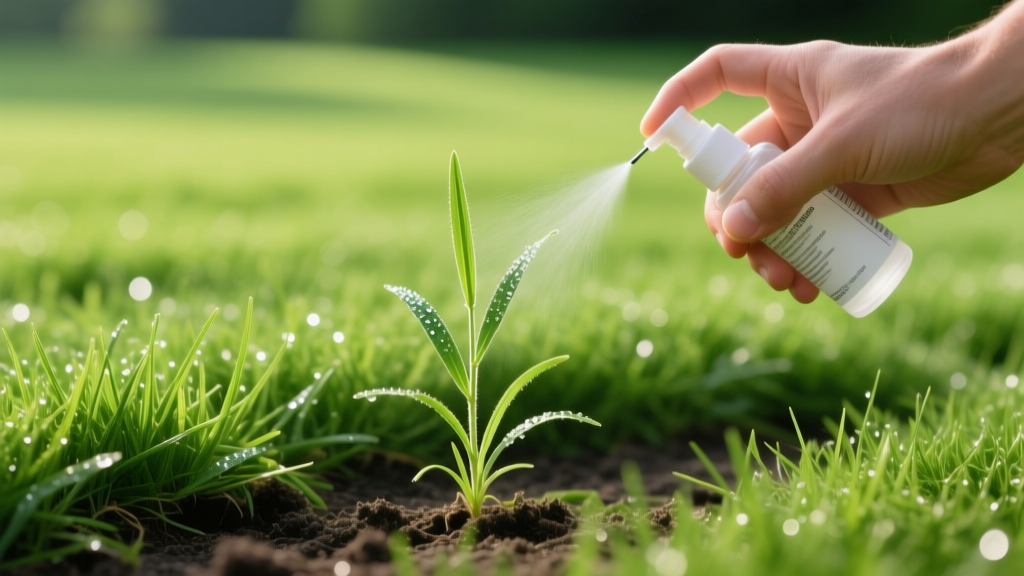
How to Spot-Treat Narrow Weeds: Grassy Lawn Invader Guide
The Broadleaf Killer Trap: Why Your Spray Failed
The most common mistake in DIY lawn care is applying a standard broadleaf herbicide to a narrow weed. Products heavily marketed for lawn weeds—often containing 2,4-D, Dicamba, or MCPP—are engineered to exploit the biological pathways of dicotyledonous (broadleaf) plants. Narrow weeds, scientifically known as monocots, possess parallel leaf venation, fibrous root systems, and entirely different metabolic pathways. When you spray 2,4-D on crabgrass or nutsedge, the chemical simply washes off or degrades without disrupting the plant's growth hormones.
According to the University of Minnesota Extension, misidentifying weed morphology leads to thousands of dollars in wasted chemicals and unintended turf stress each year. To effectively spot-treat narrow weeds, you must abandon broadleaf herbicides and utilize specific grassy-weed or sedge chemistries that target monocot cellular functions.
Identifying the Big Three Narrow Weeds
Before mixing any chemicals, accurate identification is mandatory. Narrow weeds in turfgrass generally fall into three categories: true grasses, sedges, and rushes. Here is how to distinguish the primary culprits:
Visual Identification Matrix
- Crabgrass (Digitaria): True grass. Prostrate growth habit, pale green color, and leaf blades that are wider than surrounding turf but still feature parallel veins. Stems root at the nodes.
- Yellow Nutsedge (Cyperus esculentus): Sedge. Grows upright and significantly faster than surrounding turf. Look for a distinct V-shaped stem (remember: 'sedges have edges') and leaves that emerge in sets of three from the base.
- Dallisgrass (Paspalum dilatatum): True grass. Coarse, bunch-type growth with a prominent, thick midrib on the leaf blade. Produces distinct, finger-like seed heads that emerge rapidly after mowing.
Spot-Treatment Chemistry: Active Ingredients That Work
Narrow weeds require specialized active ingredients. The University of California Statewide IPM Program notes that post-emergent control of grassy weeds relies heavily on synthetic auxins specific to monocots, or ALS (acetolactate synthase) inhibitors. Below is a breakdown of the exact chemistries required for spot-treatment, along with current retail pricing and brand equivalents.
| Active Ingredient | Target Narrow Weeds | Brand Examples | Approx. Cost |
|---|---|---|---|
| Quinclorac | Crabgrass, Foxtail, Barnyardgrass | Drive XLR8, Ortho WeedClear for Crabgrass | $35 - $65 |
| Halosulfuron-methyl | Yellow & Purple Nutsedge | SedgeHammer, Prosedge | $25 - $30 |
| Fluazifop-P-butyl | Grassy weeds in ornamental beds | Grass-B-Gon, Ornamec | $15 - $40 |
| Sethoxydim | Annual grasses in centipede/fescue | Vantage, Poast | $45 - $80 |
CRITICAL WARNING: Fluazifop and Sethoxydim are highly effective at killing narrow weeds, but they are non-selective graminicides. If you spray them on Kentucky Bluegrass, Tall Fescue, or Perennial Ryegrass, they will kill your cool-season lawn. Reserve these strictly for ornamental landscape beds or specific warm-season turf applications as dictated by the product label.
The Step-by-Step Spot-Treatment Protocol
Spot-treating narrow weeds requires more precision than broadcasting a liquid fertilizer. The waxy cuticle on grassy weeds repels water-based solutions, making the inclusion of a surfactant non-negotiable. Follow this exact protocol for maximum efficacy.
Step 1: Timing and Mowing
Apply post-emergent narrow weed herbicides when the weeds are young and actively growing. For crabgrass, this is the 1-to-2 tiller stage (before it spreads laterally). Mow your lawn 48 hours before application to ensure the weed foliage is exposed and not shaded by surrounding turfgrass. Do not mow for at least 48 hours after application to allow maximum foliar absorption.
Step 2: Mixing with the Correct Surfactant
Narrow weeds possess an upright growth habit and a thick epicuticular wax layer. You must use a Non-Ionic Surfactant (NIS) or a Methylated Seed Oil (MSO) to break the surface tension and allow the active ingredient to penetrate the leaf cuticle.
- Standard Mix: Add 0.25% v/v of NIS to your tank mix. This equates to roughly 1/2 fluid ounce of surfactant per gallon of water.
- Heavy Infestation Mix: For mature nutsedge or drought-stressed crabgrass, switch to an MSO at 1% v/v (approx. 2.5 oz per gallon). MSO provides deeper cuticle penetration but carries a slightly higher risk of temporary turf phytotoxicity (leaf burn).
Step 3: Targeted Application
Use a 1-gallon or 2-gallon pump sprayer with a adjustable cone nozzle. Adjust the nozzle to a medium-coarse droplet size to prevent herbicide drift onto desirable plants. Spray the narrow weed until the foliage 'glistens' but do not spray to the point of runoff. Dripping herbicide wastes chemical and increases soil contamination, which can harm turf roots.
Step 4: Irrigation Fasting
Withhold all irrigation and avoid application if rain is forecasted within 24 hours. Quinclorac and Halosulfuron-methyl require a minimum of 12 to 24 hours of dry foliage to translocate from the leaf tissue down to the root system or rhizomes.
Troubleshooting: When Spot-Treatments Fail
Even with the correct chemistry, homeowners frequently report failure. According to the NC State University Turfgrass Program, failure usually stems from one of three biological or mechanical errors:
- The Weed is Too Mature: Once crabgrass begins producing seed heads (typically mid-to-late summer), its metabolic energy shifts from vegetative growth to reproduction. Systemic herbicides like Quinclorac fail to translocate effectively during this stage. If the weed is seeding, mechanical removal or a targeted pre-emergent strategy for the following spring is required.
- Ignoring the Tubers (Nutsedge): Yellow nutsedge reproduces via underground tubers (nutlets). A single application of Halosulfuron-methyl will burn back the top growth, but the tuber will often send up a new shoot. You must plan for a second application 3 to 4 weeks after the initial treatment to exhaust the tuber's energy reserves.
- Hard Water Interference: If your local water supply is high in calcium or magnesium (hard water), these cations can bind to the herbicide molecules in the tank, rendering them inactive. If you suspect hard water interference, add 1 to 2 ounces of liquid ammonium sulfate (AMS) to your sprayer before adding the herbicide to condition the water.
Knowing When to Abandon Spot-Treatment
Spot-treatment is economically and environmentally viable only when narrow weed coverage is below 20% to 30% of the total lawn area. Calculating the cost of Quinclorac or Halosulfuron, combined with the labor of precision spraying, quickly surpasses the cost of renovation if the infestation is severe.
If your lawn is more than 40% compromised by dallisgrass or crabgrass, cease chemical spot-treatments. Instead, utilize a non-selective herbicide like glyphosate to kill the affected zones entirely, followed by core aeration, soil amendment, and overseeding with a competitive, dense turfgrass cultivar adapted to your specific USDA hardiness zone. A dense turf canopy, maintained at the optimal mowing height (e.g., 3.5 inches for Tall Fescue), remains the ultimate biological defense against narrow weed seed germination.

