
Lawn Care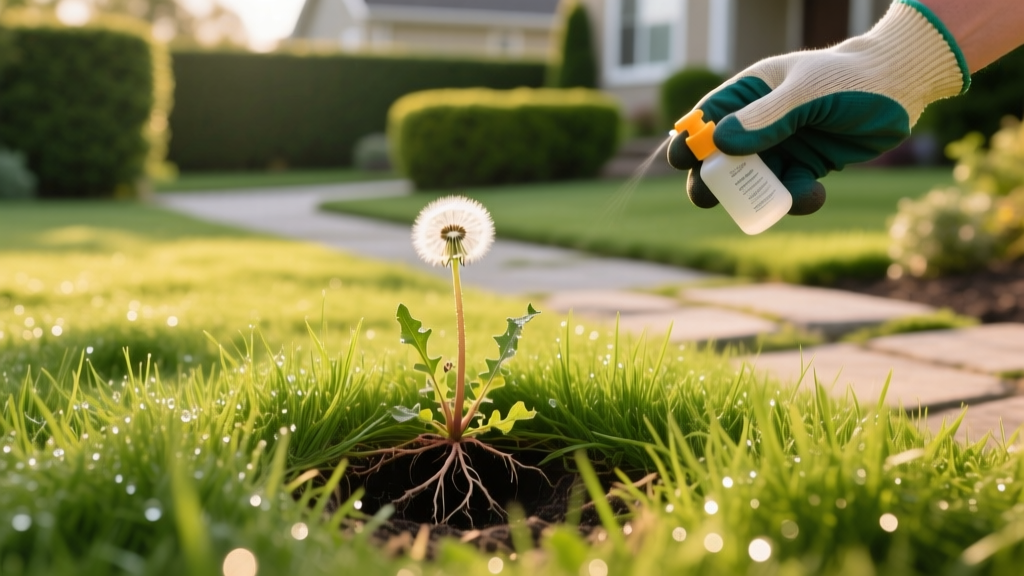
Spot-Treatment Guide for Stubborn Lawn Weeds Plants
The Spot-Treatment Decision Matrix
Broadcast spraying entire lawns is an outdated, ecologically harmful approach that wastes chemical inputs and stresses desirable turfgrass. When managing isolated patches of stubborn weeds plants, spot-treatment is the gold standard. However, determining whether a weed population warrants a localized spot-treatment or a broader application requires a strategic assessment of weed density, species, and turf health.
| Weed Density | Coverage Area | Recommended Strategy | Equipment Needed |
|---|---|---|---|
| Low (1-5 weeds per sq yard) | Less than 15% of lawn | Targeted Spot-Treatment | 1-gallon pump sprayer or sponge wand |
| Moderate (Scattered clusters) | 15% to 30% of lawn | Zonal Application | 2-gallon pump sprayer with fan nozzle |
| High (Blanket infestation) | Greater than 30% of lawn | Broadcast Application / Renovation | Hose-end sprayer or professional rig |
According to Purdue University Turfgrass Science, localized treatments reduce herbicide volume by up to 85% compared to broadcast applications, significantly lowering the risk of soil leaching and non-target damage to nearby ornamental beds.
Broadleaf Weeds Plants: Targeted Herbicide Protocols
Broadleaf invaders like dandelions (Taraxacum officinale), plantain (Plantago major), and white clover (Trifolium repens) require systemic herbicides that translocate from the leaf tissue down to the taproot. The efficacy of your treatment depends heavily on the chemical formulation and the ambient temperature during application.
Active Ingredients and Formulations
- 2,4-D (Amine vs. Ester): Use amine formulations in the summer and ester formulations in the spring or fall. Esters penetrate the waxy cuticle of mature weeds plants much faster in cooler weather (below 70°F), while amines are less prone to volatilization (vapor drift) in summer heat.
- Triclopyr: The premier active ingredient for tough, waxy broadleaves like ground ivy and wild violet. Products like Ortho GroundClear Super Weed & Grass Killer (approx. $24 for 32oz ready-to-use) or professional concentrates like Turflon Ester Ultra ($85 for 1 pint) provide superior translocation.
- Three-Way Mixtures: For mixed infestations, a combination of 2,4-D, Mecoprop-p (MCPP), and Dicamba is highly effective. SpeedZone Broadleaf Herbicide for Turf ($145 per gallon) is an industry standard; for spot-treating, you only need 1.5 to 2.0 ounces per gallon of water.
⚠️ Temperature Warning: Never apply 2,4-D or Dicamba when daytime temperatures exceed 85°F. At high temperatures, these chemicals volatilize into a gas and drift onto desirable trees, shrubs, and garden plants, causing severe twisting and cupping of leaves.
Grassy Weeds Plants: Pre-Emergent vs. Post-Emergent Tactics
Grassy weeds plants, such as crabgrass (Digitaria sanguinalis) and annual bluegrass (Poa annua), are notoriously difficult to spot-treat because they closely resemble desirable turf. Post-emergent control requires highly selective chemistry and the correct use of adjuvants.
Tackling Crabgrass with Quinclorac
Standard broadleaf herbicides will not harm crabgrass. You must use Quinclorac (found in products like Drive XLR8, approx. $90 for a 1-liter bottle). Quinclorac mimics auxin hormones, causing the crabgrass to grow itself to death.
Crucial Mixing Step: Quinclorac requires a Methylated Seed Oil (MSO) surfactant to penetrate the hairy leaf sheath of crabgrass. Mix 0.5 ounces of Quinclorac and 0.5 ounces of MSO per gallon of water. Apply when the crabgrass is in the 1- to 3-leaf stage for maximum efficacy; mature, multi-tiller crabgrass will require a second application 14 days later.
Managing Poa Annua in Cool-Season Turf
Poa annua is a winter annual that thrives in compacted soil. Post-emergent spot treatment in Kentucky bluegrass or fescue is limited. Products containing Ethofumesate (like Prograss) offer some suppression, but the most effective spot-treatment for Poa annua in dormant warm-season grasses (like Bermuda) is a non-selective application of Glufosinate or carefully painted Glyphosate using a wick applicator during winter dormancy.
The "Micro-Dose" Spot-Spraying Technique
Professional turf managers use a specific methodology to ensure spot-treatments are precise, preventing chemical burn on surrounding healthy grass. Follow this step-by-step framework for optimal results.
- Calibrate Your Output: Fill a 1-gallon pump sprayer with plain water. Spray a 10x10 foot area (100 sq ft) on your driveway at your normal walking pace and pumping pressure. Measure how much water is left. If you used 0.5 gallons, your output is 2 gallons per 1,000 sq ft.
- Add Indicator Dye: Purchase a turf marking dye (e.g., Basagran Blue Indicator, $12 per 8oz bottle). Add 1 teaspoon of dye to your herbicide mix. This allows you to see exactly which weeds plants have been coated, preventing accidental double-spraying that causes turf phytotoxicity.
- Use a Cone Nozzle: Swap the standard fan nozzle on your sprayer wand for a hollow cone nozzle. This produces a finer mist that wraps around the leaves of the weed, ensuring underside coverage where stomata (pores) are most abundant.
- Spray to the Point of Runoff: Do not drench the weed until liquid pools on the soil. Spray just until the leaves are visibly wet. The plant can only absorb a finite amount of chemical through the foliage; excess simply drips into the soil where it may be deactivated or harm turf roots.
- Wait 48 Hours: Do not mow or water the lawn for at least 48 hours post-application to allow maximum systemic translocation to the root zone.
Organic and Non-Selective Alternatives for Hardscape Edges
When weeds plants invade sidewalk cracks, driveway expansion joints, and gravel beds, selective turf herbicides are useless. For these areas, non-selective and organic spot-treatments provide rapid desiccation without long-term soil residual issues.
- Pelargonic Acid: Sold under brands like Scythe or Axxe ($45 for 2.5 gallons), this fatty acid strips the waxy cuticle off leaves, causing rapid cell membrane collapse. It works in minutes and has zero soil residual, making it safe for use near the root zones of mature trees.
- 20% Horticultural Vinegar: Unlike 5% kitchen vinegar, 20% acetic acid (approx. $35 per gallon) is a potent contact burn-down agent. It is highly effective on young, tender weeds plants but struggles to kill the taproots of mature perennials like thistle or dandelion. Always wear a respirator and acid-resistant gloves when handling 20% vinegar.
- Flame Weeding: For cracks in pavers, a propane torch weeder (such as the Flame King YSN-600, $45) delivers targeted thermal shock. Passing the flame over the weed for just 1-2 seconds boils the water inside the plant cells, causing them to rupture. This is the ultimate zero-chemical spot treatment.
Frequently Asked Questions
How long does it take for spot-treated weeds to die?
Systemic herbicides like 2,4-D and Triclopyr typically show visible curling and yellowing within 7 to 14 days, with complete root death occurring in 21 to 28 days. Contact herbicides like Pelargonic acid cause visible wilting within 2 to 4 hours.
Can I mix pre-emergent and post-emergent herbicides for a spot treatment?
Yes, tank-mixing a pre-emergent like Prodiamine with a post-emergent broadleaf killer is an excellent strategy. As you spot-treat the existing weeds plants, the pre-emergent creates a localized chemical barrier in the soil, preventing new seeds from germinating in the bare spot left behind.
Why did my spot-treatment kill the surrounding grass?
Turf damage usually results from three errors: spraying when temperatures exceed 85°F (causing vapor drift), using a surfactant that is too aggressive (like crop oil concentrate instead of a non-ionic surfactant on sensitive grasses), or overlapping passes without using a blue indicator dye to track coverage.

