
Lawn Care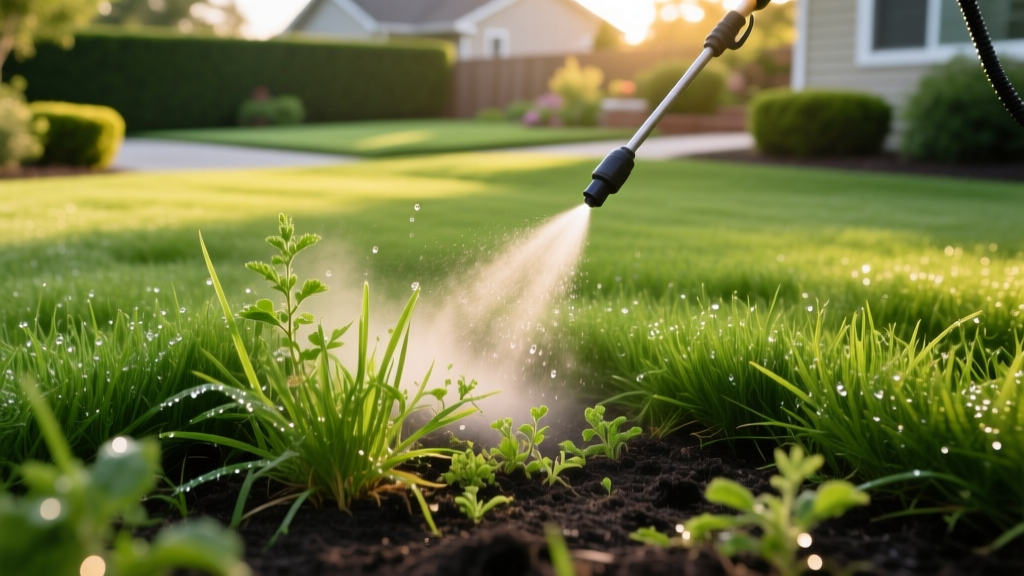
How to Spot-Treat Stubborn Weed Grasses Without Killing Turf
The Monocot Challenge: Why Weed Grasses Resist Standard Herbicides
Controlling broadleaf weeds like dandelions or clover is relatively straightforward because their dicotyledonous biology differs vastly from your lawn's monocotyledonous turf. However, weed grasses—such as crabgrass, dallisgrass, quackgrass, and goosegrass—share the exact same physiological pathways as your desirable turfgrass. This biological similarity means that non-selective herbicides will kill both the weed and your lawn, while many standard selective herbicides are entirely ineffective against mature grassy invaders.
Spot-treating weed grasses requires a bifurcated strategy: utilizing highly specific selective chemistries for certain species, and employing precision physical application methods for others. As of 2026, the phase-out of older arsenical herbicides like MSMA for residential use has made targeted spot-treatment protocols more critical than ever for maintaining high-quality turf.
Grassy Weed Identification Matrix
Accurate identification is the mandatory first step. Misidentifying a grassy weed will result in chemical failure and wasted money. Use this morphological matrix to confirm your target species before selecting a treatment.
| Weed Species | Leaf Vernation & Width | Ligule & Auricles | Growth Habit | Primary Vulnerability |
|---|---|---|---|---|
| Smooth Crabgrass | Folded; 1/4 to 1/2 inch wide, pale green | Membranous, jagged; No auricles | Prostrate, rooting at nodes | Quinclorac (Pre-tiller stage) |
| Goosegrass | Folded; Silver/white center base | Membranous, toothed; No auricles | Prostrate, zipper-like seedhead | Fenoxaprop-p-ethyl |
| Dallisgrass | Folded; 1/2 to 3/4 inch, coarse texture | Membranous, fringed; No auricles | Upright clumping, deep rhizomes | Glyphosate wick / Manual extraction |
| Quackgrass | Rolled; 1/4 to 1/2 inch, rough upper surface | Membranous; Clasping auricles present | Upright, aggressive creeping rhizomes | Glyphosate wick / Smothering |
Source: Morphological data adapted from the NC State University TurfFiles Weed Identification Guide.
Selective Post-Emergent Strategies for Crabgrass and Goosegrass
For annual weed grasses like crabgrass and goosegrass, selective post-emergent herbicides remain the most efficient spot-treatment option, provided the weeds are caught before they advance to the 4-tiller stage.
Quinclorac (Drive XLR8)
Quinclorac is a synthetic auxin herbicide that disrupts cell division in susceptible grassy weeds. It is highly effective on smooth and hairy crabgrass.
- Application Rate: 0.367 to 0.735 fluid ounces per 1,000 square feet.
- Surfactant Requirement: Must be mixed with a methylated seed oil (MSO) at 1% v/v for adequate cuticular penetration.
- Current Pricing: Professional-grade quinclorac concentrates (e.g., Drive XLR8) retail between $75 and $90 per pint in 2026, which yields over 40,000 square feet of coverage at the lowest rate.
- Limitation: Quinclorac is notoriously ineffective against mature dallisgrass and goosegrass.
Fenoxaprop-p-ethyl (Acclaim Extra)
For cool-season lawns (Kentucky bluegrass, fescues) battling goosegrass or late-stage crabgrass, fenoxaprop-p-ethyl is the superior choice. It inhibits acetyl-CoA carboxylase (ACCase), halting lipid synthesis in the weed. It is slower acting than quinclorac—requiring 14 to 21 days to see complete necrosis—but it offers excellent turf safety even in high temperatures where quinclorac might cause temporary phytotoxicity.
⚠️ WARNING: Cool-Season vs. Warm-Season Turf Safety
Never apply fenoxaprop-p-ethyl or high-rate quinclorac to St. Augustinegrass or Centipedegrass. These warm-season turf species are highly sensitive to ACCase inhibitors and synthetic auxins, which will cause severe chlorosis and potential turf death. Always verify the active ingredient's label against your specific turfgrass cultivar.
Never apply fenoxaprop-p-ethyl or high-rate quinclorac to St. Augustinegrass or Centipedegrass. These warm-season turf species are highly sensitive to ACCase inhibitors and synthetic auxins, which will cause severe chlorosis and potential turf death. Always verify the active ingredient's label against your specific turfgrass cultivar.
The Precision Wick Method for Dallisgrass and Quackgrass
Perennial weed grasses like dallisgrass and quackgrass possess deep rhizomatous root systems and biological profiles too similar to desirable turf for selective chemical control. To spot-treat these invaders without destroying the surrounding lawn, you must use a non-selective herbicide (glyphosate) applied via a precision wick or gel method.
According to the Environmental Protection Agency's guidelines on glyphosate, targeted application minimizes environmental exposure while maximizing translocation into the weed's rhizome network. Spraying glyphosate with a handheld pump sprayer, even with a shield, risks drift damage to adjacent desirable turf. Wick applicators and precision gels eliminate this risk.
Step-by-Step Wick Application Protocol
- Preparation: Mow the lawn at your standard height. Wait 3 to 5 days. This allows the weed grasses to grow slightly taller than the surrounding turf canopy, ensuring the wick only contacts the target weed.
- Mixing: For a DIY wick applicator (like the Ortho Weed B Gon wand or a generic rope-wick tool), mix a 2% solution of 41% glyphosate concentrate. This equates to roughly 2.5 fluid ounces of concentrate per gallon of water. Add 0.5 oz of non-ionic surfactant to break the leaf surface tension.
- Application: Wear chemical-resistant nitrile gloves. Saturate the wick pad or rope until it is damp but not dripping. Swipe the wick over the top third of the weed grass blades. Do not drench the plant to the point of runoff; glyphosate must be absorbed and translocated, not washed into the soil.
- Translocation Period: Leave the weed completely undisturbed for 14 days. Do not mow, water heavily, or pull the weed. The chemical requires this time to travel down into the deep rhizomes of quackgrass and dallisgrass.
- Removal: After 14 days, the weed should be entirely brown and brittle. Rake out the dead tissue, exposing the bare soil for repair.
Post-Treatment Recovery and Overseeding Timelines
Spot-treating weed grasses leaves voids in your turf canopy that must be filled immediately to prevent new weed seeds from germinating in the exposed soil.
🕒 The Herbicide-Seed Interval Rule
Timing your overseeding correctly is critical. If you applied Quinclorac, you must wait a minimum of 21 to 28 days before sowing new grass seed, as residual soil activity will inhibit turfgrass germination. If you used the Glyphosate wick method, glyphosate has no soil residual activity; you can safely overseed the raked voids 48 hours after removing the dead weed tissue.
Timing your overseeding correctly is critical. If you applied Quinclorac, you must wait a minimum of 21 to 28 days before sowing new grass seed, as residual soil activity will inhibit turfgrass germination. If you used the Glyphosate wick method, glyphosate has no soil residual activity; you can safely overseed the raked voids 48 hours after removing the dead weed tissue.
For cool-season lawns, use a blend of turf-type tall fescue or Kentucky bluegrass matching your existing stand, applying at a rate of 4 to 6 lbs per 1,000 sq ft for spot repairs. For warm-season lawns, plug the voids with 3-inch sod plugs of your specific bermudagrass or zoysiagrass cultivar, as seeding warm-season grasses late in the summer often results in poor establishment before autumn dormancy.
Expert Troubleshooting: Why Your Spot Treatment Failed
If your targeted weed grasses are returning to the exact same spot within a single growing season, evaluate these common failure modes:
Failure Mode 1: Treating Drought-Stressed Weeds
When weed grasses are drought-stressed, their stomata close and internal translocation halts. Applying quinclorac or glyphosate to a wilting, rolled-leaf weed will result in contact burn only, leaving the rhizome alive to resprout in three weeks. Always irrigate the lawn deeply 24 hours before applying post-emergent spot treatments.
Failure Mode 2: Ignoring the Seed Bank
A single mature crabgrass plant produces up to 150,000 seeds. If you spot-treat the plant in late August after it has already dropped seed, the chemical control was successful, but you will face a massive localized flush of crabgrass the following spring. You must pair late-season spot treatments with a pre-emergent application (like Prodiamine) the following early spring when soil temperatures reach 55°F at a 2-inch depth.
Mastering the spot-treatment of weed grasses requires abandoning the "spray everything" mentality in favor of precise identification, selective chemistry, and targeted physical application. By respecting the biological boundaries of monocots and adhering to strict application timelines, you can eradicate invasive grassy weeds while preserving the integrity of your turf.

